
The Ultimate Jedi Dissenter: Why KOTOR Remake's Jolee Bindo Must Challenge Cal Kestis's Beliefs
Star Wars: Knights of the Old Republic Remake must revive Jolee Bindo as a crucial philosophical counterweight to Cal Kestis, adding depth and realism.
In the vast, sprawling tapestry of the Star Wars galaxy, where the eternal dance between the light and dark sides of the Force dictates the fate of civilizations, two figures stand as starkly contrasting monuments to the Jedi legacy. One, Cal Kestis, a beacon of hope fighting to resurrect a fallen order from the ashes of betrayal. The other, Jolee Bindo, a cynical hermit who watched that same order's foundations crack from within and walked away, forever. The impending Star Wars: Knights of the Old Republic Remake carries a monumental responsibility: to resurrect Jolee Bindo not merely as a party member, but as the galaxy's most essential philosophical counterweight to the unwavering faith of modern heroes like Cal. This isn't just about nostalgia; it's about injecting a vital, subversive dose of reality into a universe often painted in simplistic shades of good and evil.
The legendary Jolee Bindo is no typical wise old mentor. Forget the serene, all-knowing Yoda archetype. When players first stumble upon him in the shadowy, perilous depths of Kashyyyk—a brilliant, intentional echo of Luke's Dagobah trial—they find something far more intriguing and dangerous: a Force-user who has formally renounced all labels. He is neither Jedi nor Sith, a walking contradiction in a universe built on that binary. 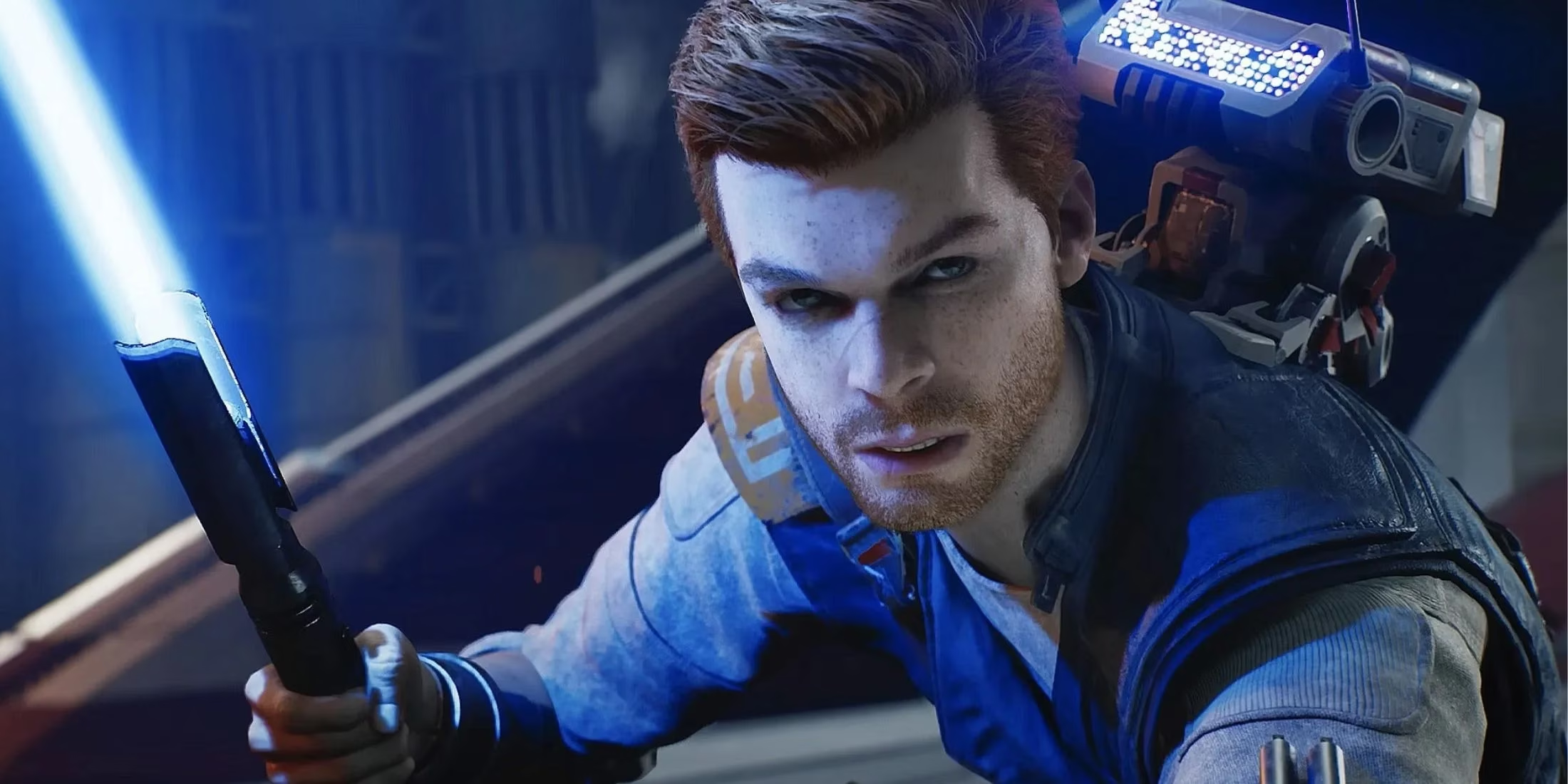 Morally, he leans toward the light, yet his soul is stained with the grey pragmatism of experience. His story is one of profound disillusionment, forged in the crucible of war where the Jedi's lofty ideals met the messy, bloody reality of conflict. The final, unforgivable sin in his eyes? The Jedi Council's ultimate hypocrisy. After an action of his that broke their sacred codes led to catastrophic, widespread death, they forgave him. They prioritized the comfort and rehabilitation of one of their own over the staggering consequences borne by hundreds of innocent lives. In that moment, Jolee didn't just see failure; he saw a corrupted institution, and he exiled himself in disgust.
Throughout the original KOTOR's epic narrative, Jolee serves as the player's conscience, but a fiercely independent one. He doesn't preach a new dogma; he relentlessly questions the old one. He prods the protagonist to think, to doubt, to recognize the Jedi not as flawless paragons but as a fallible organization capable of profound error. This nuanced critique was nothing short of revolutionary in 2003. It wasn't a Sith's ranting hatred; it was the weary, earned wisdom of a man who had seen the light cast long, dark shadows. The remake must amplify this, presenting his arguments not as mere dialogue options, but as foundational challenges to the player's journey.
-
The Core of His Philosophy: Questioning institutional infallibility, not the light side itself.
-
His Greatest Weapon: Cynical wit and firsthand experience, not a lightsaber.
-
His Legacy: A warning that good intentions, without scrutiny, can pave a road to ruin.
Now, enter Cal Kestis, the hero of a newer generation. His entire world was shattered by Order 66 as a child. For him, the Jedi were not a flawed institution to be analyzed; they were a family, a symbol of peace, and a safety net violently ripped away. His trilogy of adventures is a relentless, heartfelt quest to rebuild that symbol, to restore the Jedi Order as a force for good. His perspective is one of trauma and unwavering, almost desperate, faith. It's a noble goal that resonates deeply with fans who yearn for the return of the galaxy's guardians. This is precisely why Jolee's presence in the remake's narrative landscape is so explosively relevant.
| Character Trait | Cal Kestis | Jolee Bindo |
|---|---|---|
| Jedi Affiliation | Loyalist, Restorer | Former, Voluntary Exile |
| Core Motivation | Faith & Restoration | Disillusionment & Independent Justice |
| View of the Order | An ideal to be reclaimed | A flawed institution to be questioned |
| Defining Experience | Surviving betrayal from outside (Order 66) | Witnessing corruption from within |
| Primary Role | Warrior of Hope | Sage of Skepticism |
The potential for narrative dynamite here is off the charts. Imagine a player guiding a Light Side-aligned Revan, striving to be the ultimate Jedi hero. Jolee would be there at every turn, not to defeat them, but to complicate their victory. "You saved the day, but at what cost? Does the Council's approval make it right?" He would be the living embodiment of the question Cal Kestis never truly stops to ask: Should the Jedi Order be restored exactly as it was? Jolee doesn't advocate for a galaxy without guardians—that's a Sith's dream. He argues for guardians who are awake, who think, and who hold their own power accountable. In 2026, this isn't just a video game subplot; it's a resonant thematic exploration of institutional trust, reform, and the dangers of blind faith.
For the KOTOR Remake to truly be a masterpiece for the ages, it must wield Jolee Bindo as its most critical narrative lightsaber. He must be written and performed with all the wit, weariness, and unshakable moral clarity that made him iconic. He is the essential counter-melody to Cal Kestis's hopeful anthem. In a franchise constantly revisiting the rise, fall, and return of the Jedi, Jolee offers the one thing more valuable than a new hero or a new threat: a profound and necessary critique from within the light itself. Getting him right isn't just fan service; it's the key to delivering a Star Wars story that challenges the mind as fiercely as its combat challenges your reflexes. The fate of the remake's soul depends on this one, beautifully cynical old man.
Leave a Comment
Comments