
The Shadow of the Erdtree Dilemma: DLC, GOTY, and the Nature of Recognition
Elden Ring: Shadow of the Erdtree sparks passionate debate as a Game of the Year nominee, challenging what truly defines a GOTY contender.
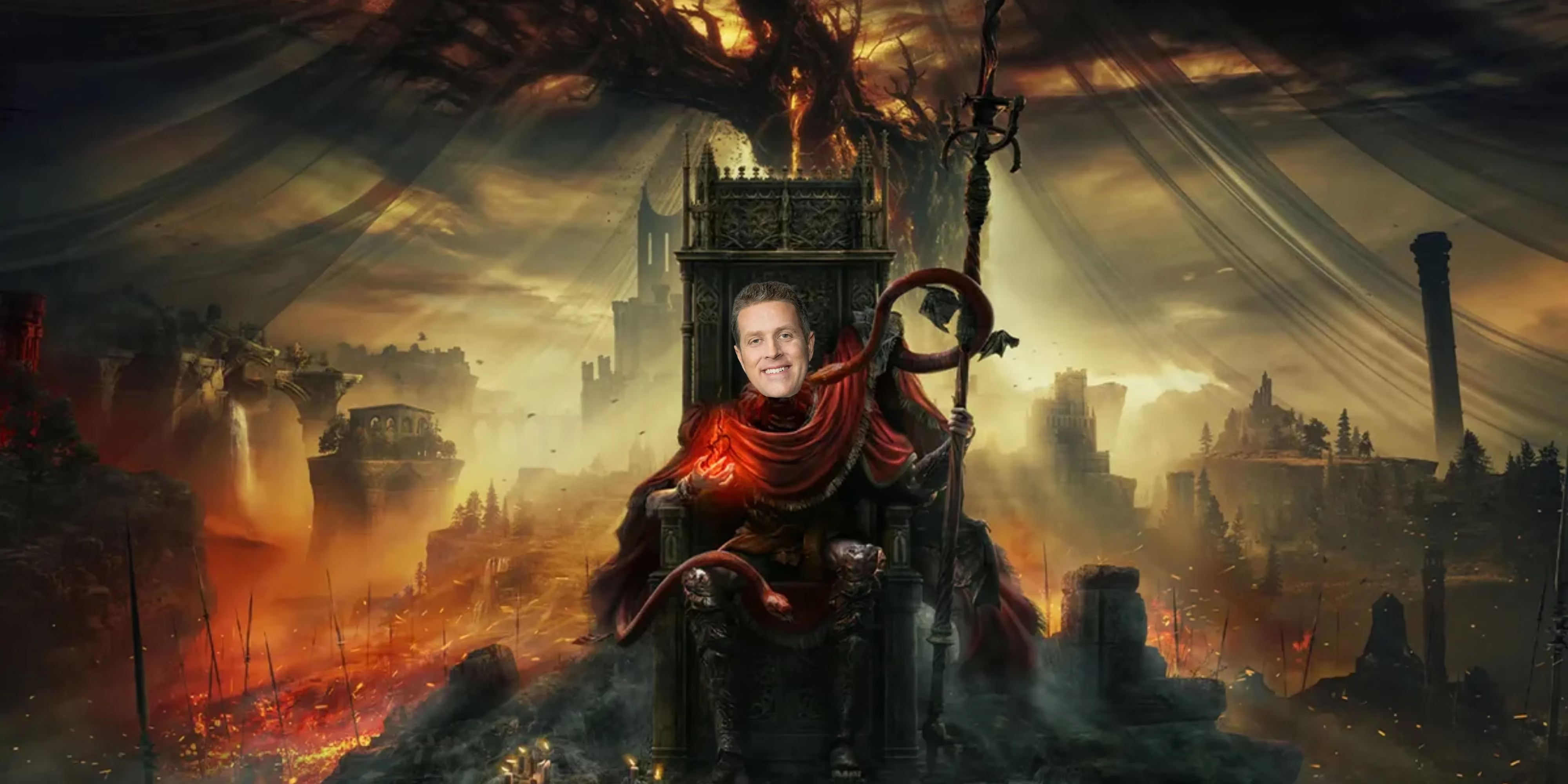
Two years after the base game claimed the ultimate prize, Elden Ring: Shadow of the Erdtree finds itself nominated for Game of the Year at The Game Awards in 2026. The air is thick with a familiar, yet newly sharpened, debate. Few would question the expansion's monumental quality—its haunting landscapes, its punishing yet poetic boss encounters, the sheer density of its mythic sorrow. The objection, rather, is one of principle. Is an expansion, a piece of additional content, truly a 'game' in the same sense as a wholly new creation? The discourse swirls, a tempest of logic and passion, as the community grapples with a simple, profound question: what, in this age of evolving content, truly deserves the crown?
The Hollow Throne of a Separate Category
The most proposed solution echoes through forums and social media threads: create a dedicated category for DLC. On the surface, it seems elegant—a way to honor excellence while preserving the sanctity of the main Game of the Year award for entirely new titles. Yet, this solution is a mirage. It implies a restriction, a first-ever gate placed upon a TGA nominee based on its format. The awards have never strictly defined what constitutes an indie game or rigidly policed genre boundaries; why start with expansions? More critically, such a category would likely be an additional award, not an alternative one. Shadow of the Erdtree could, in theory, still compete for GOTY, rendering the new category a consolation prize rather than a legitimate honor. The underlying desire isn't for a DLC category; it's for a specific outcome for one particular, towering piece of content.
The Barren Field of Worthy Contenders
Advocates for a Best DLC award must confront a stark reality: the field is desolate. The modern landscape of gaming has shifted dramatically. Studios often pursue a 'one-and-done' model or focus on endless live-service updates and seasonal passes. Substantial, award-worthy expansion packs like Shadow of the Erdtree are rare jewels. What other contenders from 2026 would fill a credible ballot? One might point to narrative expansions for major titles, but many significant updates find their home in the Best Ongoing Game category. The list of potential nominees becomes a speculative, forced assembly:
-
Alan Wake 2's two DLC packs (if considered separately)
-
A possible expansion for Prince of Persia: The Lost Crown
-
Stretching the definition to include Astro Bot's post-launch speedrun challenges
This is not a crowded, competitive field. It is a category built for one king, with subjects hastily drafted to fill the court. A category without robust competition is not a category; it is an asterisk.
The Ghost of Recognition: What Does a Statuette Mean?
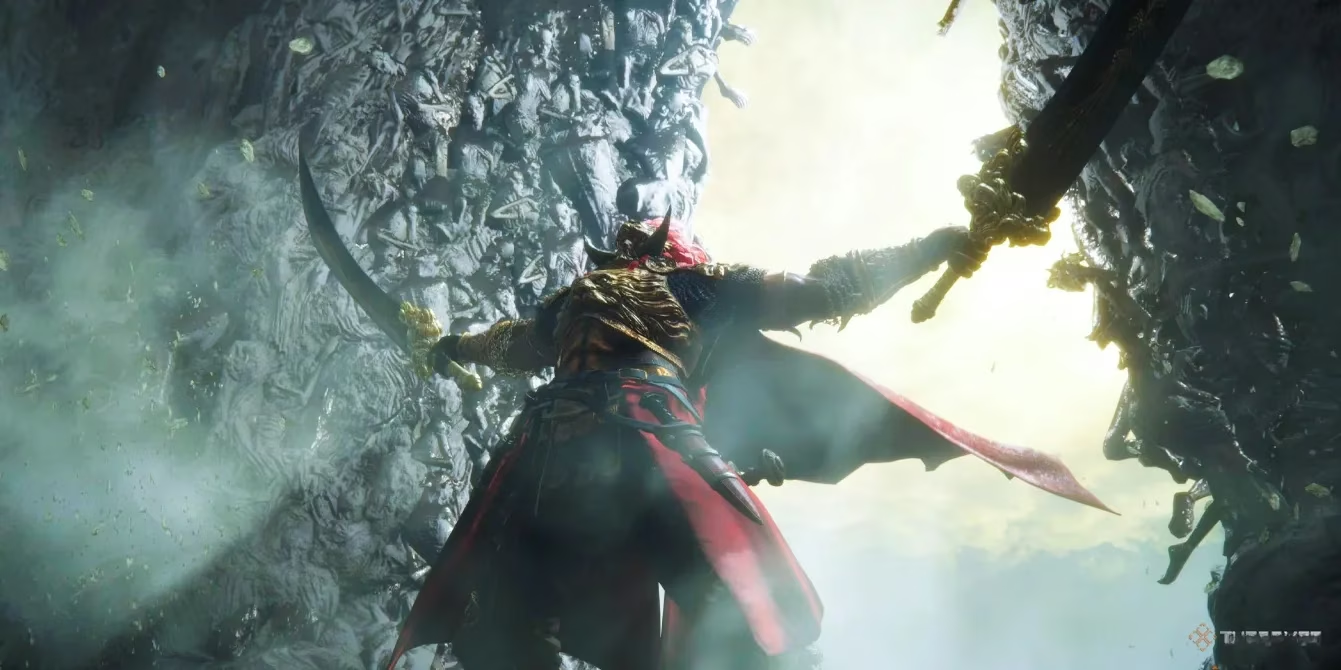
Why does Shadow of the Erdtree need this formal recognition? Its greatness is already etched into the collective consciousness of players. The discourse, the praise, the shared stories of triumph and despair—these are its true trophies. Elden Ring itself already stands as a GOTY winner. This is not a Cyberpunk 2077: Phantom Liberty scenario, where an award felt like redemption for a base game's troubled launch. The Shadow of the Erdtree nomination is a testament to content so profound it challenges the very framework of our awards. If its quality is deemed worthy of the highest honor, then the logical conclusion is that it should be eligible for—and potentially win—Game of the Year. To create a special lane for it is to simultaneously celebrate and diminish its achievement.
The Tangled Web of Remakes and Remasters
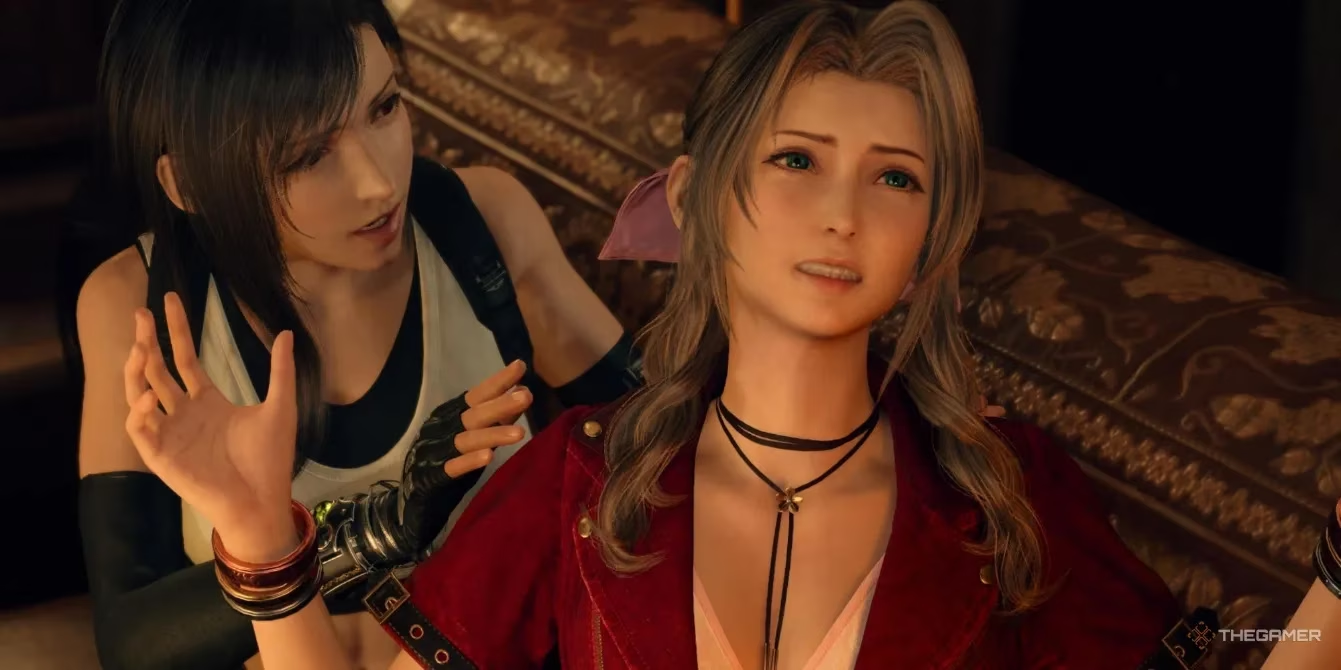
Some suggest broadening the hypothetical category to include remakes and remasters, given their increasing prevalence. This only complicates the issue further. Remakes like Final Fantasy VII Rebirth (a frontrunner this year) and past nominees such as Resident Evil 4 are already commonplace and largely uncontroversial in the main GOTY category. The industry's tendency to revisit and resell its past is a separate, thorny issue, but their nomination status is rarely the core of the debate. If the goal of a new category is to prevent DLC from competing for GOTY, would it not also exile these significant, ground-up reconstructions? The logic becomes impossibly murky. The category, then, isn't a principled stand but a tactical maneuver aimed at a single target.
The Only Choice That Remains
The ceremony, in its gleaming digital spectacle, reflects a broader tension in how we consume and value art in the interactive space. The lines between game, expansion, season, and remake blur into insignificance before the sheer force of experience. The debate around Shadow of the Erdtree's nomination is, at its heart, a struggle to define boundaries in a boundless medium. We are presented with a binary, as clean and sharp as a katana's edge:
-
Accept that any release—be it a new IP, a massive expansion, or a transformative remake—that meets the criteria of excellence is eligible for Game of the Year.
-
Reject that premise and fundamentally redefine the award's scope, a move that would require rigid, likely contentious, new rules.
There is no perfect third path. A separate DLC category is a well-intentioned illusion, a patch on a foundational question. It seeks to have both cities stand, to save every faction, in a choice-based narrative where a true decision must be made. The shadow cast by the Erdtree is long, and it asks us not whom to crown, but what the crown itself represents. In 2026, as the golden statues are prepared, the industry must decide if its highest honor celebrates the artifact or the achievement, regardless of its form.
Leave a Comment
Comments