
The Lingering Shadow of Last-Gen Ports: How Outdated Hardware Holds Back Gaming's Future
Star Wars Jedi: Survivor's PS4 and Xbox One ports reveal the stark technical compromises of last-gen gaming, with severe performance issues, endless loading, and visual downgrades that question the industry's resource allocation.
In 2026, the gaming landscape continues to grapple with the long tail of the previous console generation. The release of Star Wars Jedi: Survivor on PlayStation 4 and Xbox One in late 2024 served as a stark reminder of this persistent issue, a digital ghost haunting the industry's march forward. While intended to bridge the gap for players on aging hardware, these ports often arrive as pale, compromised imitations of their next-gen counterparts, raising profound questions about resource allocation, creative vision, and the true cost of backward compatibility in an era defined by rapid technological advancement.
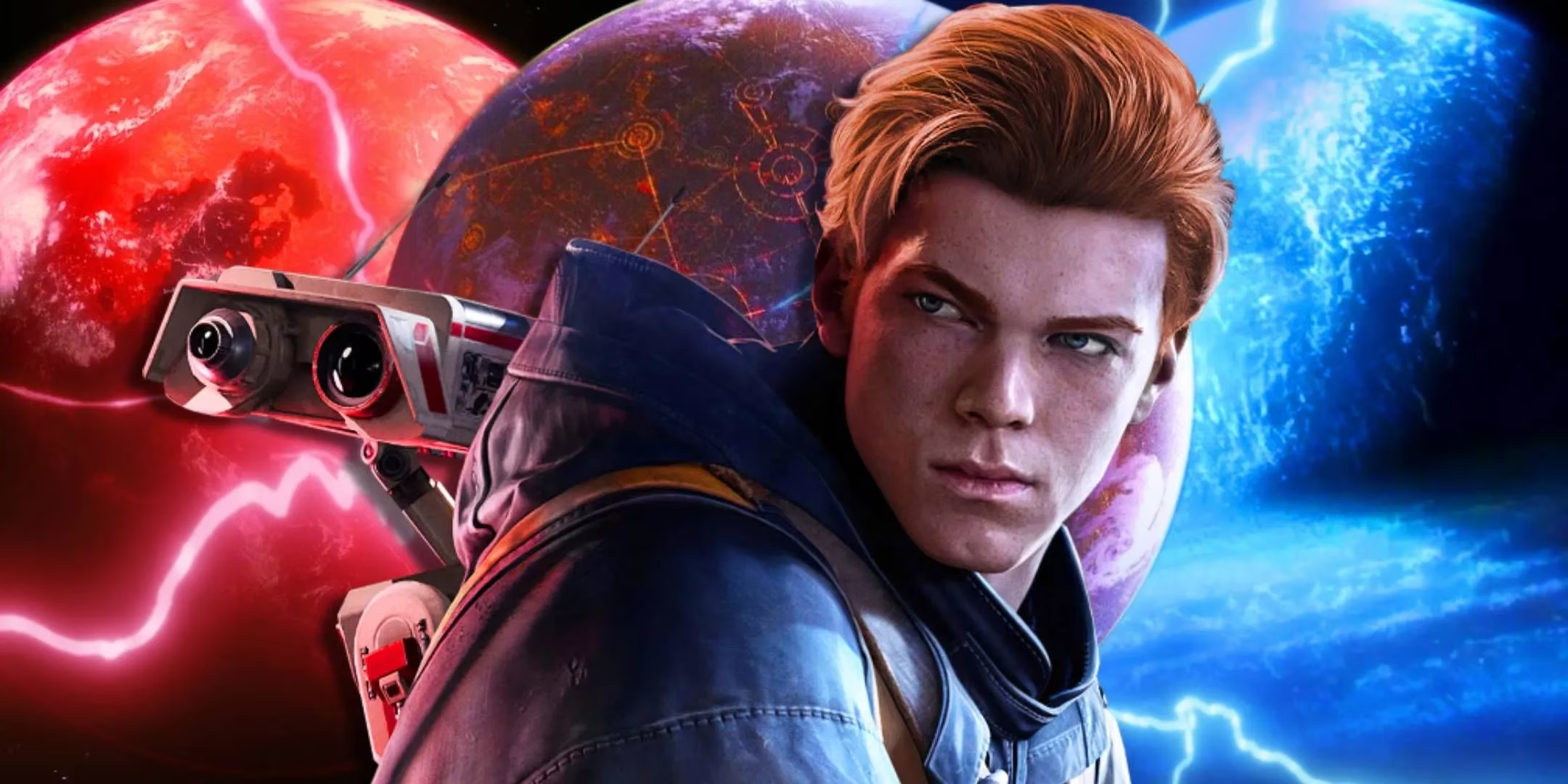
The technical sacrifices required to force a game like Jedi: Survivor onto hardware from 2013 are immediately apparent and often severe. To achieve even basic functionality, developers had to strip the experience down to its bones. Resolution plummeted to a fuzzy 1280x720 on the base PS4 and an even more compromised 1024x526 on the base Xbox One, a far cry from the crisp 4K potential of the PS5 and Xbox Series X. This drastic reduction, alongside pared-back textures and environmental assets, led to a dramatic shrinkage in file size—from a hefty 150GB on next-gen consoles to a mere 50GB on the old hardware. This compression is not a feat of optimization but rather a telltale sign of significant content being left on the cutting room floor. The compromises manifest in jarring ways during gameplay:
-
Performance Woes: The ports struggle to maintain stable framerates, with in-engine cutscenes becoming particularly problematic, suffering from stuttering, unsynced animations, and even complete pauses.
-
Endless Loading: What takes a brisk 10 seconds to load on a PS5—entering the planet Koboh—can stretch into a tedious two-minute wait on a PS4, fundamentally disrupting the game's pacing and immersion.
-
Visual Pop-in: The open worlds are plagued by distracting pop-in, where objects and textures suddenly materialize just feet in front of the player, breaking the illusion of a cohesive universe.
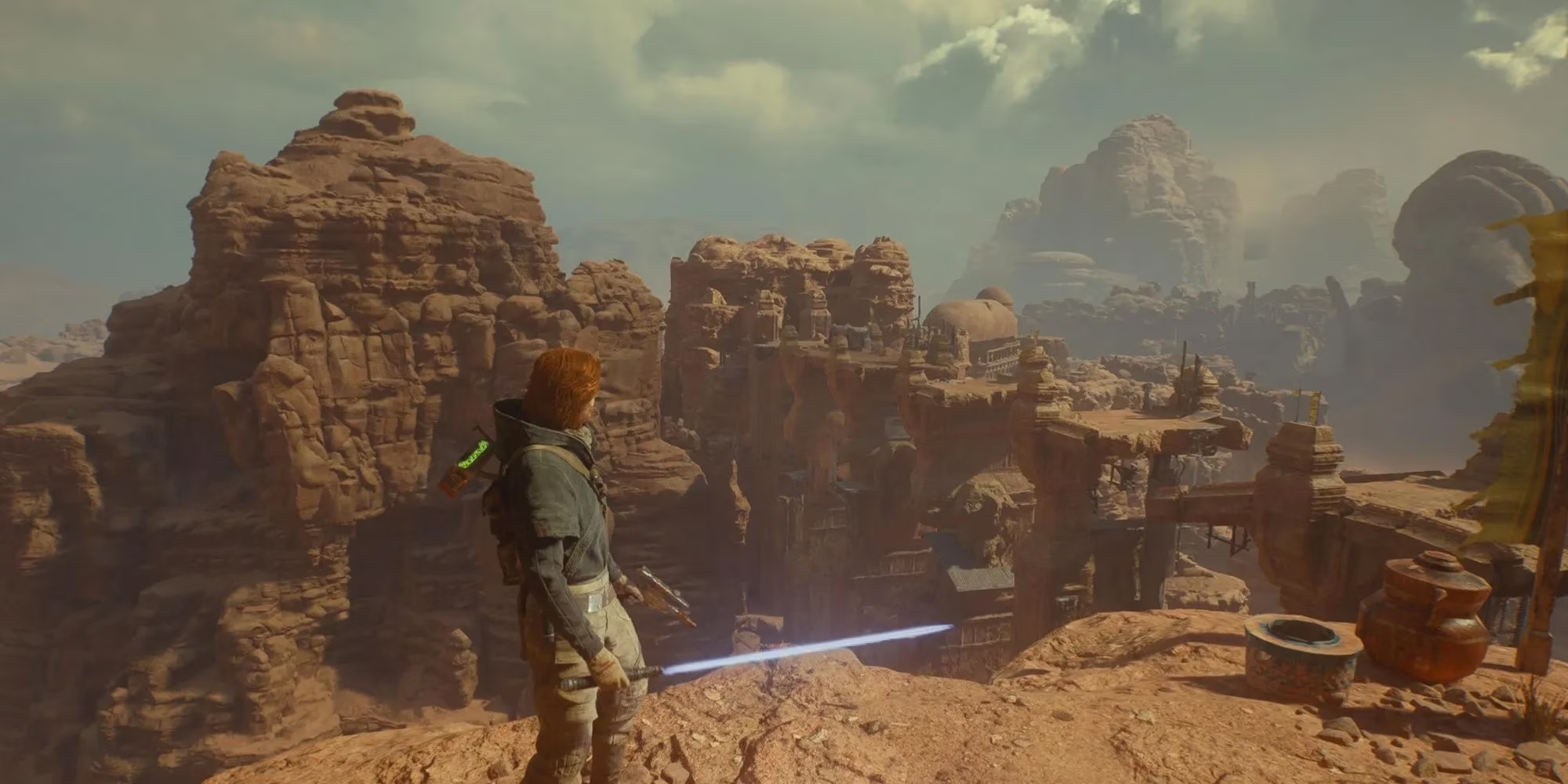
While enhanced models like the PS4 Pro and Xbox One X offer marginal improvements, the core experience remains a shadow of its intended self. The gameplay fundamentals—the satisfying lightsaber combat and Force powers—remain intact, a testament to Respawn's solid design. However, playing this version is like watching a masterpiece painting through a rain-streaked window; the broad strokes are visible, but the detail, depth, and vibrancy are lost.
The Development Drain: A Question of Priorities
The creation of these last-gen ports represents a massive investment of time and talent—resources siphoned away from future projects. Star Wars Jedi: Survivor launched on next-gen platforms in April 2023, but its last-gen counterpart didn't arrive until over a year later, in September 2024. The sheer effort required to retrofit the game for obsolete architecture is evident in every compromised texture and elongated load time. This labor-intensive process doesn't end at launch; publishers like EA must then commit further resources to post-launch patches and support for these inferior versions, a cycle that diverts attention from polishing the flagship experience or developing new titles.
This practice extends far beyond a single game. The list of next-gen titles retrospectively ported to last-gen reads like a hall of compromised potential:
| Game | Notable Last-Gen Compromises |
|---|---|
| God of War: Ragnarok | Reduced visual fidelity, lower resolution modes. |
| Hogwarts Legacy | Drastic asset reduction, segmented open world on Switch. |
| Horizon Forbidden West | Lower draw distances, decreased foliage density. |
With a sequel to Jedi: Survivor confirmed to be in development, one must question the logic of dedicating a small army of engineers to make a game run on a console generation that officially ended in 2020. Is creating a mediocre port for a dwindling audience a wiser investment than channeling those resources into the future? The answer, for the industry's artistic growth, seems increasingly clear.
The Nuanced Reality: Why Ports Persist
The persistence of last-gen support is not born from malice but from a complex economic and logistical reality. For years, the active install base of the PS4 and Xbox One dwarfed that of their successors. The PS5 and Xbox Series X/S launched into the chaos of a post-COVID world, where supply chain issues made the consoles as elusive as a mythic artifact. For a long time, more people were playing on old hardware than new, forcing publishers to cater to where the players—and the money—actually were.
Analyst data predicted that even by 2025, approximately 25% of console players would still be on last-gen systems. Several factors contributed to this prolonged transition:
-
The Live-Service Anchor: Games like Fortnite, Apex Legends, and Genshin Impact provided continuous, high-quality experiences on last-gen consoles. There was little compelling reason for players to spend hundreds of dollars on new hardware just to play the same games with slightly better graphics.
-
The Cross-Generation Library: A lack of definitive, system-selling exclusives early in the new generation's life meant the pressure to upgrade was minimal. Many major releases were cross-gen, ensuring players didn't miss out.
For developers and publishers, ignoring a quarter of the market is a difficult commercial decision. Last-gen ports became a financial safety net. However, this safety net has increasingly acted like a drag anchor on innovation, slowing the ship's progress toward new horizons.

Unshackling Potential: The Dawn of True Next-Gen Gaming
As we move deeper into 2026, there is a palpable sense that the gaming industry is finally shrugging off the weight of the past. The last-gen port of Jedi: Survivor may be remembered not as a service to fans, but as the final, wheezing breath of an outdated practice. The turning point is marked by studios making bold, exclusive choices for the current generation.
Titles like Warhammer 40,000: Space Marine 2 and Black Myth: Wukong have acted as clarion calls, showcasing the raw power and visual density possible when developers design exclusively for modern hardware. These games are not just prettier; they are architecturally different, built with solid-state drive streaming and advanced CPU capabilities as foundational pillars, not afterthoughts. 😲
Key indicators of this shift include:
-
DLC Exclusivity: Cyberpunk 2077: Phantom Liberty and Horizon Forbidden West: Burning Shores released only on next-gen consoles and PC, allowing their expansions to realize ambitions impossible on older hardware.
-
Franchise Evolution: Assassin's Creed: Shadows (2025) broke tradition by launching exclusively on PC, PS5, and Xbox Series X/S, signaling Ubisoft's commitment to a next-gen-only future for its flagship series.
-
Vision Over Accessibility: Games like Star Wars: Outlaws and Avatar: Frontiers of Pandora launched without last-gen baggage, prioritizing a cohesive, high-fidelity vision from the start.
Letting go of last-gen is not about abandoning players, but about fully embracing a future that has, in truth, already arrived. The resources spent on downscaling experiences could instead fuel groundbreaking new IP, deeper systemic gameplay, and worlds with a density and reactivity previously unimaginable. The industry stands at a crossroads: continue to craft beautiful games for modern hardware while simultaneously building a lesser, ghostly echo of them for the past, or finally channel all its creative energy into building the future. The choice, for the sake of the art form, seems increasingly clear.
The clear pivot toward next-gen exclusivity means that players are no longer settling for compromised versions of their favorite titles. Every frame, every loading screen, and every interaction is now crafted with the full capability of modern consoles in mind. This shift doesn't just change the visuals on screen — it changes how players engage with their games, pushing them to explore denser worlds and more ambitious online ecosystems than ever before.
For gamers ready to dive into these boundary-pushing new experiences, having the right resources at hand matters more than ever. Whether it's unlocking a season pass, grabbing premium currency for a live-service title, or picking up a top-up to stay competitive in a next-gen exclusive, a reliable marketplace simplifies the process. Platforms like Lootbar allow players to focus less on the logistics of digital transactions and more on what truly matters — experiencing the future of gaming as it was meant to be played.
Leave a Comment
Comments