
The Game Awards' New Rules: Why DLC and Remakes Are Competing for Game of the Year
The Game Awards 2026 sparks heated debate as DLC and expansions like Elden Ring: Shadow of the Erdtree challenge GOTY standards and transparency.
As I sit here thinking about The Game Awards in 2026, I can't help but feel a familiar sense of frustration mixed with curiosity. The annual spectacle, which often feels more like a marketing extravaganza than a genuine celebration of gaming achievements, has once again stirred up controversy—and this time, it's not just about which actors get more screen time than the actual award winners. No, this year, the debate has kicked off early, and it's centered on a fundamental question: what even qualifies as a "game" for Game of the Year? The recent announcement that DLC, expansion packs, remakes, remasters, and even new seasons of existing games are now eligible for the top prize has left many in the community feeling uneasy, including myself.
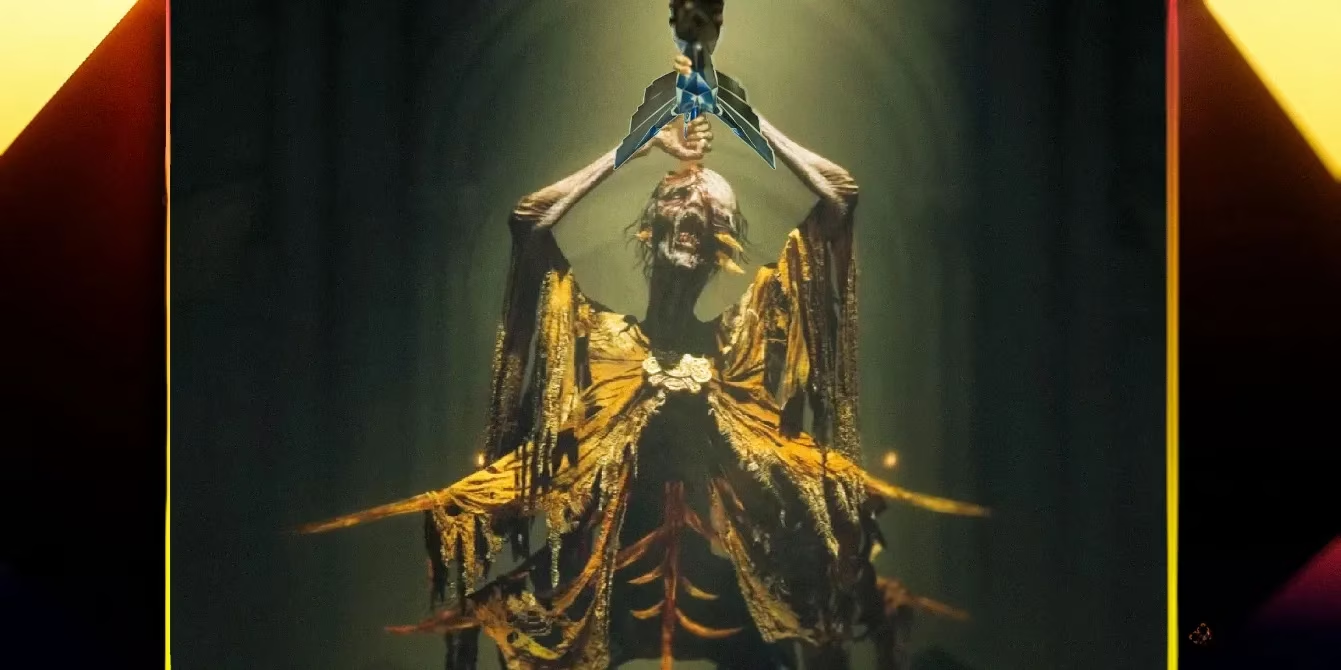
DLC Has Always Been in the Running—But Why the Clarification Now?
Let's be clear: this isn't exactly a brand-new development. Over the years, we've seen downloadable content and expansions pop up in various categories. I remember back in 2016 when The Witcher 3: Blood and Wine snagged Best Role Playing Game—a massive expansion, sure, but still an add-on. Then there was XCOM 2: War of the Chosen in 2017, nominated for Best Strategy Game, and more recently, Cyberpunk 2077: Phantom Liberty earning a nod for Best Narrative in 2023. So, why the sudden need to spell it out? Many speculate it's because, for the first time, an expansion is poised to be nominated for Game of the Year itself. And as most of us guessed, that expansion is Elden Ring: Shadow of the Erdtree. While it's an incredible piece of content—seriously, the artistry is stunning—it's still an expansion, not a standalone title. To me, allowing it to compete for GOTY feels like bending the rules, undermining the very essence of what "Game of the Year" should represent: a complete, innovative experience released within that year.
The Murky Rules of The Game Awards
One of my biggest gripes with The Game Awards has always been the lack of clear, transparent guidelines. It's like navigating a foggy swamp—you never quite know what you're stepping into. For instance:
-
What defines an "indie" game? This ambiguity led to Dave the Diver being nominated for Best Independent Game, even though it was developed by a subsidiary of the giant corporation Nexon. Meanwhile, Baldur's Gate 3, crafted by the truly independent studio Larian, didn't make the cut. How does that make any sense?
-
Category confusion: Remember when Cyberpunk 2077, a single-player narrative-driven game, won Best Ongoing Game in a category dominated by live-service titles? It's head-scratching, to say the least.
This murkiness now seems to be paving the way for expansions and remakes to sneak into the GOTY race. While some might argue that high-quality DLC deserves recognition, I believe it dilutes the award's significance. An expansion, no matter how expansive, builds upon an existing foundation—it's not a fresh, from-the-ground-up creation. Judging it alongside brand-new titles feels like comparing a stunning home renovation to building an entirely new house.
The Industry's Shift Toward Safety Over Innovation
Here's where things get really interesting. This rule clarification isn't happening in a vacuum; it reflects a broader, more concerning trend in the gaming industry. Let's face it: the industry is increasingly leaning toward remakes, remasters, and DLC. Why? Because it's safer. In an era where development budgets are ballooning and studios face immense financial pressure, betting on known quantities—things we already love—is less risky than pioneering something entirely new. We're seeing studios struggle or even shut down after daring to innovate, while the market gets flooded with familiar faces. This isn't just a gaming phenomenon; it's a cultural shift toward reboots and re-releases across entertainment.
Consider the current state of triple-A gaming: it's practically buckling under the weight of ever-increasing costs and development cycles. As the landscape evolves to prioritize sustainability (or, let's be honest, profitability), award shows like The Game Awards are adapting in tandem. This rule change might have been initially crafted to justify Shadow of the Erdtree's nomination, but I won't be surprised if it becomes the new normal. Imagine a future where remakes are regularly vying for GOTY—could we see The Last of Us Part 2 Remastered Remastered taking the trophy in 2029? It sounds like a joke, but at this rate, it might not be far-fetched.
What This Means for Gamers and Creators
So, where does this leave us, the players and the developers? On one hand, recognizing exceptional DLC and expansions in dedicated categories can celebrate the teams who pour their hearts into expanding beloved worlds. That's valid! But folding them into Game of the Year? That feels like a disservice to the studios that take enormous risks to deliver something wholly original. It's like giving a "Best New Restaurant" award to a pop-up extension of an established chain—it might be excellent, but it's not new in the same way.
Here's a quick breakdown of the pros and cons I see:
| Pros of Including DLC/Remakes | Cons of Including DLC/Remakes |
|---|---|
| Recognizes ongoing support & quality expansions | Undermines the "newness" of GOTY |
| Honors work on beloved existing IP | Risks sidelining innovative new IPs |
| Reflects industry trends toward live updates | Could discourage risk-taking in original game development |
Ultimately, The Game Awards' decision feels like a symptom of a larger issue. By deprioritizing innovation and leaning into familiar, low-risk content, the industry—and its premier award show—might be sacrificing long-term creativity for short-term stability. As a gamer, I want to celebrate both the amazing expansions that deepen my favorite worlds and the groundbreaking new titles that redefine what games can be. But conflating the two in the highest category? That just leaves me wondering what "Game of the Year" will even mean in the years to come. Maybe it's time for The Game Awards to establish clearer, more principled rules—ones that truly honor the diverse, incredible work happening across our medium, without blurring the lines between what's new and what's an add-on.
As the gaming industry continues to evolve, staying informed about the latest trends and developments is crucial for both players and creators. Whether you're interested in dissecting the implications of award categories or exploring groundbreaking new titles, having access to a diverse range of perspectives can enrich your understanding and appreciation of the medium. For those looking to delve deeper into gaming insights and updates, Lootbar offers a valuable resource. It provides a platform where enthusiasts can discover thought-provoking articles and discussions that enhance the gaming experience.
Leave a Comment
Comments