
The Force and Yellow Paint: How Jedi: Survivor Justifies Its Crazy Parkour
Star Wars Jedi: Survivor brilliantly uses the Force to justify Cal Kestis's daring platforming, blending realism and character development.
Ever find yourself controlling Cal Kestis in Star Wars Jedi: Survivor, making a blind leap across a chasm that looks certain death, only for him to miraculously grab a ledge you couldn't even see? 🤔 You're not alone. That moment perfectly captures the absurdity of video game action heroes, constantly performing physics-defying stunts. But here's the twist: Cal might be one of the few heroes who actually has a legit excuse for his recklessness. While Nathan Drake or Lara Croft might leave us questioning their sanity, Cal has the Force whispering in his ear, telling him to jump. This isn't just gameplay; it's a unique form of character development wrapped in space wizardry.
🎮 The Platforming Paradox: Realism vs. Recklessness
Let's face it, improbable leaps of faith are a video game staple. Back in the 2D era, it was cartoonish mascots like Mario or Sonic bouncing around. No big deal. But modern games strive for realistic aesthetics and tone, which creates a weird disconnect. Watching a blocky Minecraft Steve yeet himself off a cliff? Fine. Watching a hyper-realistic Lara Croft from the Tomb Raider reboot do the same? That's terrifying! 😱
Modern games often try to rationalize these stunts with urgent stakes. Nathan Drake isn't parkouring for fun; he's escaping a collapsing building or a sinking ship. The danger justifies the daredevil act. But what happens when there's no ticking clock, no immediate threat?
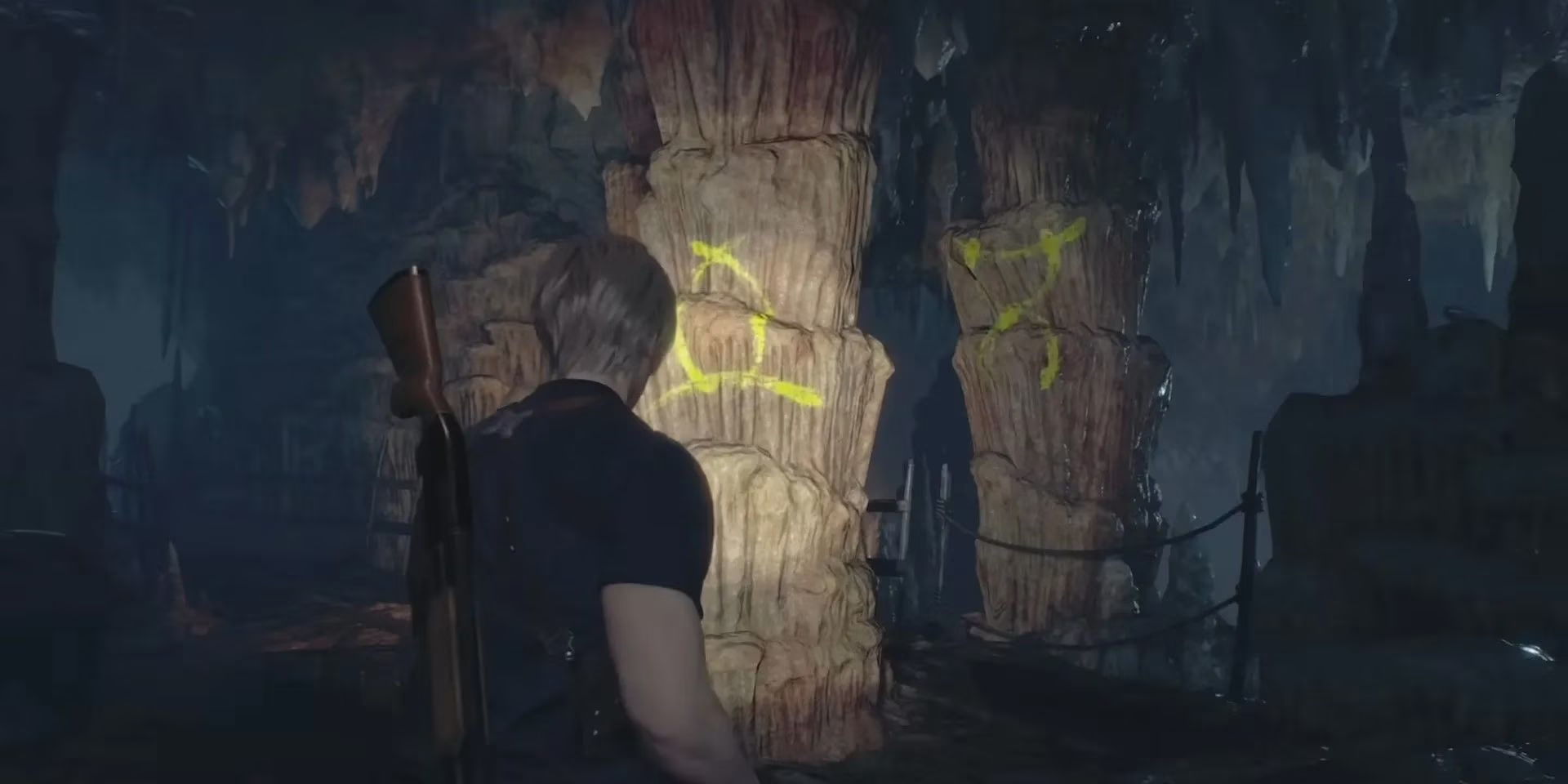
Jedi: Survivor throws Cal into a sprawling open world full of secrets. He'll run along sheer cliff faces, hoping at the end he can Force Pull a rope to access some hidden temple. The story has him searching for the planet Tanalorr, but there's no Death Star threatening to blow up a planet if he fails. So why take these insane risks? Why not just call his friends for a shuttle pickup or, I don't know, use a jetpack like his buddy Bode? The answer lies beyond gameplay mechanics.
⚡ The Force Is Your Co-Pilot: In-Universe Justification
Here's where Jedi: Survivor gets clever. The gap between player experience and character experience is huge. When you, the player, die six times trying to land a jump, that's not canon. In the story, Cal nailed it on the first try. You just experienced six alternate, failed timelines. The game is full of Star Wars canon Easter Eggs, and Cal canonically survives. He didn't mess up his double jump.
So, what's the in-universe reason? The Force. It's not just for moving rocks and mind tricks. The Force must be guiding Cal, giving him a supernatural sense of certainty. It tells him which apparent death drop is within his physical and mystical abilities. When Cal takes a running leap into the unknown, he's not being reckless; he's following the will of the Force. The Force tells Cal to have faith and jump. This transforms absurd platforming from a gameplay necessity into a core part of his character as a Jedi.
🎨 Meet Your New Best Friend: The Yellow Paint of Guidance
This brings us to the unsung hero of modern gaming: the yellow paint. You know it. That bright, obvious coat on a ledge, pipe, or crate that screams "CLIMB HERE!" Some players hate it, calling it immersion-breaking. But me? I love that yellow paint. 🥰
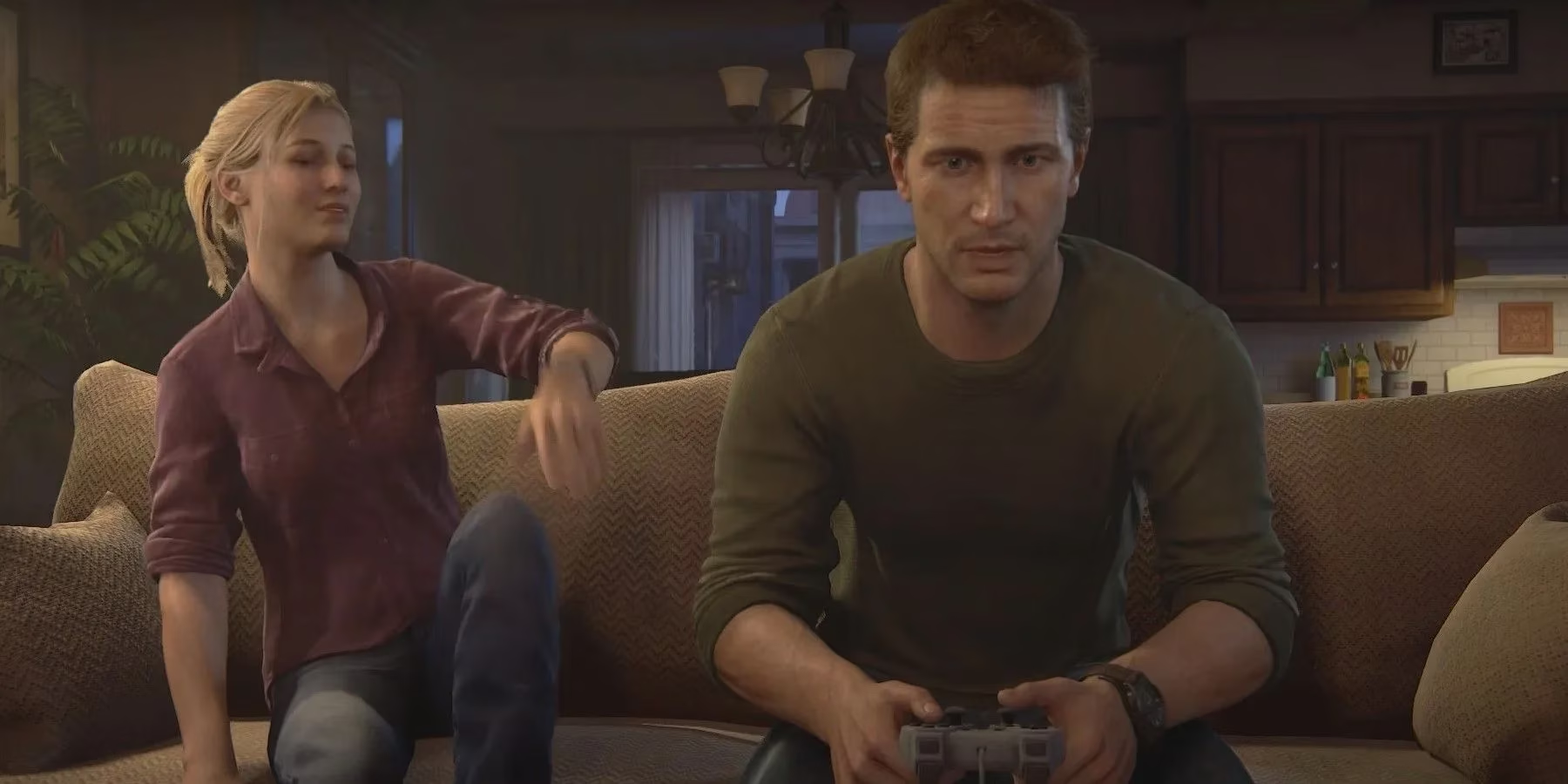
Think about it. In Jedi: Survivor, the yellow paint is the video game manifestation of the Force. It's the game's way of telling you, "Hey, as ridiculous as this looks, you can make this jump. Trust me." No one in the game's fiction talks about the yellow paint. But does Cal see it? Does Lara Croft? Maybe characters with preternatural agility, like them, have a sixth sense that manifests to the player as yellow highlights on certain ledges.
Remember the old Tomb Raider games before yellow paint? It was endless trial, error, and watching Lara plummet to her death followed by agonizingly long PS1 loading screens. The yellow paint eliminates that guesswork. That visual cue tells me I'm approaching a jump the designers intend for me to succeed at. It's a pact between the game and the player. If we had yellow paint in real life, we'd all avoid a lot of trouble (and maybe a few knee surgeries!).
🤔 When Characterization Clashes with Climbing
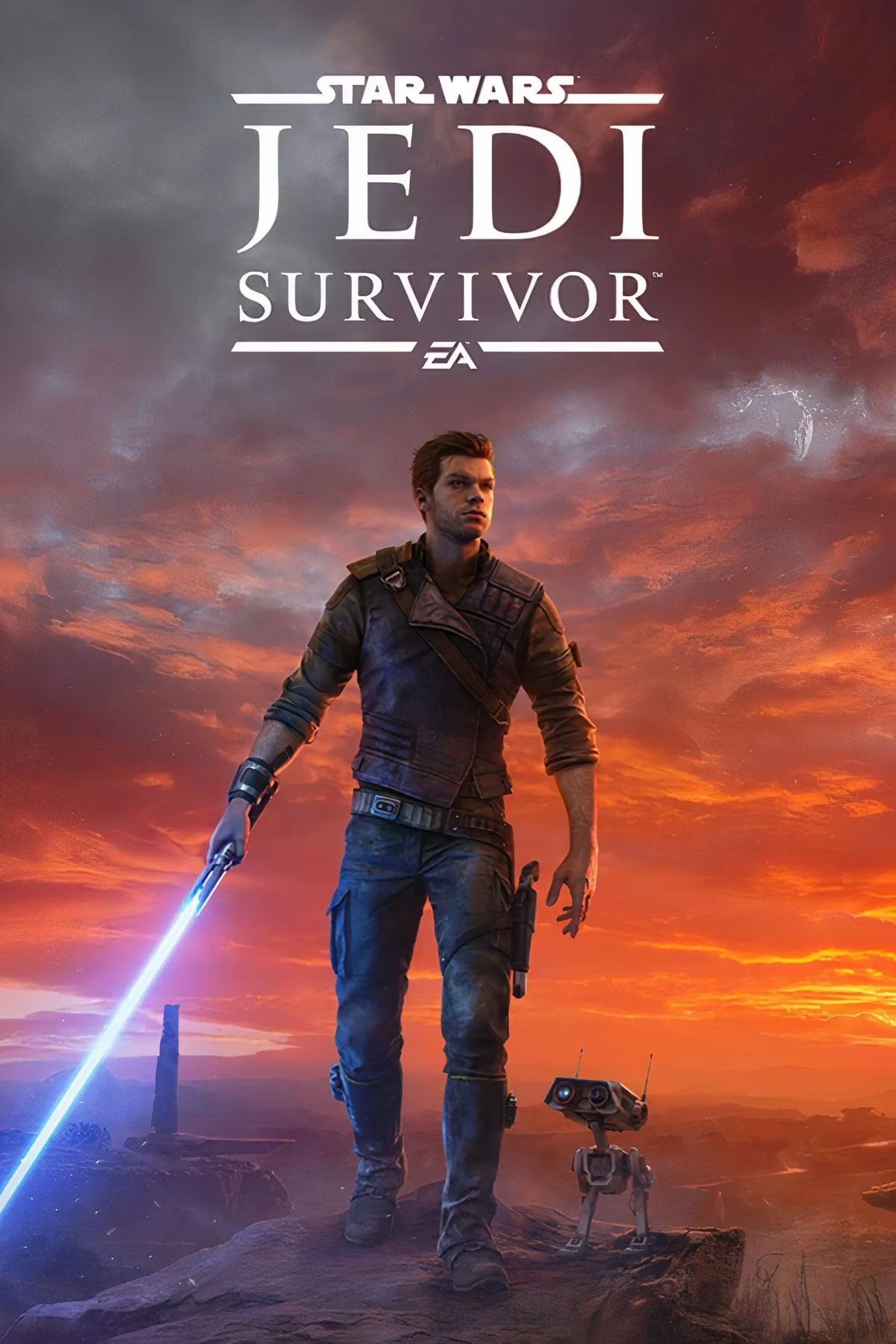
This works for Cal because he's a Jedi. But for other "realistic" heroes, it can break immersion. Take Nathan Drake. He's a fully developed character with a wife, friends, and a life. The games go to great lengths to humanize him—like showing him playing Crash Bandicoot with Elena.
So, when that same, humanized Nathan decides to fling himself across a bottomless pit just to grab a shiny trinket... it feels off. Having a realistic character take a lethal risk for no urgent stakes can shatter the illusion. He shouldn't be doing that! He should leave the nonsensical gold-coin chasing to cartoon characters like Crash. Unless, of course, we apply the Jedi: Survivor logic and imagine Nathan has his own kind of "Force"—an unbelievable luck he constantly jokes about.
✨ Conclusion: Recklessness as Character Development
Overall, Star Wars Jedi: Survivor (released in 2023 and still going strong in 2026) is an excellent sequel that builds beautifully on its predecessor. And part of its brilliance is how it justifies its gameplay. Cal's recklessness isn't a bug; it's a feature of his story. He's a young Jedi dealing with trauma and survivor's guilt, pushing his limits and trusting in the Force more than ever. Those vaults over nothingness might be his way of coping, of testing his faith and his connection to something greater.
So next time you see Cal make an impossible jump, remember: the Force is with him. And the next time you see yellow paint in Uncharted 5 (rumored to be in the works!), remember: that's your Force, guiding you through the chaos. We finally understand Cal's excuse. Now, someone please explain what Mario's is! 🍄
| Game | Hero | Excuse for Crazy Stunts | Does It Work? |
|---|---|---|---|
| Star Wars Jedi: Survivor | Cal Kestis | Guidance from The Force | ✅ Yes, it's canonical and thematic! |
| Uncharted Series | Nathan Drake | Urgent stakes, "luck" | ⚠️ Sometimes, but can break character immersion |
| Tomb Raider Reboot | Lara Croft | Survival instinct, exploration | ⚠️ Often feels terrifyingly reckless |
| Super Mario Bros. | Mario | He's a cartoon plumber! | ✅ Absolutely, no explanation needed |
In the end, Jedi: Survivor shows us that with the right narrative framework, even the most absurd video game logic can feel not just acceptable, but essential to the journey. May the Force (and the yellow paint) be with you! ✌️
Leave a Comment
Comments