
The Evolution of Villains in the Star Wars Jedi Series and the Challenge Ahead
Star Wars Jedi villains and antagonists shine with unforgettable depth, elevating the series' narrative and setting high expectations for future titles.
The Star Wars universe has consistently delivered some of the most iconic antagonists in cinematic and gaming history, with figures like Darth Vader, Emperor Palpatine, and Darth Maul leaving an indelible mark on the franchise's legacy. This tradition of compelling adversaries has been masterfully continued in Respawn Entertainment's critically acclaimed Star Wars Jedi series. With two outstanding installments already released, the narrative strength of these games is significantly bolstered by their memorable villains, who serve as perfect foils to protagonist Cal Kestis's journey. As the series looks ahead to its highly anticipated third chapter in 2026, the challenge of crafting a worthy successor to its formidable rogues' gallery looms large. The previous antagonists have set a remarkably high bar, each intricately woven into their game's core themes and emotional resonance.
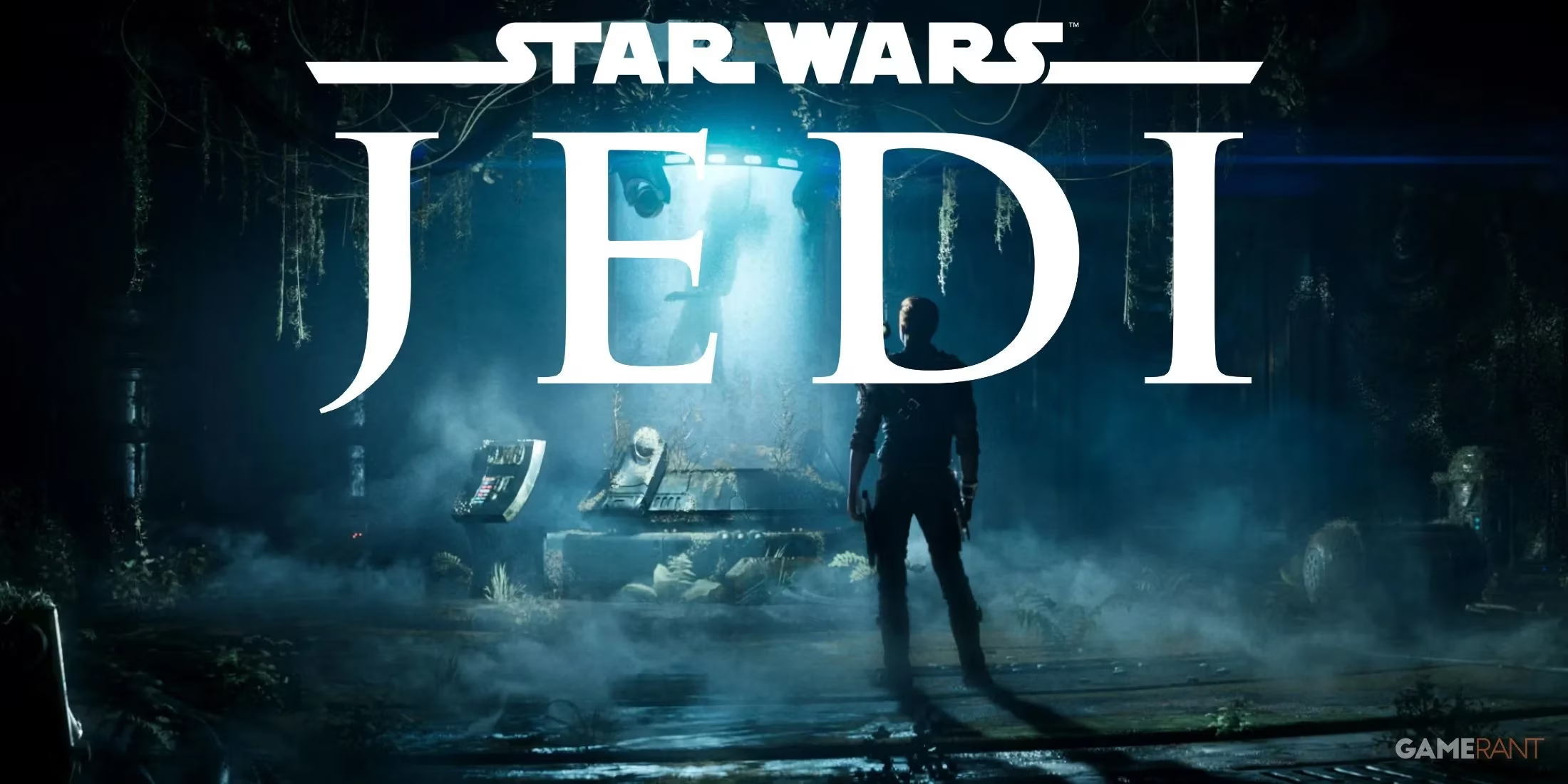
The Foundational Foes: Setting the Standard
The inaugural title, Star Wars Jedi: Fallen Order, introduced players to the haunting figure of Trilla Suduri, the Second Sister. Her narrative was a tragedy that perfectly encapsulated the game's somber tone. A former Jedi Padawan betrayed during the cataclysmic events of Order 66, Trilla's descent into darkness was fueled by the perceived abandonment of her Master. This backstory made her transformation into a relentless Imperial Inquisitor profoundly impactful. Her character was not merely an obstacle for Cal but a dark reflection of what he could become—a Jedi consumed by pain and anger. Her pursuit of Cal was driven by a deep-seated hatred for the Jedi Order, a sentiment born from her own suffering. This dynamic created a compelling psychological duel, where Cal's mission to reconnect with the Force and uphold the Jedi's legacy was constantly tested by the living embodiment of its failure.
Raising the Stakes: The Complex Antagonists of Survivor
The sequel, Star Wars Jedi: Survivor, faced the daunting task of escalating the conflict and introducing adversaries that could match the narrative weight of its predecessor. The game delivered not one, but two masterfully crafted antagonists, each serving a distinct purpose.
-
Dagan Gera: The Fallen Legend 😲
A Jedi Knight from the bygone High Republic era, Dagan Gera brought an immediate aura of grandeur and mystery. His introduction shifted the scale of the conflict, tying Cal's personal struggle to a much older, almost mythical chapter of galactic history. Preserved in a Bacta tank for centuries, Gera awoke to a galaxy that had betrayed his vision, fueling a fanatical obsession with reclaiming the past. His power and ancient techniques made the previous Inquisitors seem like mere apprentices, presenting Cal with a threat of an entirely different magnitude.
-
Bode Akuna: The Ultimate Betrayal 💔
However, the narrative's most devastating blow came from a character presented as an ally. Bode Akuna's betrayal stands as one of the series' most powerful storytelling moments. His role was pivotal in exploring Survivor's central themes of trust, family, and the desperate measures taken for survival. Bode was not a villain driven by a lust for power or ideological fanaticism; he was a father acting out of profound love and fear for his daughter's safety. This motivation made his treachery against Cal and the Mantis crew heartbreakingly understandable, adding layers of moral complexity rarely seen in typical antagonist arcs. His actions forced Cal to confront the harsh reality that in a galaxy ruled by the Empire, even the bonds of found family could be shattered by desperation.
The Looming Challenge for the Next Chapter
With such a strong foundation, the pressure on the developers for the third game is immense. Fans naturally anticipate an even grander, more threatening adversary. The series has established a pattern of villains who are deeply thematic and emotionally resonant, not just powerful combatants. To surpass Dagan Gera's imposing legacy and Bode Akuna's emotional gut-punch, the next antagonist must continue this tradition of narrative synergy.
A significant debate surrounds the potential use of legacy characters. Iconic figures like Darth Vader have made brief, terrifying appearances in both previous games, serving as unforgettable set-pieces that raised the stakes instantly. However, featuring such a character in a primary antagonist role presents a dilemma:
| Potential Approach | Advantages 🟢 | Risks 🔴 |
|---|---|---|
| Original Villain | Continues the series' strength in character creation; can be perfectly tailored to the new game's themes. | Must compete with the high standard set by Trilla, Dagan, and Bode. |
| Legacy Villain (e.g., Vader) | Instant narrative weight and sky-high stakes; a proven fan-favorite. | Could feel like a reliance on nostalgia; might overshadow Cal's personal story. |
The ideal path may involve a hybrid approach—introducing a formidable original villain who operates in the shadow of, or perhaps even in conflict with, a major legacy figure. This could allow for fresh storytelling while leveraging the established gravity of the wider Star Wars mythos. Perhaps the foe is a former Jedi Council member from the prequel era, or a ruthless Imperial warlord with a personal vendetta against the Mantis crew. Whatever direction is chosen, the antagonist must serve as more than a final boss; they must be a narrative catalyst that challenges Cal Kestis's beliefs, morals, and his very definition of what it means to be a Jedi in a broken galaxy.
Ultimately, the Star Wars Jedi series has proven that its heart lies in personal, character-driven conflict. The best villains are those who mirror the hero's struggles, forcing them to grow. As Cal's journey continues toward its inevitable climax in 2026, the galaxy awaits the next dark soul who will define this chapter of his epic saga. The stage is set for a confrontation that must be both spectacular in scale and intimate in consequence, a balance this series has so far mastered.
Leave a Comment
Comments