
The Evolution of Game Expansions: When DLC Becomes the New Sequel
Lies of P: Overture redefines the boundaries between expansions and sequels, showcasing a monumental shift in post-launch storytelling. This ambitious content blurs traditional definitions, transforming the lifecycle of beloved game worlds.
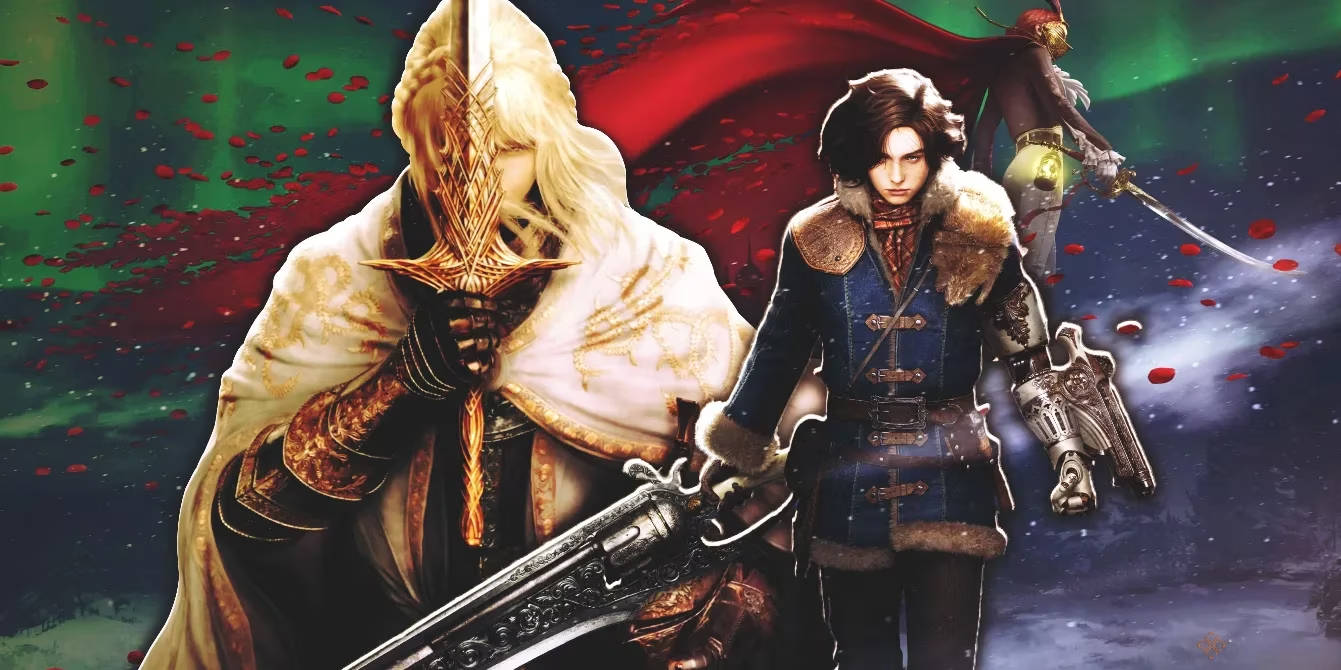
In the shimmering digital landscape of 2026, the revelation of Lies of P: Overture at a 2025 showcase sparked a quiet, profound contemplation among players and creators alike. The trailer unfolded with the melancholic grace of a forgotten melody, presenting a wintry realm distinct from the original's gilded decay, yet intimately tethered to its soul. The declaration that the base game was required settled a silent debate: this was not a sequel, but an expansion of such magnitude and artistic ambition that it blurred the very definitions of post-launch content. This phenomenon, arriving nearly two years after the original, stands as a testament to a seismic shift in the creative ethos of interactive storytelling. The understanding of what constitutes downloadable content versus a full-fledged sequel has been irrevocably transformed over the past decade, weaving a new narrative for the lifecycle of beloved worlds.
The Changing Chronology of Creation
The question of temporal investment in game development now echoes with a different resonance. Once, a sequel like BioShock 2—arriving two-and-a-half years after its predecessor, offering a refined perspective within a familiar setting—represented a standard model. In the late 2000s and early 2010s, such a timeline was often considered lengthy. Titles like Uncharted 2 were crafted in under two years, and annualized franchises were commonplace. This rhythm dictated that expansions, too, were swifter affairs; The Witcher 3's profound narrative add-ons, Hearts of Stone and Blood and Wine, were both delivered within roughly a year of the base game's launch.
Now, in the mid-2020s, the sands of the hourglass have settled into a new pattern. The gestation period for expansive, triple-A experiences has lengthened considerably, and this dilation has profoundly affected the nature of post-launch support. The industry finds itself in a curious paradox: as the time required to build entirely new worlds grows, the supplemental content for existing ones expands in tandem, filling the widening gaps between major releases with experiences of near-sequel scale.
The Grandeur of Modern Expansions: A New Paradigm
The modern expansion is no longer a mere appendage; it is a full-bodied continuation, a second act with its own epic scope. This evolution was powerfully demonstrated by pivotal releases in the years leading to 2026:
| Expansion | Base Game | Release Gap | Approximate Scale |
|---|---|---|---|
| Phantom Liberty | Cyberpunk 2077 | ~3 Years | 20+ Hours, New District, Storyline |
| Shadow of the Erdtree | Elden Ring | ~2.5 Years | 40+ Hours, Vast New Realm |
| Iceborne / Sunbreak | Monster Hunter: World / Rise | ~1.5-2 Years | Larger than many full games |
| Overture (2026) | Lies of P | ~2 Years | New Snowy Region, Narrative Arc |
These are not simple quest packs. Shadow of the Erdtree offered a landmass and challenge comparable to a major FromSoftware title. Phantom Liberty served as both a narrative capstone and a systemic redemption for its base game, a three-year labor of love and technical overhaul. These expansions demand investment—from developers and players alike—that rivals the creation of new intellectual property.
.jpg)
The Delicate Balance: Benefits and Creative Crossroads
This trend toward monumental DLC carries a complex bouquet of advantages and potential pitfalls.
✨ The Benefits:
-
Deepened Engagement: They provide a mountainous offering of new content for an established, beloved world, satisfying the community's hunger for more.
-
Cost-Effective Exploration: For players, it is often a more affordable entry into a significant experience than a brand-new $70 title.
-
Narrative Cohesion: Allows developers to explore corners of their world or untold stories without the overhead of building an entirely new engine and core systems.
-
Redemption Arcs: As seen with Cyberpunk 2077, a massive, high-quality expansion can redefine a game's legacy and rebuild player trust.
⚠️ The Drawbacks & The Crossroad:
-
The Opportunity Cost: The industry isn't merely choosing between big or small DLC; it's often choosing between a colossal expansion and a brand-new, smaller-scale game. When a team spends three years crafting Phantom Liberty, that is three years not spent on a new Witcher or an original IP.
-
The Risk of Exhaustion: There is a danger that both developers and players may experience fatigue within a single universe, craving the novelty of a fresh start.
-
Inflated Expectations: The success of these behemoths risks setting a new, unsustainable standard where any post-launch content is expected to be gargantuan, potentially stifling smaller, more experimental add-ons.
The question lingers: why opt for a $40, 40-hour expansion instead of a new, $60-70 game? The answer often lies in perceived player expectations—a fear that audiences will balk at a smaller, shorter, or less technologically revolutionary full-price sequel.
A Path Forward: Clarity, Scale, and Cadence
This learned behavior, however, is not an immutable law. History whispers of alternative models that have found success through transparent communication and adjusted expectations. Consider these examples:
-
Spider-Man: Miles Morales 🕷️: A shorter, narratively focused, and slightly lower-priced experience that sold exceptionally well, proving the market for "in-between" stories.
-
Uncharted: The Lost Legacy 🗺️: A standalone adventure that, while not matching Uncharted 4's sales, performed on par with earlier series entries, demonstrating the viability of mid-sized projects.
There is a verdant path forward that doesn't consign studios to half-decade cycles on a single title. It requires a shift in dialogue:
-
Embrace Scale Transparency: Clearly communicate when a project is a "major expansion" versus a "new, mid-sized adventure."
-
Align Price with Scope: A smaller-scale, full-game sequel or spin-off can and should carry a lower price tag, reflecting its focused design.
-
Sell the Vision of More: Frame these projects not as lesser offerings, but as a philosophy to deliver more diverse games, more often. It is an appeal to the player's desire for variety and continued exploration within beloved universes without enduring endless waits.
In an era where the gaps between flagship titles can feel like epochs, this model offers a compelling alternative. It is a reminder that between the monumental releases—the Grand Theft Auto VIs and Elder Scrolls VIs of the world—there is fertile ground for stories that are complete, crafted with care, and delivered with a rhythm that respects both the creator's ambition and the player's time. Lies of P: Overture is not just an expansion; it is a statement, a snow-blanketed chapter in the ongoing story of how we build and inhabit the worlds we love.
Leave a Comment
Comments