
The Erdtree's Shadow: How a DLC Became 2024's Most Controversial Game of the Year Nominee
Elden Ring: Shadow of the Erdtree Game of the Year nomination sparks heated debate, dividing the gaming community with its groundbreaking DLC status.
In the grand, often chaotic theater of The Game Awards, 2026 finds itself with a plot twist worthy of a FromSoftware lore dump: a downloadable content pack, Elden Ring: Shadow of the Erdtree, sitting proudly among the nominees for the coveted Game of the Year award. This isn't just a minor tremor in the gaming landscape; it's a full-blown, controller-throwing earthquake that has the community more divided than a party trying to decide between co-op and PvP. The announcement that this expansion—requiring the full base game of 2022's champion, Elden Ring, to even function—is competing against brand-new titans like Astro Bot, Black Myth: Wukong, and Final Fantasy 7 Rebirth has sparked a debate hotter than the fires of the Frenzied Flame.
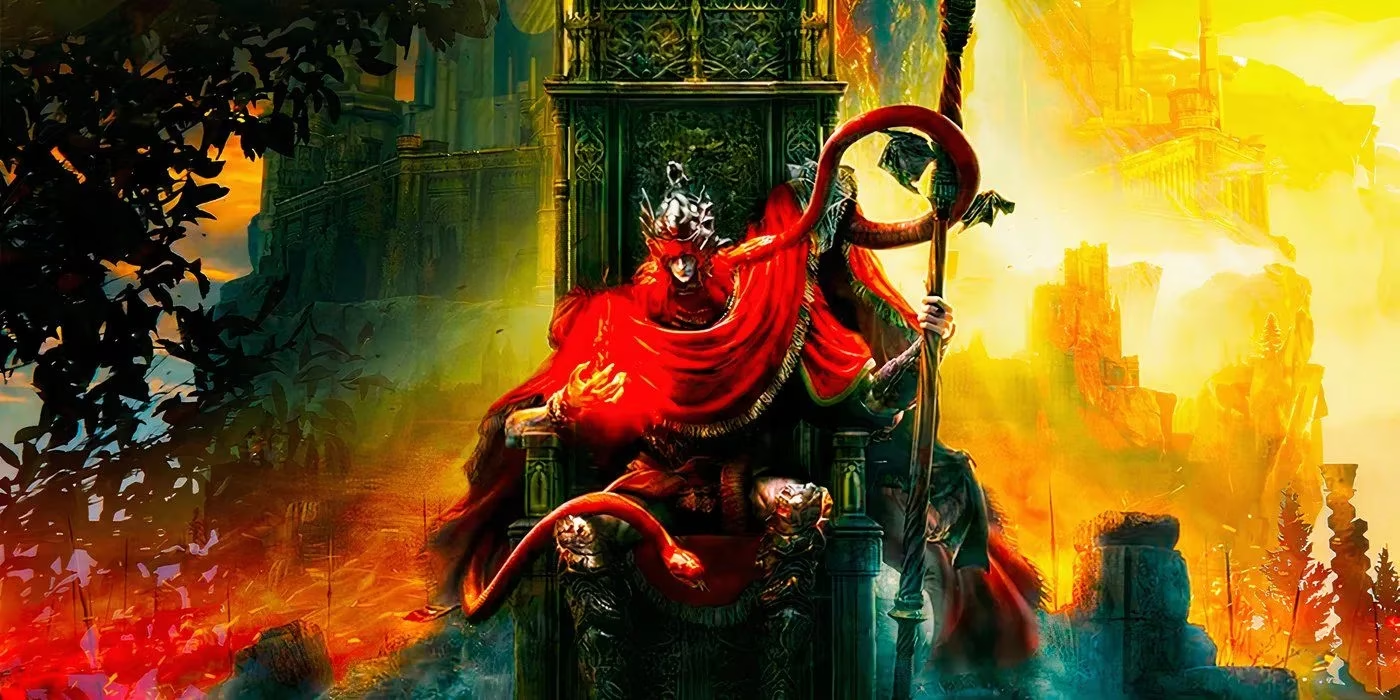
The Roots of the Uproar 🌳
The controversy sprouted faster than a Golden Seed takes root. Critics argue that Shadow of the Erdtree's nomination is like nominating a spectacular new chapter for a "Book of the Year" award—impressive, but inherently dependent on a work that already had its moment in the sun. The timing of the rule change, announced mere days before the nominees, felt to many like a rulebook being hastily rewritten in the middle of the championship match, specifically to allow a fan-favorite contender onto the field. This perception has led to accusations of favoritism so blatant it would make a Golden Order Fundamentalist blush, with some claiming the entire awards process is as rigged as a scripted NPC invasion.
The Core Criticisms:
-
Not a Full Game: It's an expansion, requiring ownership and significant progress in Elden Ring.
-
Precedent-Setting: No pure DLC has ever been nominated for GOTY at The Game Awards before.
-
Suspicious Timing: The eligibility rule change felt tailored for SOTE.
The Other Side of the Fog Wall 🛡️
However, not every Tarnished is hurling lightning spears at the screen. A vocal contingent of players and fans defends the nomination with the fervor of a Finger Maiden protecting her Lord. They argue that Shadow of the Erdtree is not just an add-on; it's a masterpiece in its own right, a content-rich experience that surpasses many full-priced releases in scope, quality, and sheer artistic ambition. To them, denying it a spot would be a greater snub than any a player has ever received from Malenia. They point to precedent in other categories, where expansions like Cyberpunk 2077: Phantom Liberty and The Witcher 3: Blood and Wine have been rightly celebrated.
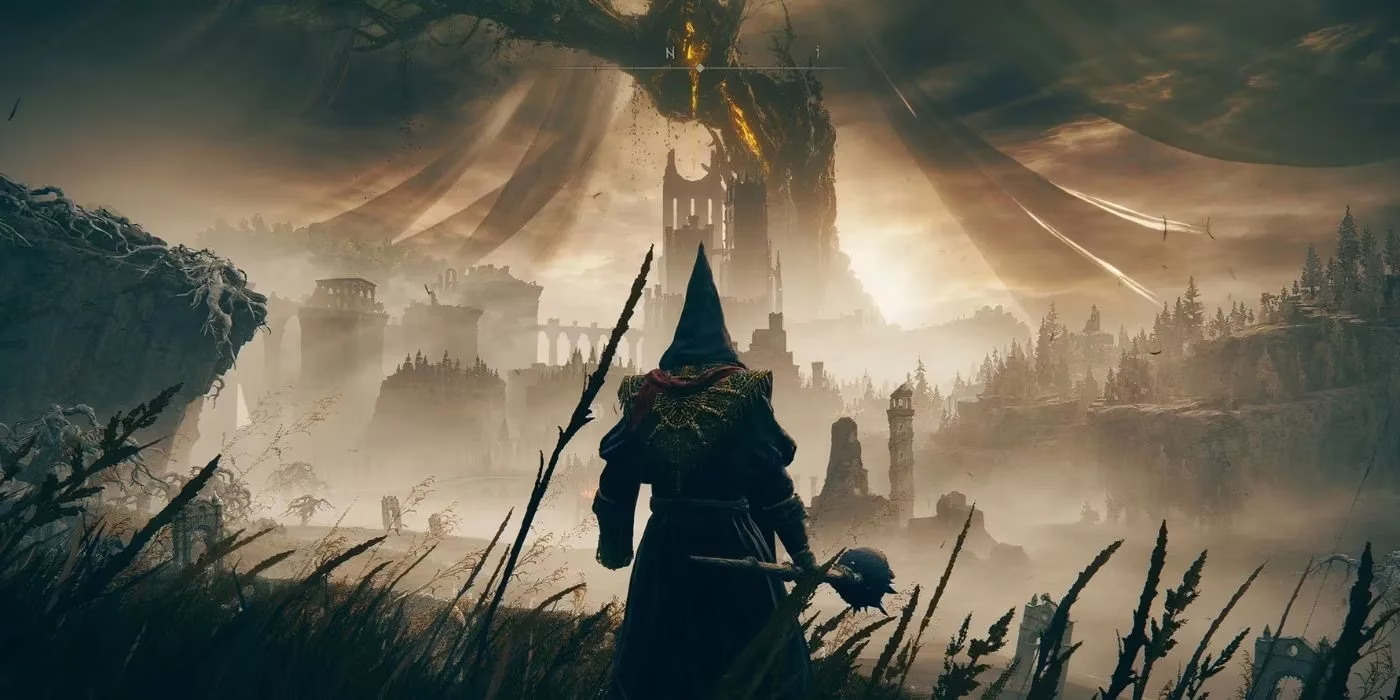
The Defense's Argument:
| Point | Explanation |
|---|---|
| Quality Over Format | It's one of 2024's best releases, period. Should excellence be disqualified by its delivery method? |
| Expansive Scope | The Land of Shadow is vast, with new lore, bosses, and weapons that feel like a wholly new game. |
| Historical Precedent | High-quality DLC has been nominated (and won) in other categories before. |
This defense posits that Shadow of the Erdtree is less like a book chapter and more like a stunning, self-contained novella published in the same universe—a work that stands powerfully on its own merits.
A Legacy at Stake: The Double GOTY Crown 👑
The stakes are uniquely high. If Shadow of the Erdtree wins, Elden Ring will achieve a feat as rare as a perfectly balanced PvP build: winning Game of the Year awards in two separate years (2022 for the base game, 2024 for the DLC). This possibility is as tantalizing to its fans as it is galling to its detractors. It would set a monumental precedent, potentially opening the floodgates for future expansions and redefining what constitutes a "game of the year."
The Uncommon Metaphors of the Conflict
-
The DLC's nomination is like a champion's regalia being altered mid-tournament to fit a returning hero. The rules were the armor all competitors expected to wear, but a last-minute adjustment made it seem tailor-made for one specific legend, leaving others feeling their own gear was suddenly obsolete.
-
The debate itself is a Siege of Leyndell in the realm of public opinion. Two massive, entrenched armies—the Purists and the Progressives—are clashing over a symbolic capital (the definition of GOTY), with volleys of forum posts and social media threads serving as their trebuchets and magic spells.
-
The expansion's quality, for its defenders, is a Miquella's Needle for the award's credibility. They see it as a pure, exceptional object capable of piercing through the chaotic, frenzied debate and stabilizing the award's true purpose: to crown the year's best experience, no matter its original packaging.
What Lies in the Land of Shadow? 🔮
As of 2026, the controversy shows no signs of abating. The nomination is locked in, and Shadow of the Erdtree will battle it out on the stage. Whether it wins or not, its presence has already forced the industry and its audience to confront fundamental questions:
-
What truly defines a game eligible for such an award?
-
Does the traditional separation between "base game" and "DLC" still hold weight in an era of expansive, live-service-like expansions?
-
Is the purpose of the award to honor the most complete new package, or the single best interactive experience released that year, regardless of format?
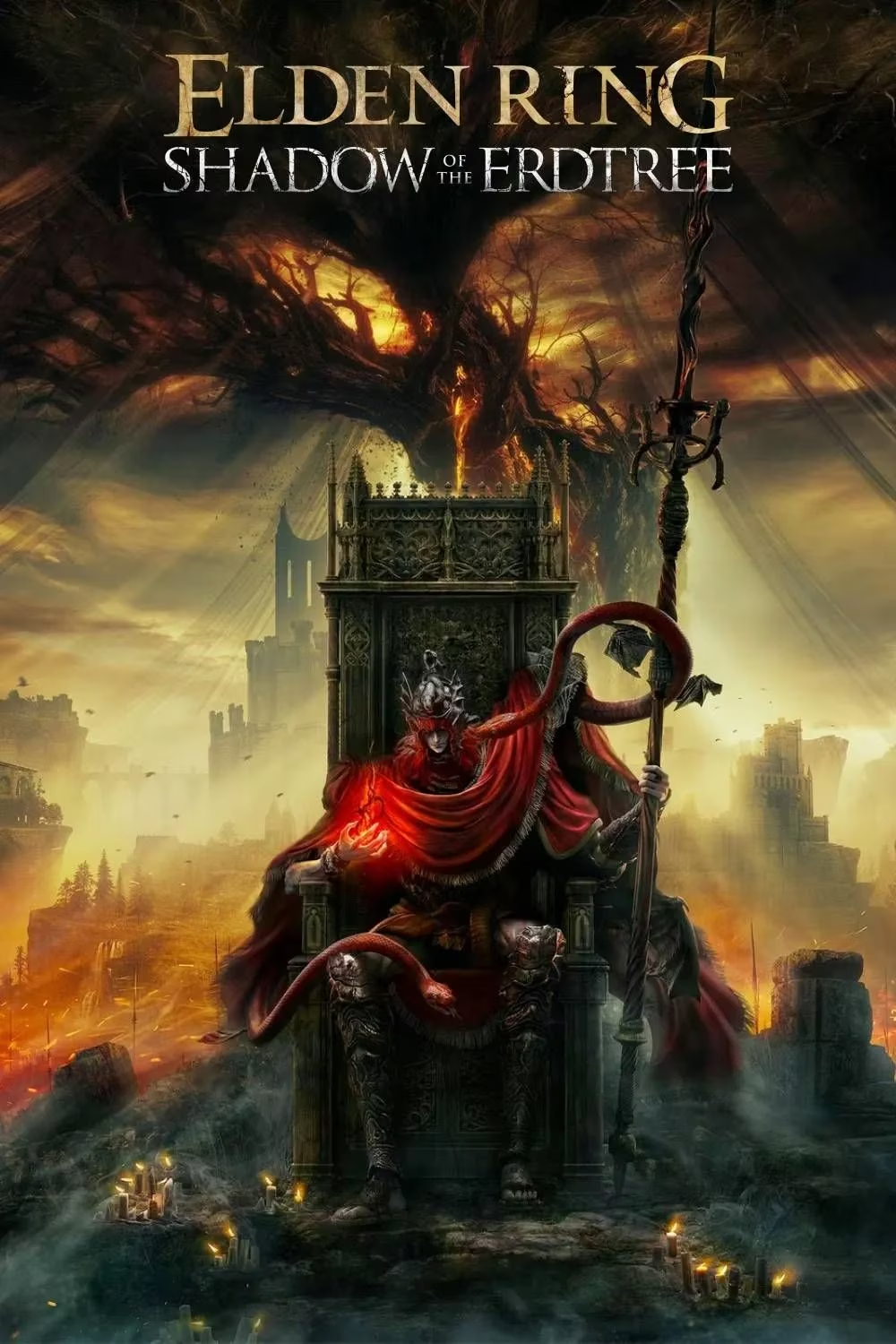
The only certainty is that the discourse surrounding Elden Ring: Shadow of the Erdtree has become as integral to 2024's gaming story as the DLC's own narrative. It has evolved from a simple question of eligibility into a sprawling meta-commentary on the state of games, awards, and fandom itself. When the winner is finally announced, the reaction will likely be as memorable as the victory—a testament to the fact that in modern gaming, the drama off-screen can sometimes rival the epic tales told on it. The Tarnished may have reached the Erdtree, but the gaming community is still very much wrestling with its long, contentious shadow.
Leave a Comment
Comments