
The DLC Dilemma: A Ghost of Awards Past Haunts Our Present
The 2026 Game Awards nominations spotlight *Cyberpunk 2077: Phantom Liberty* as a glaring omission from 2023, sparking fierce debate over DLC eligibility and historical snubs like *The Witcher 3: Blood & Wine*.
I sit here, staring at the screen as the digital confetti for the 2026 Game Awards nominations settles, and a peculiar ghost from 2023 has materialized in our midst. It's the phantom of Cyberpunk 2077: Phantom Liberty, a specter conjured not by its own absence this year, but by the very tangible, very nominated presence of Elden Ring: Shadow of the Erdtree. The official word, a quiet clarification buried in an FAQ, stated the quiet part loud: DLC, expansions, remakes—they could all wear the crown. This wasn't a new rule, they insisted, merely an articulation of an old truth. Yet, that articulation has cracked open a vault of what-ifs and simmering resentments, turning celebration into a chorus of echoes from awards past.
A Nomination That Echoes Like a Bell in an Empty Cathedral
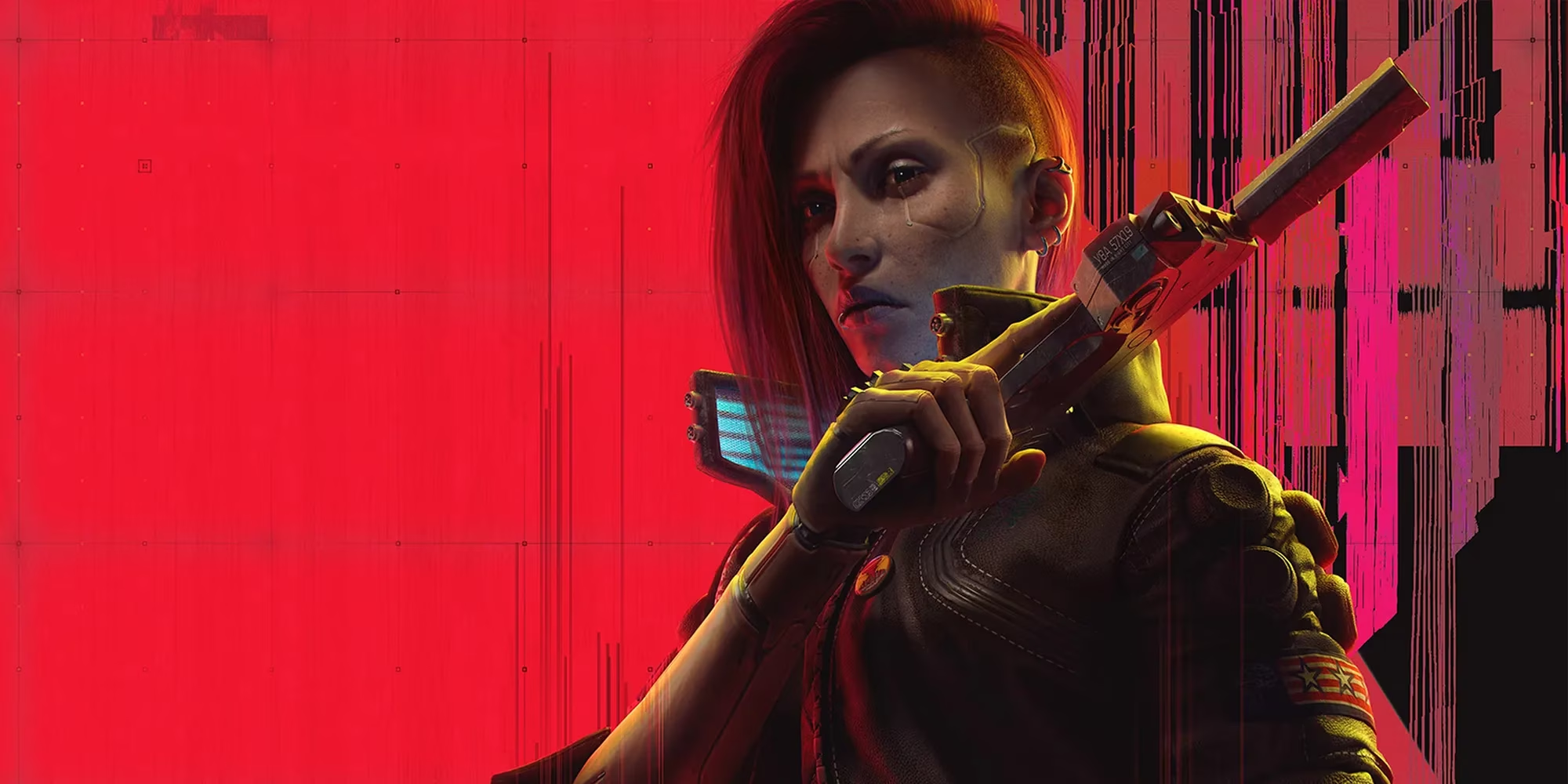
The reaction wasn't mere debate; it was a seismic shift in perspective. For many of us who journeyed through the neon-soaked, spy-thriller redemption of Phantom Liberty, this nomination feels like a delayed justice for a ghost. The argument, articulated by voices across the digital sphere, is crystalline: if the rule was always there, then Phantom Liberty was a glaring omission in 2023. It wasn't just an update; it was a narrative tour de force, a second wind that transformed Night City from a promise into a place. To see it relegated then to "Best Ongoing Game" now feels like seeing a masterpiece hung in a hallway instead of the main gallery. The sentiment isn't that it would have dethroned the titanic Baldur's Gate 3—that colossus was a rightful champion—but that it deserved to stand in that arena, to have its name called. Its absence then, highlighted by inclusion now, is a dissonant note in the awards' symphony.
Rewinding the Tape: The Unnominated Legends
This revelation has sent us, the collective gaming consciousness, spiraling down a rabbit hole of historical revision. We are now archivists of snubs, re-examining every awards season with this new, or rather newly clarified, lens. The discontent is not solitary; it's a tapestry of fandoms united by a shared sense of retrospective oversight.
-
The Witcher 3: Blood & Wine (2016): This wasn't DLC; it was a farewell novel to Geralt of Rivia, a sun-drenched, vibrant region that felt like a full game woven into another. Its absence from that year's top category now seems as glaring as a missing chapter from a beloved book. It was a love letter that never got its envelope stamped for the main contest.
-
Final Fantasy XIV: Shadowbringers & Endwalker: These expansions were cataclysmic narrative events, reshaping an entire world and its cosmology. To many, they were the emotional keystone of a decade-long saga, yet they were never in the running for the ultimate prize. Their stories were epic poems performed in a theater that only gave awards for new plays.
The list whispers on, a quiet murmur of what could have been. This retroactive scrutiny is like finding an old rulebook that changes the outcome of every past game you've ever watched.
The Core of the Contention: What Truly Defines a "Game"?
Beneath the specific grievances lies the fundamental, philosophical question the awards have inadvertently spotlighted: where do we draw the line? Is a game a discrete product, a box (digital or physical) purchased at a point in time? Or is it a living narrative experience, a story that can be told in chapters across years? Shadow of the Erdtree is monumental, a tectonic plate shift within the Lands Between, but it builds upon a foundation laid years prior. Phantom Liberty was a narrative island, accessible only from the mainland of Night City, yet it told a story that could stand alone in its emotional weight.
The anger from some corners isn't about quality—it's about category. It feels, to many, like allowing a breathtakingly beautiful new wing of a museum to compete for "Building of the Year" against brand-new, ground-up constructions. The craftsmanship might be equal or superior, but the starting point is fundamentally different. This ambiguity, this gray area as vast and nebulous as the Astral Sea, is where the discomfort breeds.
Looking Forward from a Fractured Past
As we approach the 2026 ceremony, the shadow of this debate will loom large. The nominations this year were already a minefield of cultural discourse, with titles like Black Myth: Wukong and Dragon Age: The Veilguard carrying their own heavy baggage. This DLC clarification has added a meta-layer of institutional critique. The trust in the categories themselves feels slightly eroded. If Shadow of the Erdtree wins, will it be celebrated as a landmark achievement (which it is), or will the victory feel bittersweet, a reminder of the ghosts it raised? The conversation has irrevocably changed. We, the players, are now looking at the awards not just as a celebration of the present, but as a curator of history, and we've begun to question the cataloging system. The genie of retroactive eligibility is out of the bottle, and no amount of wishing will stuff the phantoms of expansions past back inside. Our collective memory has been triggered, and it's asking for a recount of every digital year that has passed.
Leave a Comment
Comments