
Star Wars Outlaws vs Jedi 3: Has Ubisoft Redefined Open-World Star Wars?
The revolutionary open-world freedom of 'Star Wars Outlaws' has dramatically raised the bar for galactic exploration, potentially casting a shadow over the more confined, story-driven experience of the acclaimed 'Star Wars Jedi' series.
The galaxy far, far away has finally opened up its doors in a way never seen before. For years, fans dreamed of freely roaming iconic Star Wars planets, and in 2026, Star Wars Outlaws has delivered just that. Ubisoft's ambitious project has set a new benchmark for exploration, immersing players in sprawling sandboxes filled with smuggler intrigue. But what does this mean for other beloved series, like the critically acclaimed Star Wars Jedi franchise? Has the success of Outlaws raised the bar so high that the hotly anticipated Star Wars Jedi 3 will feel constrained by comparison? Let's dive into the new frontier of Star Wars gaming.
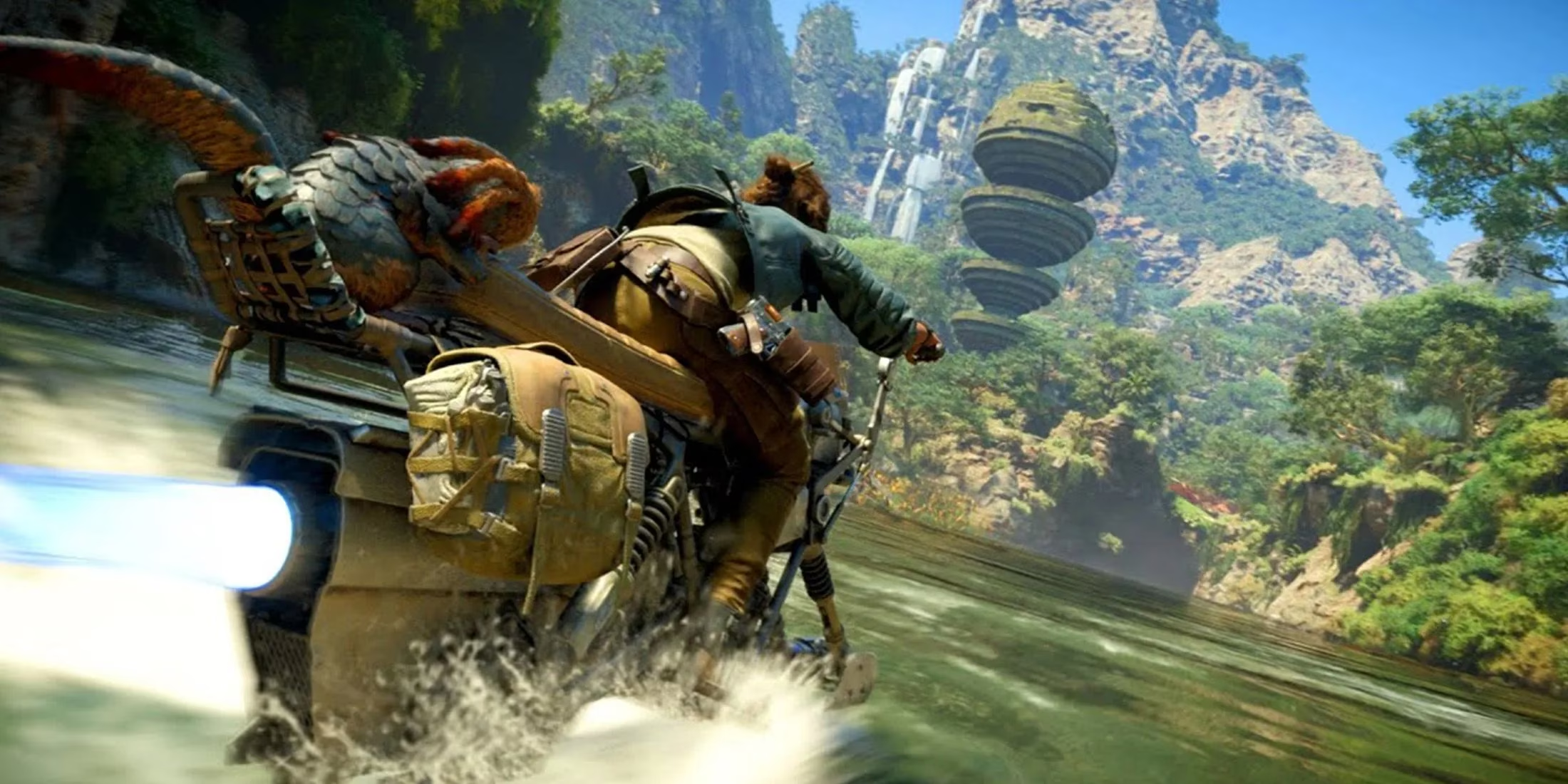
🌌 The Outlaws Experience: Freedom at Lightspeed
From the moment players take control of Kay Vess, Star Wars Outlaws makes one thing clear: this is a different kind of Star Wars story. Gone are the lightsabers and Force powers; in their place is the gritty, high-stakes life of a smuggler. The game's true magic lies in its five beautifully realized planets:
-
Cantonica: Kay Vess's homeworld and the glitzy location of Canto Bight. Your adventure begins here.
-
Toshara: A brand-new planet created for the game, offering unique vistas.
-
Tatooine: The iconic desert world, finally fully explorable. Fans can now track down every corner of Mos Eisley and beyond.
-
Akiva & Kijimi: More iconic locales ripped straight from the films, each filled with stories and collectibles.
Four of these planets are genuine open-world maps. Massive Entertainment has crafted them with such loving detail that they feel lived-in and vast. Players aren't just passing through levels; they are inhabiting a slice of the galaxy. This sense of immense freedom—hopping on a speeder and just going—has created an unforgettable experience. It begs the question: once you've had this taste of total freedom, can you ever go back to a more guided path?
⚔️ The Jedi Conundrum: Brilliant But Confined?
Now, let's look at the Star Wars Jedi series. Respawn Entertainment has built something incredible:
| Feature | Star Wars Jedi Series | Star Wars Outlaws |
|---|---|---|
| Core Gameplay | Soulslike combat, Metroidvania exploration | Open-world smuggling, stealth, action |
| World Design | Contained, intricate levels | Vast, seamless open-world planets |
| Player Freedom | High within curated paths | Near-total sandbox freedom |
| Story Focus | Linear, character-driven epic | Player-driven, faction-based narrative |
The Jedi games have been praised for their tight combat, fantastic story following Cal Kestis, and clever world design. However, their worlds are inherently more constrained. Think of them as incredibly detailed dioramas. Jedi: Survivor's Koboh was a step toward openness, but it still paled in scale next to the planets in Outlaws. Is this a bad thing? Not necessarily. The focused, curated experience allows for intense storytelling and challenging gameplay. But in 2026, after players have spent dozens of hours freely exploring Tatooine, will returning to a series of connected levels feel like a step back?
🤝 Can These Two Worlds Coexist?
The beauty of Star Wars is its variety. For decades, fans have enjoyed everything from flight simulators (Squadrons) to tactical shooters (Republic Commando). There's absolutely room for both the open-world grandeur of Outlaws and the focused, narrative-driven action of Jedi.
However, inspiration is a two-way street. Here’s what each series could learn from the other:
What Jedi 3 Could Learn from Outlaws:
-
Scale Up the Playground: Jedi 3 doesn't need five full planets, but one or two truly open, explorable regions would be a game-changer. Imagine freely traversing a massive chunk of a jungle moon or a corrupted city-planet as Cal.
-
More Organic Side Content: Instead of collectibles hidden in nooks, fill the world with dynamic events, hidden Force echoes that tell stories, and optional puzzles in the environment.
-
Seamless Travel: The transition from on-foot to piloting the Mantis could be seamless, enhancing the feeling of being a true galactic wanderer.
What a Future Outlaws Could Learn from Jedi:
-
Combat Depth: Jedi's lightsaber combat is second to none. While Outlaws has its own style, incorporating more nuanced melee or gadget-based combat could add layers.
-
Narrative Pacing: The Jedi series excels at emotional, character-driven moments. Weaving more of that into the open-world framework would create an even richer story.
-
Environmental Storytelling: Jedi uses its levels to tell silent stories. Applying that density of detail to an open world would make exploration even more rewarding.
🔮 The Future of Star Wars Gaming
Star Wars Outlaws has done something monumental: it has proven that a true, large-scale open-world Star Wars game is not only possible but can be spectacular. It has shown players the potential of the galaxy. This success undoubtedly puts a gentle pressure on all future titles, including Star Wars Jedi 3. Players' expectations have evolved.
The key for Respawn won't be to copy Ubisoft's blueprint, but to reinterpret openness within the Jedi framework. Maybe Cal's next journey involves stabilizing a whole planet, requiring him to explore large, interconnected biomes freely. Perhaps the story itself becomes more nonlinear, with the order of planets visited affecting the narrative.
Ultimately, 2026 is a great time to be a Star Wars gamer. We have Outlaws offering boundless freedom and the promise of Jedi 3 continuing a beloved, focused saga. They represent two brilliant sides of the same coin. The success of Outlaws isn't a threat to Jedi; it's an invitation. An invitation for the entire galaxy of Star Wars games to dream bigger, to make worlds feel more alive, and to give fans new ways to live out their adventures in that beloved galaxy far, far away. The Force is strong with both approaches, and their coexistence only makes the gaming universe richer. The question is no longer if we want more, but how spectacular the next journey will be.
Leave a Comment
Comments