
Star Wars Outlaws and the Canon Conundrum: Balancing Lore, Fatigue, and Future Games
Exploring the intricate balance of Star Wars canon, the commercial performance of *Star Wars Outlaws* highlights the critical tension between franchise fatigue and narrative immersion in canonical storytelling.
In the sprawling expanse of the Star Wars galaxy, a new story unfolded in 2025 with the release of Ubisoft's open-world action game, Star Wars Outlaws. Set in the turbulent era between The Empire Strikes Back and Return of the Jedi, the game cast players as the cunning thief Kay Vess, who must assemble a ragtag crew for one monumental, life-altering heist. As part of Disney's continued expansion into interactive entertainment, Outlaws aimed to join the ranks of celebrated titles like Jedi: Fallen Order and Jedi: Survivor. However, despite generally positive critical reception, the game's commercial performance fell short of Ubisoft's ambitious expectations. This outcome sparked a broader conversation within the fandom, highlighting a growing tension between the desire for new adventures and a palpable sense of franchise fatigue.
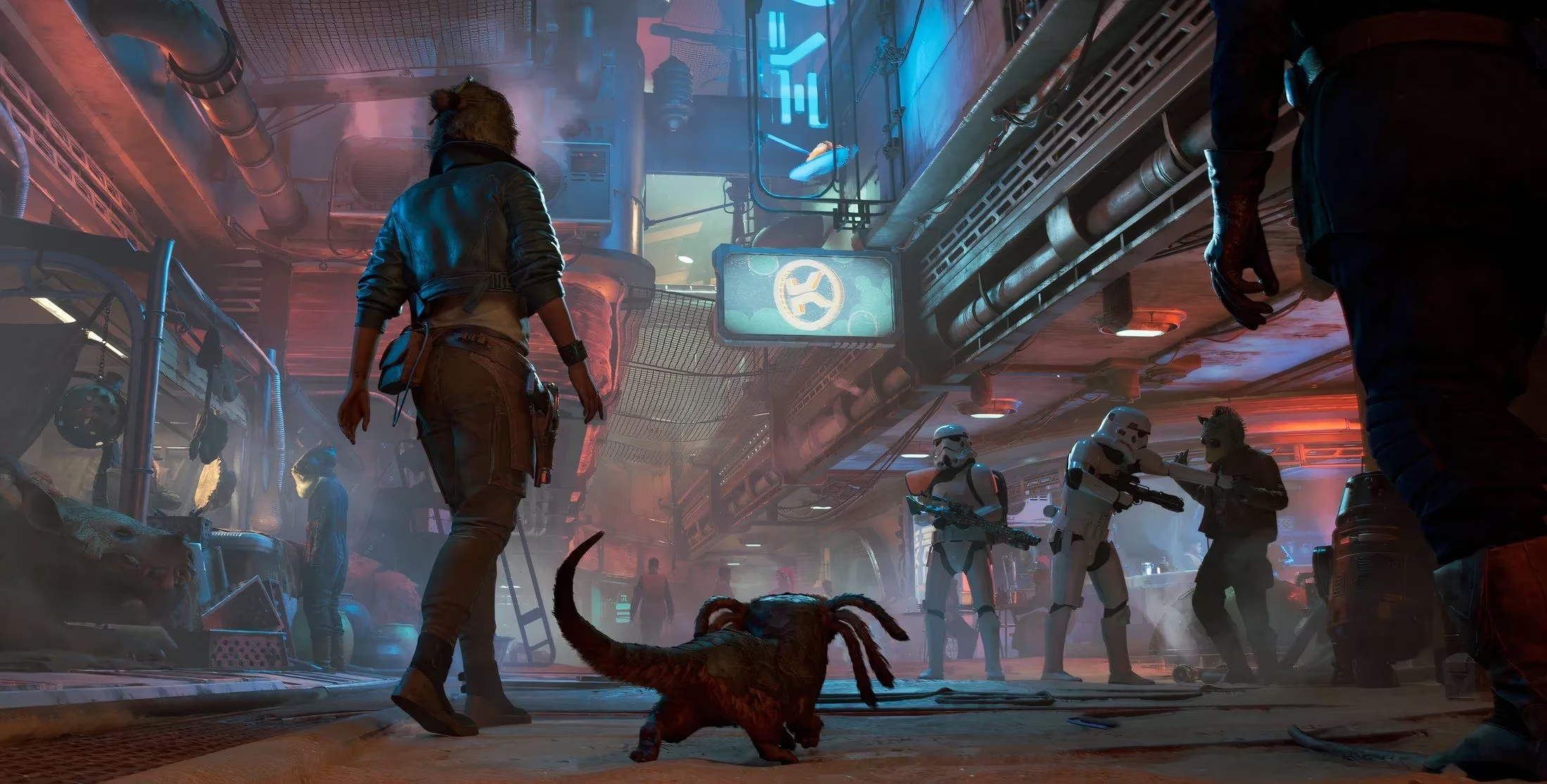
The underwhelming sales of Star Wars Outlaws cannot be attributed to a single flaw. While some critics pointed to repetitive mission structures, a more significant factor emerged: audience exhaustion. The relentless pace of new Star Wars content—spanning blockbuster films, streaming series, novels, comics, and video games—has created a daunting barrier for even the most dedicated fans. This constant bombardment has, for many, stripped the galaxy far, far away of its sense of mystical wonder and scale. Keeping up with the interconnected timeline has become a part-time job, transforming what was once escapist fun into a chore. The release of Outlaws, therefore, landed in a market increasingly saturated and selective, forcing a crucial question: what is the future for canonical Star Wars video games?
On one hand, the power of canon is immense. Making a game part of the official Star Wars story grants it weight and consequence. Players feel their actions resonate within a universe they love. Abandoning canon, as some have suggested in light of Outlaws, risks alienating a core segment of the community. A non-canonical game can feel like a hollow exercise, a mere "What-If?" scenario where stakes are lowered because the events ultimately "don't count." The emotional investment, the feeling that one is truly participating in Star Wars history, is significantly diminished. Furthermore, canonical games have proven invaluable for enriching the lore and making it accessible.
Consider the resounding success of Jedi: Fallen Order. It didn't just tell a compelling story about Cal Kestis; it masterfully expanded upon the Inquisitors, a faction previously seen in the animated series Star Wars Rebels. The game introduced these fearsome Jedi hunters to a whole new audience who may not have watched the cartoons. Its portrayal was so effective that it directly influenced their depiction in the live-action Obi-Wan Kenobi series. This interconnectivity creates a rich, living galaxy that rewards dedicated fans. It makes the universe feel vast yet coherent, where stories in one medium ripple out to affect others. This tapestry of narratives is a double-edged sword, however.
The downsides of an ever-expanding, tightly-woven canon are becoming harder to ignore. Disney has faced criticism for steering Star Wars toward a Marvel Cinematic Universe-style model, where every piece of content is a mandatory chapter in a grand saga. The timeline between major film events is now densely packed with stories from games, shows, and books. For the casual fan, this creates a confusing labyrinth. When does this game take place? Does it connect to that show? Is it essential viewing? The burden of knowledge can be overwhelming, pushing people away rather than drawing them in. The promise of an interwoven narrative becomes a threat of homework.
For developers, crafting a new canonical game is a narrative minefield. First, there's the issue of dramatic stakes. Most modern games are set in established historical periods where the ultimate outcomes are already known. In Fallen Order, players knew Cal Kestis couldn't possibly rebuild the Jedi Order, as that history was sealed by the original trilogy. This inherent limitation can undercut the tension of a protagonist's journey, no matter how well-told. Secondly, the sheer volume of existing lore makes originality a monumental challenge. Finding an unexplored corner of the galaxy, a fresh conflict, or a new character archetype that doesn't contradict established canon is increasingly difficult. Each new game adds another layer, making the task for the next writing team even harder.
Yet, the desire for new, high-quality Star Wars games remains strong. The triumphs of Jedi: Fallen Order and Jedi: Survivor prove there is a hungry audience for immersive, story-driven experiences set in this universe. The key may lie in strategic innovation. As the period between Revenge of the Sith and The Force Awakens becomes overcrowded, perhaps it's time to look elsewhere. 🚀
Potential paths forward could include:
-
Exploring Untapped Eras: Venturing far into the past of the Old Republic or the distant future beyond the Skywalker saga.
-
Embracing "Canon-Adjacent" Stories: Telling smaller, personal tales that exist on the fringes of major events, minimizing direct conflict with established lore.
-
Reviving the "Legends" Spirit: Creating bold, non-canonical games like the beloved Star Wars: The Force Unleashed, which, freed from continuity constraints, could deliver unprecedented power fantasies and imaginative scenarios.
The journey of Star Wars Outlaws serves as a critical data point. It highlights that while the foundation of canon is powerful, the structure built upon it is becoming precarious. The future of Star Wars gaming may depend on a more flexible approach—one that honors the rich history of the franchise while daring to build new playgrounds where creativity, not continuity, is the primary force guiding development.
Leave a Comment
Comments