
Star Wars Jedi: Survivor's Boss Battles: A Tale of Repetition and Missed Opportunities
Star Wars Jedi: Survivor's boss fights, featuring Dagan Gera and Rayvis, blend epic battles with uneven narrative impact and thrilling gameplay.
In the sprawling galaxy of Star Wars Jedi: Survivor, Cal Kestis faces a pantheon of foes, from legendary creatures to cunning bounty hunters. Yet, not all clashes of lightsabers and wills are forged equally. While the sequel builds upon the foundation of its predecessor, Fallen Order, it stumbles in crafting a boss battle roster that balances narrative weight with mechanical satisfaction. Why do some encounters, like the fearsome Gen'Dai Rayvis, leave a lasting impression, while others, such as the repeated clashes with Dagan Gera, fade into the background noise of galactic conflict?
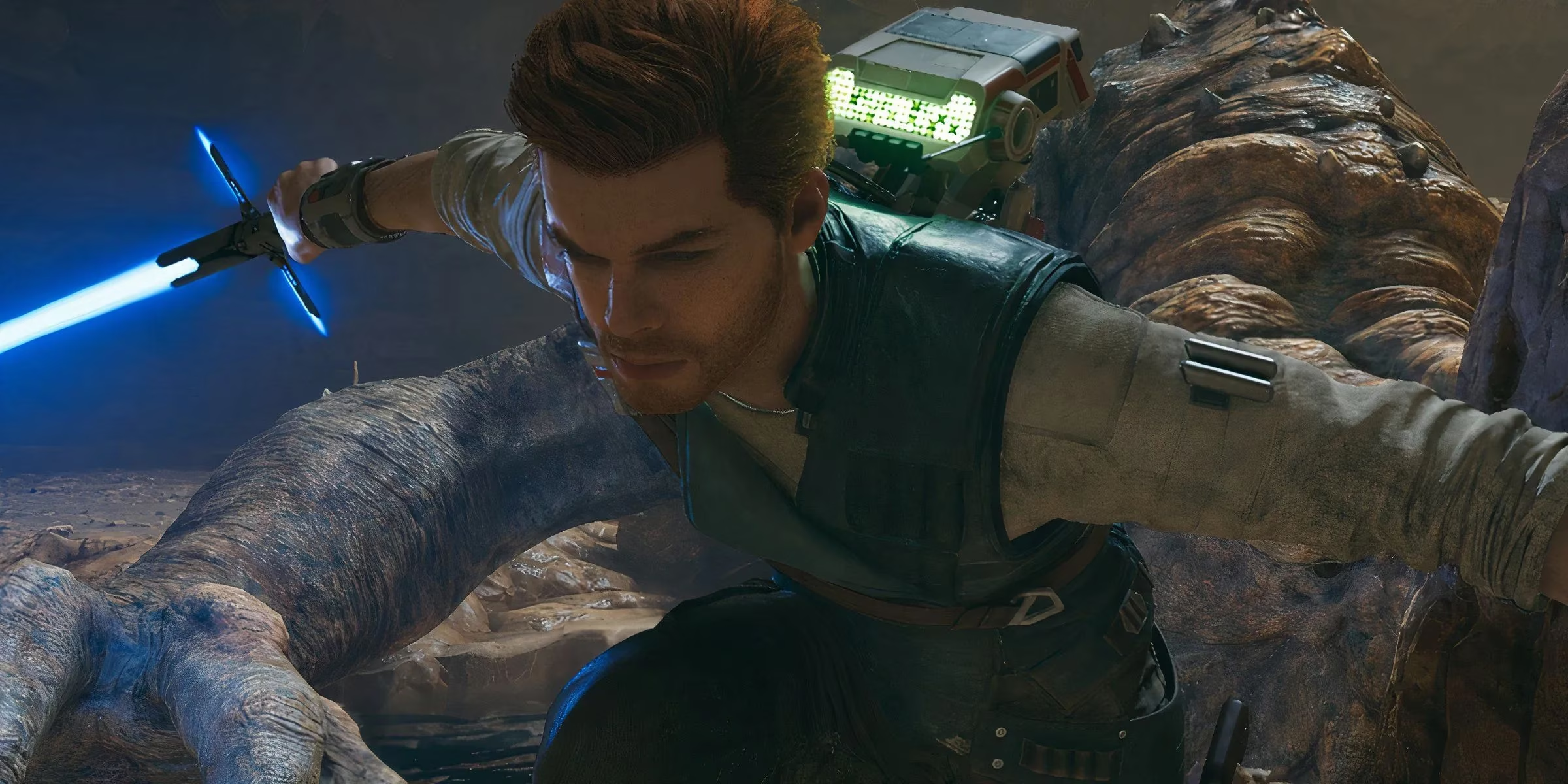
The Curse of Repetition: Dagan Gera's Forgettable Trilogy
Dagan Gera stands as the game's lead antagonist for much of the journey, a role that seemingly demands a memorable presence. Respawn Entertainment, perhaps taking a page from Fallen Order's Second Sister, Trilla Suduri, structures his arc around multiple confrontations. However, here lies the core issue: Dagan Gera lacks the narrative depth to sustain three separate boss fights. His character remains frustratingly static—a rogue Jedi obsessed with Tanalorr, with little evolution or nuance between encounters. The fights themselves, while competent, become procedural checkpoints rather than dramatic crescendos. They bloat the game's runtime without offering significantly escalating challenge or revealing new facets of his personality. 🤔
This stands in stark contrast to Trilla's arc in Fallen Order. Her repeated encounters with Cal were compelling because each duel peeled back another layer of her tragic past as a former Jedi Padawan turned Inquisitor. Players learned more about her torment and her flickering connection to the light side with each clash. Her ultimate demise was devastating because of that built-up complexity. Dagan's death, however, feels almost like an afterthought, quickly overshadowed by Bode Akuna's earth-shattering betrayal. In the end, Dagan is reduced to a narrative stepping stone, his trio of fights a testament to quantity over quality.
The Rayvis Paradox: Quality Over Quantity
In a fascinating twist, the game's most mechanically satisfying and memorable boss fight belongs to a character with minimal plot significance: Rayvis, the Gen'Dai warlord. Here is a lesson in impactful design. Rayvis boasts only a single, dedicated boss encounter, yet it resonates far more powerfully than Dagan's trilogy. Why does this work?
| Aspect | Dagan Gera (Multiple Fights) | Rayvis (Single Fight) |
|---|---|---|
| Narrative Role | Lead Antagonist (until Act 3) | Secondary Antagonist / "The Muscle" |
| Character Depth | Static, single-minded obsession | Intimidating presence, honorable warrior code |
| Fight Design | Competent but repetitive variations | Unique, two-phase battle with distinct mechanics |
| Lasting Impact | Low; quickly eclipsed by Bode | High; a standout combat challenge |
Rayvis's fight is a masterclass in escalation. The buildup is perfect: multiple tense standoffs where he and Cal nearly come to blows, including a brilliant moment where Cal futilely stabs him, only for the nearly unkillable Gen'Dai to shrug it off. 😲 The battle itself features two distinct, challenging phases that feel entirely unique within the game's roster. No other enemy moves or fights like Rayvis. He is a spectacle of pure combat prowess, proving that a boss doesn't need to be the central villain to be unforgettable. His role as "the muscle" for Dagan, and later being eclipsed by Bode, ironically makes his singular moment in the spotlight shine all the brighter.
The Epidemic of Recycled Encounters
Beyond the primary antagonists, Jedi: Survivor suffers from a pervasive issue of enemy replication. Many bosses adorned with health bars are simply stronger versions of regular foes. The Haxion Brood bounty hunters, for instance, offer little variety; players often fight the same archetypes, with the only difference being the duo or trio they appear in. Even the meme-worthy Rick, the Door Technician, while a fun surprise, is fundamentally a reskinned Bedlam Raider with a fancy title. This design approach makes the world feel smaller and less surprising.
Consider what gets lost: the thrill of encountering a truly unique foe with unpredictable patterns. When every legendary creature or Raider commander uses a familiar moveset, the sense of adventure diminishes. The game's best moments—like facing Rayvis or the haunting, unscripted terror of a Rancor—work because they break this mold. They force the player to adapt, learn, and engage fully, rather than relying on muscle memory from previous trash mob encounters.
Lessons for the Future: What Should a Jedi's Final Chapter Learn?
As fans look ahead to the inevitable third chapter in Cal Kestis's saga, the boss battles of Survivor offer clear lessons. A potential final confrontation with a supreme antagonist doesn't need to follow the Dagan model of multiple, diluted fights. Instead, imagine a structure inspired by Rayvis:
-
Build Up Through Story, Not Just Fights: Create a villain as complex as Trilla, where each interaction (not necessarily a full boss battle) deepens the conflict.
-
Make Each Encounter Meaningfully Different: If there are multiple fights, each should represent a dramatic shift in the antagonist's abilities, mindset, or the environment. Think less "more health and damage," more "completely new phase with unique mechanics."
-
Cherish Uniqueness: Not every major foe needs to be the main villain. Supporting antagonists with one phenomenal, tailored fight can be more impactful than a central villain with three mediocre ones.
-
Avoid Boss Inflation: A health bar does not a true boss make. Reserve the title for encounters that are narratively significant and mechanically distinct.
In 2026, the standards for action-adventure games are higher than ever. Players crave novelty and emotional weight. Star Wars Jedi: Survivor delivers moments of brilliance, like the claustrophobic duel with Darth Vader or the brutal ballet against Rayvis, but it's held back by a reliance on repetitive structures and recycled adversaries. The Force is about growth, change, and overcoming unique challenges. The next game's greatest foes should embody that same philosophy, offering battles that test not just Cal's reflexes, but a player's ability to adapt and feel the stakes of a galaxy far, far away. Will the final chapter learn from these mistakes, or will it repeat them? Only time, and the developers at Respawn, will tell. ✨
As players eagerly anticipate the next installment in the Jedi series, it's essential to stay connected with the gaming community and explore resources that enhance the experience. Whether it's discovering new strategies, diving into game lore, or finding the latest updates and news, engaging with fellow enthusiasts can make a significant difference. One such platform that offers a comprehensive array of gaming insights is Lootbar. Here, fans can delve into discussions about game mechanics, share tips, and stay informed about upcoming releases that shape the gaming landscape.
Exploring platforms like Lootbar not only enriches the gaming experience but also fosters a sense of community among players. By sharing experiences and insights, fans can collectively appreciate the intricate designs and narratives that make games like Star Wars Jedi: Survivor memorable. As we look forward to future adventures in the galaxy, the value of being part of an informed and passionate gaming community cannot be overstated. So, whether you're strategizing for the next epic boss battle or simply connecting with like-minded players, resources like Lootbar can be an invaluable part of your gaming journey.
Leave a Comment
Comments