
Star Wars Jedi: Survivor and Other AAA Titles Face Performance Issues on PlayStation 5 Pro
Star Wars Jedi: Survivor PS5 Pro performance issues and graphical glitches highlight challenges with PlayStation Spectral Super Resolution technology.
In late 2026, publisher Electronic Arts has formally acknowledged and is actively investigating performance and graphical issues affecting Star Wars Jedi: Survivor on Sony's latest flagship console, the PlayStation 5 Pro. The sequel to 2019's acclaimed Jedi: Fallen Order finds itself among a growing list of high-profile games experiencing technical difficulties on the enhanced hardware. While the game's performance on PC was a significant point of criticism at its 2023 launch, subsequent updates from developer Respawn Entertainment had largely stabilized the experience across platforms. However, the transition to the PS5 Pro's advanced capabilities has introduced new challenges, with players reporting specific graphical anomalies that impact gameplay.
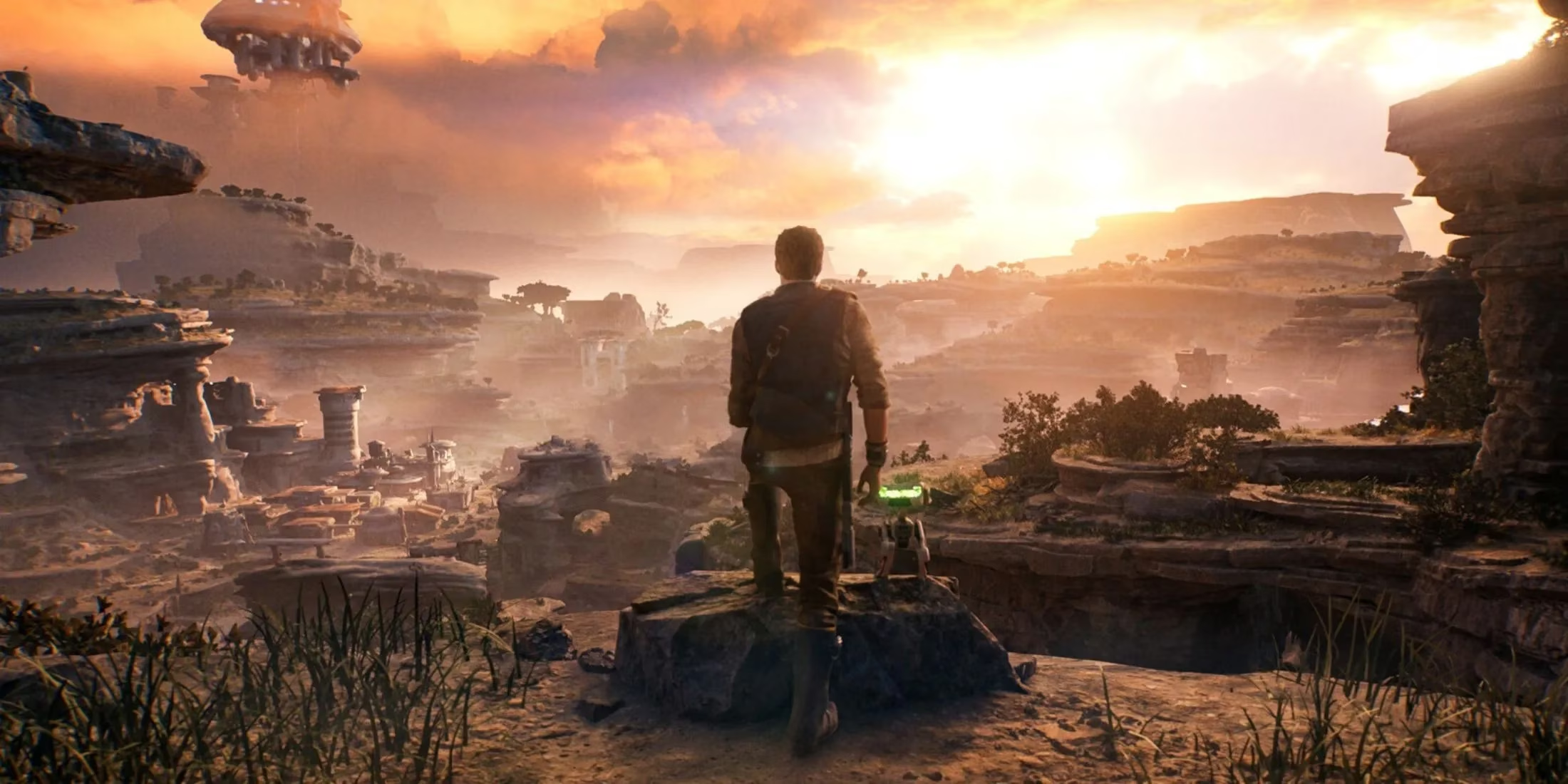
The core of the problem, as identified by technical analysts like Digital Foundry, appears to be linked to the PlayStation 5 Pro's proprietary PlayStation Spectral Super Resolution (PSSR) technology. This AI-driven upscaling feature is designed to deliver sharper, more detailed images by intelligently enhancing textures. For Star Wars Jedi: Survivor, however, activating the Performance Mode—which prioritizes higher frame rates—triggers noticeable graphical glitches. Players and analysts have documented issues such as persistent texture flickering and a general instability in visual rendering, which suggests the game's engine is not fully optimized to interface with the PSSR pipeline in its current state. EA's public statement confirms the studio is examining these specific interactions.
😟 Key Reported Issues in Jedi: Survivor on PS5 Pro:
-
Texture flickering and pop-in during gameplay.
-
Performance degradation in Performance Mode compared to the base PS5 version.
-
Visual instability potentially linked to the PSSR upscaling process.
Importantly, Star Wars Jedi: Survivor is not an isolated case. The PS5 Pro's PSSR feature seems to be a common factor in performance disruptions across several major titles. This indicates a potential platform-level teething problem with how the AI upscaling integrates with diverse game engines. For instance, the highly anticipated Call of Duty: Black Ops 6 has also been flagged by its community for similar troubles. Players have reported a pronounced "shimmering" or hazing effect on-screen, particularly when the game is set to its 60 FPS mode. This artifact is believed to be a direct consequence of the PSSR processing, affecting visual clarity and immersion during fast-paced gameplay.
The situation extends beyond shooters and action-adventure titles into the horror genre as well. The acclaimed remake of Silent Hill 2 has drawn significant criticism from its player base regarding its PS5 Pro performance. Despite the game's store page listing PlayStation 5 Pro enhancements, the actual experience has been contradictory. Users have found that the Quality mode remains locked at a 30 FPS target, failing to leverage the Pro's extra power for a smoother frame rate—a feature successfully implemented in other first-party titles like God of War Ragnarok. Furthermore, when switched to Performance mode, the game exhibits a strange shimmering effect on various environmental surfaces, degrading the carefully crafted, oppressive atmosphere crucial to the horror experience. Fans have been vocal in urging publisher Konami to address these shortcomings.
| Game Title | Reported Issue on PS5 Pro | Suspected Cause |
|---|---|---|
| Star Wars Jedi: Survivor | Texture flickering in Performance Mode | PSSR upscaling compatibility |
| Call of Duty: Black Ops 6 | Screen "shimmering" in 60 FPS mode | PSSR artifact generation |
| Silent Hill 2 Remake | Shimmering surfaces; No 60 FPS in Quality Mode | Lack of optimization for Pro hardware |
For players and the industry alike, these widespread issues highlight the complexities of introducing significant hardware advancements mid-generation. The PlayStation 5 Pro's PSSR represents a leap in rendering technique, but it requires deep, game-specific optimization from developers to function flawlessly. The current wave of problems suggests that either the development tools or the implementation timelines for some third-party studios were insufficient to ensure day-one compatibility. The responsibility now falls on both platform holder Sony and individual publishers to collaborate on patches and updates. EA's prompt acknowledgment for Jedi: Survivor is a positive first step, setting an expectation for other affected studios to follow suit.
Looking ahead, the resolution path involves targeted patches from developers like Respawn Entertainment. These updates will likely focus on refining how the game's engine calls upon the PS5 Pro's GPU and manages the PSSR upscaling data. It may also involve offering players more granular graphics settings to toggle specific features like PSSR on or off. While no official timeline for a fix has been provided, the active investigation is a reassuring sign for the community. The situation serves as a reminder that even the most powerful hardware is dependent on meticulous software optimization to deliver its promised experience. As the PS5 Pro library expands, the lessons learned from these early AAA titles will be crucial for ensuring smoother launches for future games on the platform.
Leave a Comment
Comments