
St. Trina's Revelation: The Discarded Love of Miquella in Elden Ring's Shadow of the Erdtree
Discover the haunting lore of St. Trina and the Coffin Fissure in Elden Ring's Shadow of the Erdtree DLC, where sorrow and mystery entwine.
As I ventured into the enigmatic depths of the Coffin Fissure in 2026, the haunting beauty of Elden Ring's Shadow of the Erdtree DLC unfolded before me. Guarded by the formidable Putrescent Knight and hidden within a cavern adorned with resplendent violet blossoms, I discovered a being of profound sorrow and lore: St. Trina. This encounter, more than any other, crystallized the tragic narrative at the heart of the expansion. St. Trina, with her delicate, perpetually youthful form cradled within a colossal purple flower, is not merely a new character—she is the discarded compassion of the demigod Miquella, a literal fragment of his soul left behind in his ruthless pursuit of divinity. Her presence in the Land of Shadows forces us to confront the immense cost of godhood and the emotions sacrificed upon its altar.
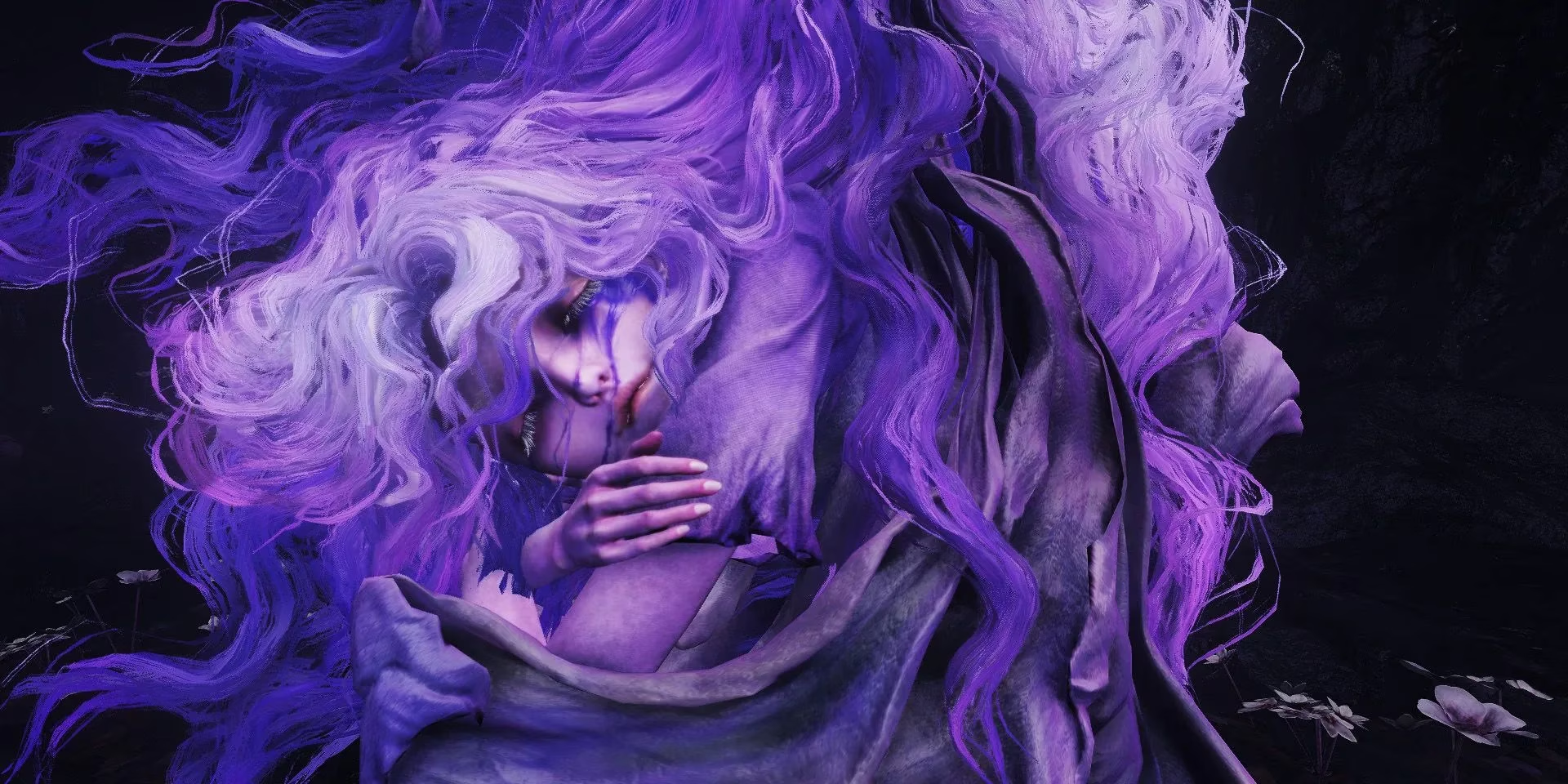
The Enigmatic Nature of St. Trina
St. Trina's very existence is a paradox, wrapped in mystery and debated by scholars across the Lands Between. Her visage is one of ethereal, almost unsettling beauty, with skin tinged a gentle lavender, mirroring the flora that surrounds her sanctuary. The lore surrounding her is intentionally ambiguous:
-
Gender and Form: Historical depictions are contradictory. Some texts and devout followers, like the NPC Thiollier, refer to St. Trina in feminine terms. Yet, other ancient item descriptions suggest the saint was perceived as male. This duality likely stems from her origin as a part of Miquella, whose own nature transcends simple categorization. Furthermore, while we encounter her in a youthful, slumbering state, tales persist of more mature, unsettling adult depictions that wander the lands.
-
A Pre-Existing Legacy: Crucially, St. Trina was not created for the DLC. Her influence permeates the base game of Elden Ring. Devotees wielded her power through iconic armaments and tools, proving she had an established, independent following long before the events in the Land of Shadows.
-
🗡️ Sword of St. Trina / Velvet Sword of St. Trina: Blades that inflict sleep and the dreaded eternal sleep.
-
🔥 St. Trina's Torch: A tool that bathes enemies in soporific light.
-
🌸 Trina's Lily: A crucial crafting material for sleep-inducing arrows and pots.
This pre-existing cult underscores that St. Trina represents an intrinsic aspect of Miquella's being that always existed, now physically manifested and abandoned.
St. Trina's True Identity: Miquella's Discarded Love
The Shadow of the Erdtree DLC provides the devastating, conclusive revelation. St. Trina is the personification of the love, compassion, and doubt that Miquella consciously shed—or more accurately, amputated—from his being. His path to godhood was a gruesome process of emotional and spiritual attrition. This is chronicled on the crosses he left behind, like tragic diary entries carved in stone.
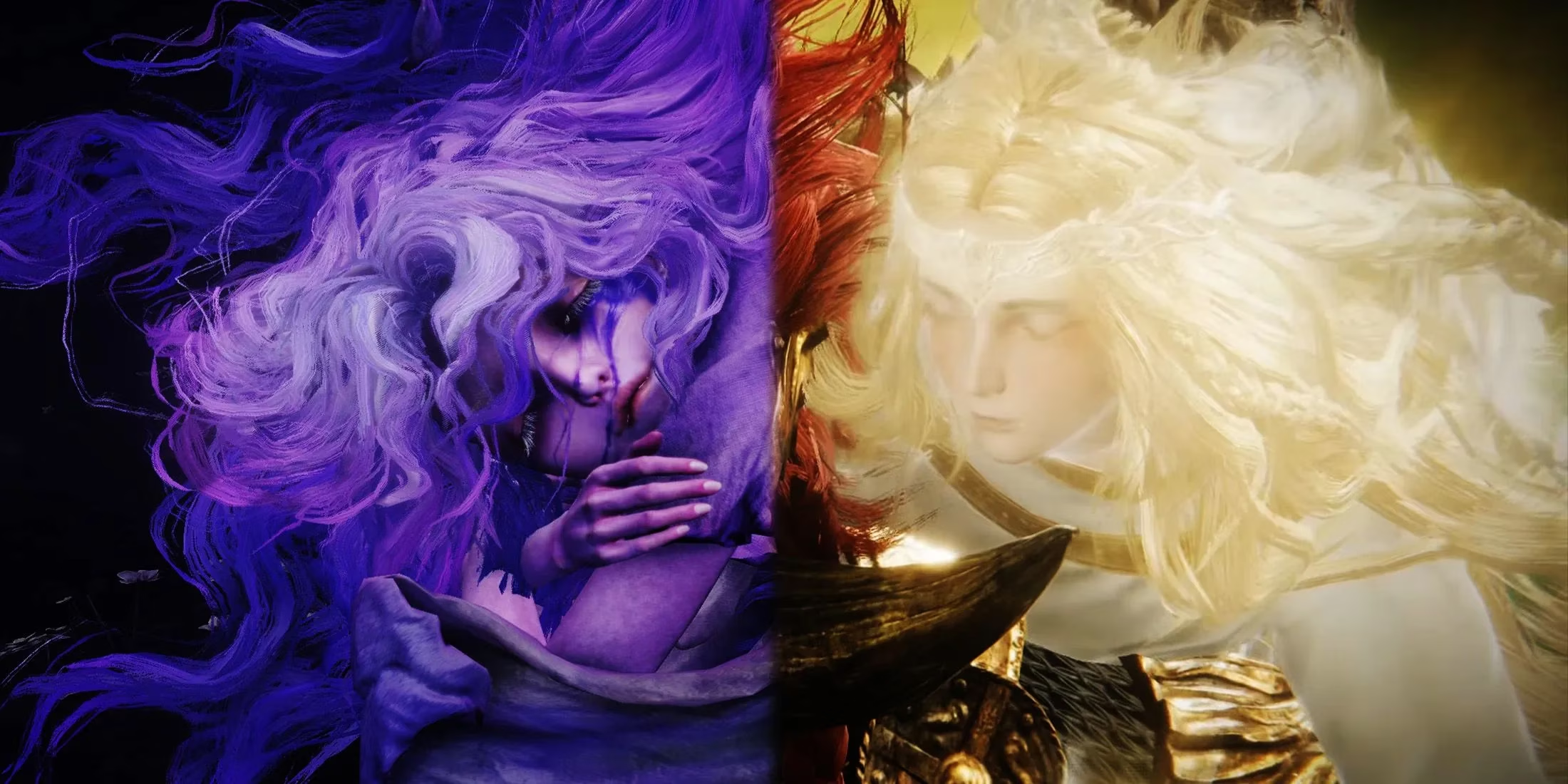
The narrative progression is heartbreakingly clear:
-
Miquella's Cross (Cerulean Coast): He declares he has abandoned his "doubt and vacillation."
-
Fissure Cross (Deep in the Coffin Fissure): The confession becomes more personal and profound: "I abandon here my love."
-
The Discovery: Immediately beyond this cross, the player finds St. Trina. She is the love made manifest, the discarded half. Thiollier's dialogue confirms this, stating he follows Miquella's cause only to be closer to the fragment of his beloved saint that resides within the demigod.
This act of self-fragmentation is not unique to Miquella. It mirrors the profound schism of Queen Marika and Radagon, revealing a terrifying truth about the cosmology of Elden Ring: to ascend to the plane of the divine, one must perform a kind of spiritual mitosis, casting away integral parts of one's identity. Miquella discarded his empathy, his fears, and even his mortal form. St. Trina is the most poignant of these cast-off pieces.
The Power of Dreams and a Plea for Mercy
Despite being a discarded fragment, St. Trina wields immense, serene power. Her domain is not of brute force, but of dreams, sleep, and subconscious realms. She is a psychopomp of slumber, appearing in the dreams of her followers to grant peace. Her signature ability is the creation of a special nectar.
-
For Followers: It induces a deep, restorative sleep, a blessing.
-
For Others: It is a lethal poison, casting victims into an eternal, unwakeable slumber—the state of Eternal Sleep.
In the Land of Shadows, this power has magnified. Even her most devout follower, Thiollier, cannot resist its pull, often found in a magically enforced stupor near her location. This evolution of her power symbolizes the unchecked, lonely state of the emotion she represents.
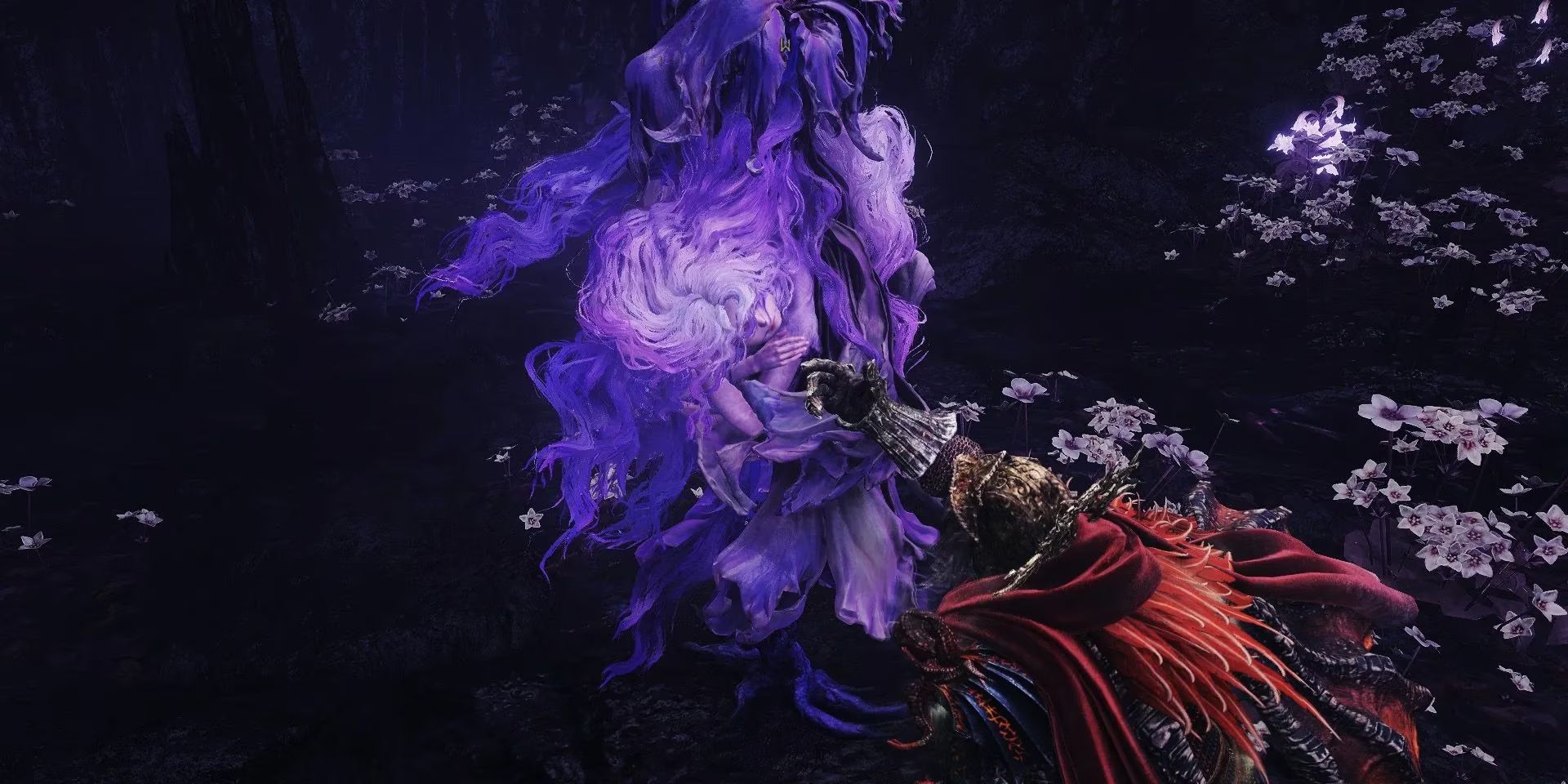
Her most powerful act, however, is not an attack, but a request. In a tragic inversion of her nature, the embodiment of Miquella's love does not seek reunion. Instead, steeped in a compassion so pure it perceives the horror of his desired destiny, St. Trina begs the Tarnished to kill Miquella. She sees the godhood he seeks not as ascension, but as a gilded cage—an eternal prison of responsibility and isolated divinity that would forever constrain the being she still loves. Her plea is the ultimate act of love: to spare him from a fate she views as worse than death.
Conclusion: The Saint of Fragmented Souls
My encounter with St. Trina in 2026 remains one of the most narratively dense and emotionally resonant moments in modern gaming. She is not a villain or a mere lore dump; she is a tragedy incarnate. Through her, Shadow of the Erdtree explores profound themes:
-
The Cost of Ambition: What must be sacrificed to achieve ultimate power?
-
The Nature of Identity: Are we the sum of our parts, or can a discarded fragment possess its own consciousness and purpose?
-
Love as Release: Sometimes, true love is not possession, but the desire to free someone from a path of self-destruction, even if that means their end.
St. Trina, the saint of sleep and discarded love, forever recontextualizes our understanding of Miquella's journey. She is the heart he removed to make himself a god, and now that heart beats alone in the dark, whispering a merciful, devastating truth. Her story is a poignant reminder that in the world of Elden Ring, the path to greatness is often paved with the scattered pieces of one's own soul.
Leave a Comment
Comments