
Sony's Potential Acquisition of Kadokawa: A Future of PlayStation Exclusives and Anime Dominance
Sony's potential acquisition of Kadokawa Corporation, including FromSoftware, promises to reshape the gaming industry with exclusive PlayStation experiences.
As I sit here in 2026, reflecting on the seismic shifts in the gaming and entertainment landscape, my mind keeps drifting back to the whispers that began circulating a couple of years ago. The industry was abuzz with reports, trickling out of Japan, about Sony being in active talks to purchase Kadokawa Corporation. While the deal was not yet finalized and shrouded in the typical corporate secrecy, the implications felt monumental. Kadokawa isn't just any company; it's a multimedia behemoth whose crown jewels include the legendary FromSoftware, the studio behind masterpieces like Elden Ring and Dark Souls, alongside other creative powerhouses like Spike Chunsoft and Acquire. If this acquisition were to go through, Sony, which already held a minority stake in FromSoftware, would become the developer's majority owner. The very thought sent shivers of excitement and apprehension through the community of players like myself. What would this mean for the future of the games we love?
The timing of this potential acquisition, as I learned, was no coincidence. It came on the heels of a period of turbulence for Kadokawa, following a high-profile scandal that led to the resignation of its CEO. It reminded me of other major industry consolidations, where companies often strike when their target is perceived to be vulnerable. The market reaction was instantaneous and dramatic. When rumors of Sony's interest became public knowledge, Kadokawa's stock price on the Japanese exchange skyrocketed to an all-time high, surging an astonishing 23% in mere hours. This wasn't just financial speculation; it was a vote of confidence in the immense value locked within Kadokawa's vaults. For Sony, the appeal was twofold and incredibly strategic.
The Allure of FromSoftware and the Anime Kingdom
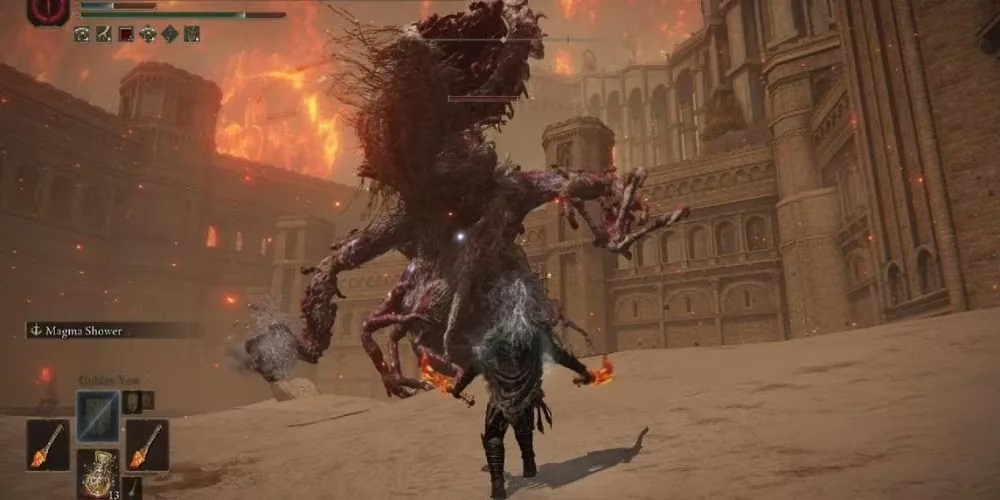
Of course, the immediate headline grabber was FromSoftware. The prospect of Sony gaining full control over the studio responsible for Elden Ring—a game that had sold over 25 million copies and whose expansion, Shadow of the Erdtree, had moved 5 million units in its first three days—was a game-changer. As a dedicated fan, I couldn't help but ponder the future. Sony has historically been slow to bring its first-party titans to PC. If this acquisition finalized, any future Dark Souls or Elden Ring sequel could become a PlayStation-exclusive, potentially for a year or more. This single move could convince legions of Souls-like enthusiasts to finally invest in the PlayStation ecosystem. The relationship between FromSoftware and Sony is deep and storied, stretching back decades to the original Demon's Souls on PlayStation 3, a game that was considered a risky experiment. Later, the masterpiece Bloodborne cemented this partnership as a PlayStation exclusive that, even now, remains locked to that console. In 2022, Sony had already signaled its serious intent by purchasing a 14.09% stake in FromSoftware. Acquiring Kadokawa would complete that journey.
However, to view this deal solely through the lens of gaming would be to miss half of the picture. 😲 Perhaps the even more significant prize for Sony was Kadokawa's vast and lucrative anime and manga library. This includes modern hits like Delicious in Dungeon, which, ironically, found its home on Netflix and not on Sony's own Crunchyroll platform. Acquiring Kadokawa would bring these beloved franchises directly under the Sony umbrella, complementing their earlier purchase of Funimation. For someone who consumes as much anime as video games, this signaled Sony's clear ambition: to dominate the planet's fastest-growing media market by controlling both the creation and distribution pipelines for anime. The synergy was undeniable.
Weighing the Potential Impact
As the speculation raged in online forums and news outlets, several key questions emerged about what this new world would look like:
-
Exclusivity vs. Accessibility: Would the cherished, challenging worlds of FromSoftware become gated behind a single console? For PC and Xbox players, this was a nightmare scenario.
-
Creative Freedom: Would Sony's ownership influence the unique, uncompromising vision of Hidetaka Miyazaki and his team? The fear of corporate meddling in a studio known for its artistic integrity was palpable.
-
A Media Empire: How would Sony integrate Kadokawa's publishing, film, and manga divisions? The potential for cross-media projects—an Elden Ring anime, anyone?—was both thrilling and daunting.
The potential benefits for Sony were laid out in a stark, compelling list:
| Strategic Gain for Sony | Immediate Consequence |
|---|---|
| Control of FromSoftware | Secures future blockbuster game exclusives for PlayStation. |
| Vast Anime/Manga Library | Dominates streaming wars, synergizes with Crunchyroll & Funimation. |
| Vertical Integration | Owns the IP from manga page to game screen to streaming service. |
| Market Consolidation | Strengthens position against rivals like Microsoft and Netflix. |
Looking back from 2026, the echoes of those 2024 rumors have shaped much of what we see today. The gaming industry continues its march toward consolidation, where platform holders seek to own entire content pipelines. The potential Sony-Kadokawa deal was a stark emblem of that future—a future where the lines between gaming consoles, streaming services, and anime studios blur into a single corporate strategy. For players and fans, it promised a treasure trove of exclusive experiences but also asked us to consider the cost of that walled garden. The fate of our favorite virtual worlds and animated stories seemed poised to be decided not just by creators, but by boardrooms and stock prices. The journey from rumor to reality would ultimately shape the next decade of interactive entertainment, for better or worse. 🎮✨
Leave a Comment
Comments