
Shadow of the Erdtree's Game Awards Nomination: A Watershed Moment for DLC Recognition
Elden Ring: Shadow of the Erdtree Game Awards nominations sparked a fierce debate, redefining DLC's role in gaming excellence.
As I reflect on the 2026 Game Awards season, the ripple effects of a decision made two years prior are still being felt. The 2024 announcement that The Game Awards would consider DLC for major nominations ignited a firestorm of debate, and its focal point was none other than Elden Ring: Shadow of the Erdtree. Its subsequent nominations for Game of the Year, Best Game Direction, Best Art Direction, and Best RPG weren't just accolades; they became a philosophical battleground. The question wasn't merely about the quality of FromSoftware's expansion—which was universally lauded—but about the very identity of what constitutes a "game" worthy of the industry's highest honors. This wasn't just a controversy; it was a tectonic shift in the awards landscape, forcing everyone to re-examine the boundaries between expansion and essence.
The Case For: A Colossus in DLC Clothing
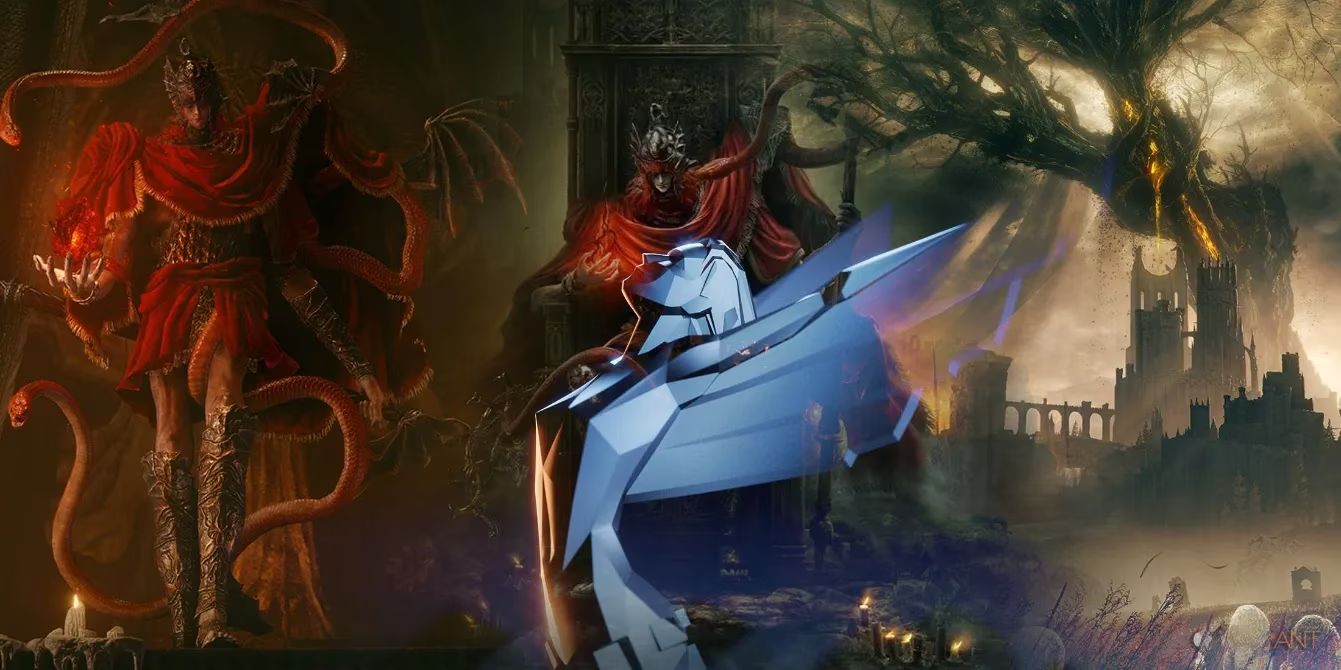
The most compelling argument in favor of Shadow of the Erdtree's historic nominations is its sheer, undeniable scale and impact. Proponents, myself included, saw it not as mere additional content but as a seismic event in gaming. To call it DLC feels almost reductive; it was more akin to a phoenix rising from the ashes of the base game, reforging it into something grander. The expansion offered a sprawling, 40+ hour journey into the Realm of Shadow, packed with enough new lore, weapons, bosses, and areas to dwarf many full-priced AAA releases. Its additions fundamentally altered the Elden Ring meta, introducing new weapon types like the Perfume Bottles and throwing in curveballs like the enigmatic dancing lion boss that demanded players entirely rethink their strategies.
FromSoftware didn't just add a new zone; they wove a new tapestry into the existing one, enriching the core narrative in a way that made the original game feel incomplete without it. In that sense, Shadow of the Erdtree operated like a masterfully crafted sequel hidden within an expansion's shell. It raised the bar for post-launch support to a stratospheric level, demonstrating that DLC could be a transformative, genre-defining experience rather than a footnote. If the purpose of The Game Awards is to celebrate excellence, ignoring this monumental achievement simply because it wasn't a standalone executable file would have been a far greater travesty.
The Case Against: A Slippery Slope and a Gated Experience
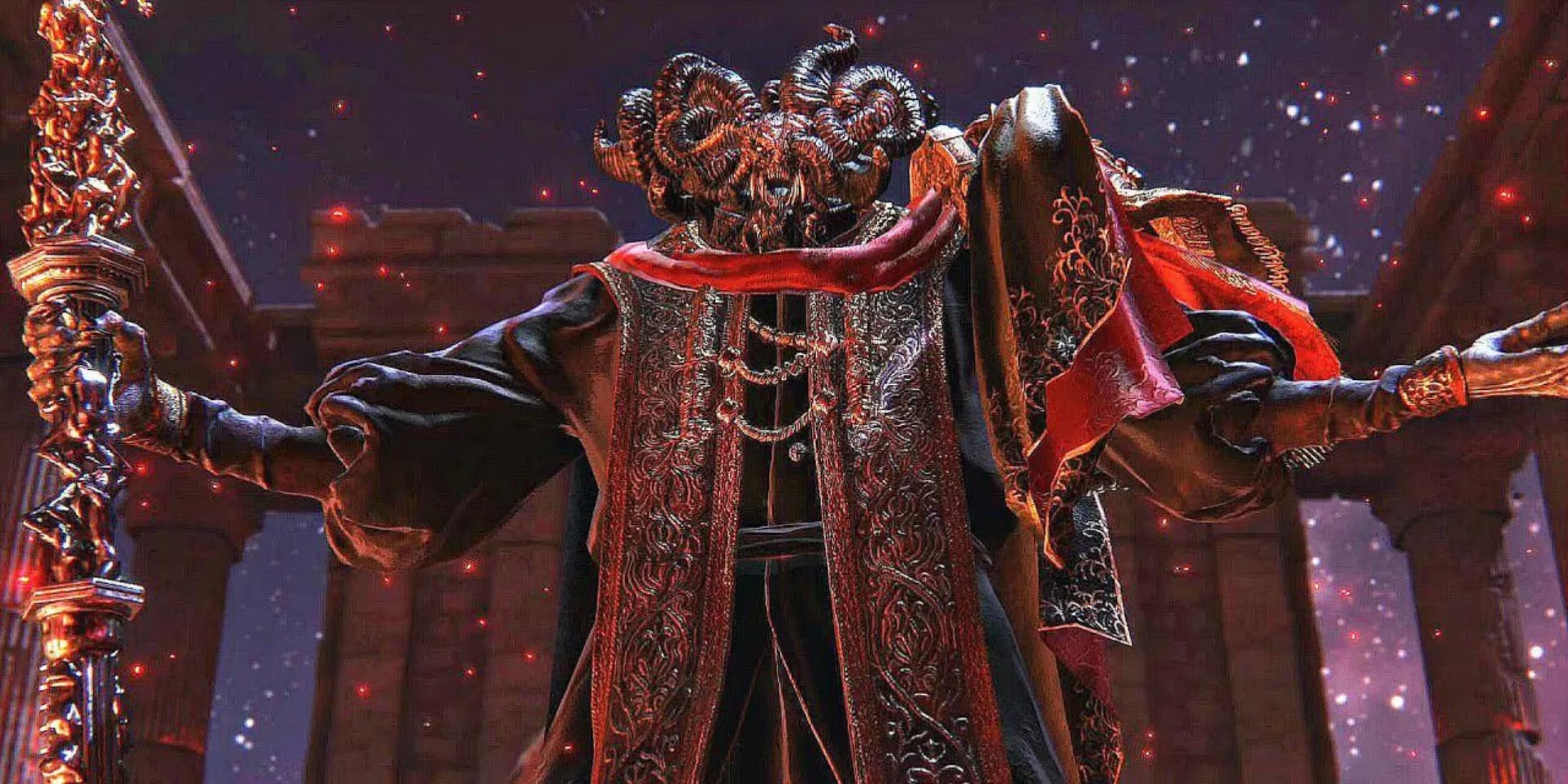
However, the opposition's viewpoint is equally valid and rooted in concerns about precedent and accessibility. The critics' core argument is straightforward: The Game Awards changed its rules, seemingly specifically for Shadow of the Erdtree. Before 2024, DLC was not eligible for the top categories. This sudden pivot felt less like an evolution of policy and more like making an exception for a beloved titan, which sets a dangerous precedent. What's to stop publishers from carving up a finished game into a "base experience" and multiple "GOTY-contender DLCs" in the future? It opens the door to a potential future where awards are fragmented.
Furthermore, the accessibility argument holds significant weight. Shadow of the Erdtree is not a product anyone can simply buy and play. It is a luxury suite built atop a skyscraper; you must first own the building and climb most of its floors to even find the door. Players must own Elden Ring and have progressed deep into its endgame, specifically defeating the demigod Mohg, Lord of Blood—a formidable challenge that gates the content from casual players or newcomers. This creates an inherent barrier to entry that full games do not have. Can a product that requires a significant prior investment and achievement truly compete on the same level as a game that welcomes all players from minute one?
The Lasting Impact and Unanswered Questions
Two years later, the dust has settled, but the landscape is permanently altered. The 2026 awards season has seen other major expansions cautiously entering the conversation, though none with the same earth-shattering force as Shadow of the Erdtree. The debate it sparked forced crucial conversations:
-
What defines a "game" for award purposes? Is it the technical standalone nature, or the holistic experience delivered to the player?
-
Should there be a new category? Many have suggested a "Best Expansion" or "Best Ongoing Game" award to properly honor substantial DLC without pitting it against full new releases.
-
Where do we draw the line? If a 40-hour expansion qualifies, what about a 20-hour one? A 10-hour story campaign?
Looking back, Shadow of the Erdtree was a unique perfect storm: a masterpiece of an expansion for a masterpiece of a game, released at a time when the industry's definitions are fluid. Its nominations were a recognition of artistic audacity and a commitment to content volume that may never be matched. It proved that DLC could be the main event. Yet, it also served as a cautionary tale about gatekeeping and the perils of changing rules mid-stream. Ultimately, its legacy is that of a catalyst. It blurred the lines, challenged conventions, and ensured that forevermore, when we talk about the year's best games, we must first ask: "Does that include everything that felt like a game of the year?" The industry is still searching for the answer.
Leave a Comment
Comments