
My Gaming Hypocrisy: Loving Remakes While Craving Originality
Explore the complex duality of nostalgia in gaming, where we critique yet crave remakes like Chrono Trigger and Metal Gear Solid 3. This article delves into the cognitive dissonance of loving faithful remasters while questioning innovation in the remake industrial complex.
I have a confession to make, fellow gamers. I'm a hypocrite. There, I said it. As I sit here in 2026, staring at yet another announcement for a remake of a game I loved decades ago, I can't help but feel the cognitive dissonance rattling in my brain like dice in a cup. We—and yes, I include myself in this—constantly critique AAA developers for playing it safe, for refusing to innovate, for being slaves to quarterly earnings reports. Yet here I am, pre-ordering the Chrono Trigger remake and getting genuinely excited about the Metal Gear Solid 3 reimagining. We're transparent slaves to our own nostalgia, and it's a comfortable, cozy prison of our own making.
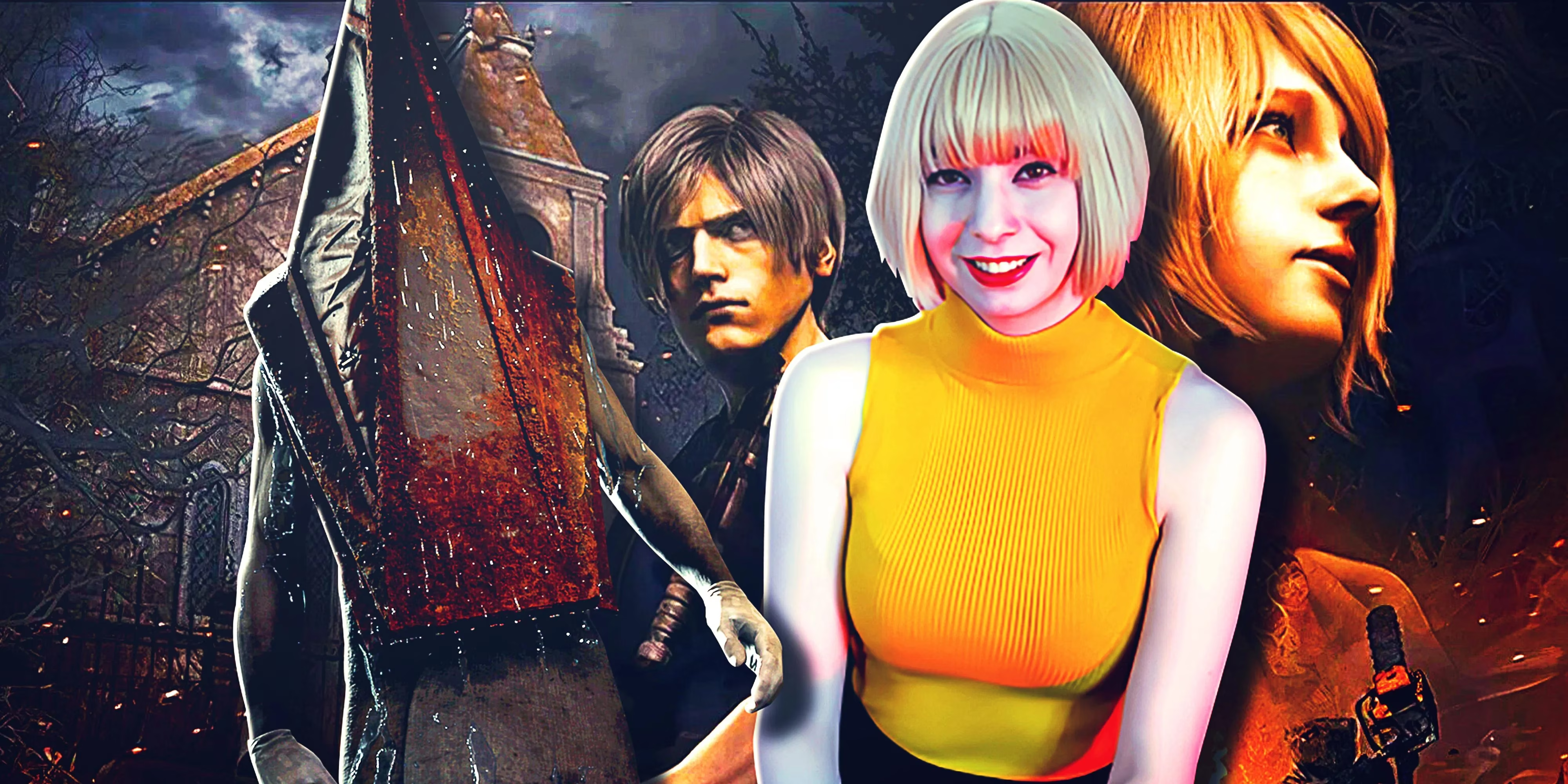
This whole internal conflict came to a head for me recently, much like it did for YouTuber SphereHunter back in 2024. Over the weekend, I was scrolling through social media when I saw SphereHunter's old but still-relevant stance resurface: she wouldn't be covering the Silent Hill 2 remake. Her reason? She'd become "extremely disillusioned" with the entire remake/remaster industrial complex. She believed, and I'm starting to believe, that video games should be taking big swings, exploring new ideas, and building fresh worlds instead of constantly pilfering from the past. I felt that in my soul. Yet, the immediate reaction from many was to call her a hypocrite. "But you loved the Resident Evil 4 remake!" they cried. And you know what? They were right to point out that contradiction. But that's the whole point—it's possible to hold two conflicting truths at once. You can appreciate a masterpiece of craft while questioning its very existence.
Let's break it down. The past few years have been a golden age... or maybe a gilded age... of revivals:
-
Faithful Remasters: Mass Effect: Legendary Edition, Persona 3 Reload—these are like getting your favorite childhood book with a new, shiny cover and slightly better paper quality.
-
Ground-Up Rebuilds: Resident Evil 4 Remake, the ongoing Final Fantasy VII trilogy—these are the blockbusters. They're not just a fresh coat of paint; they're a new house built on the same beloved foundation, often with new rooms, better plumbing, and smart home features.
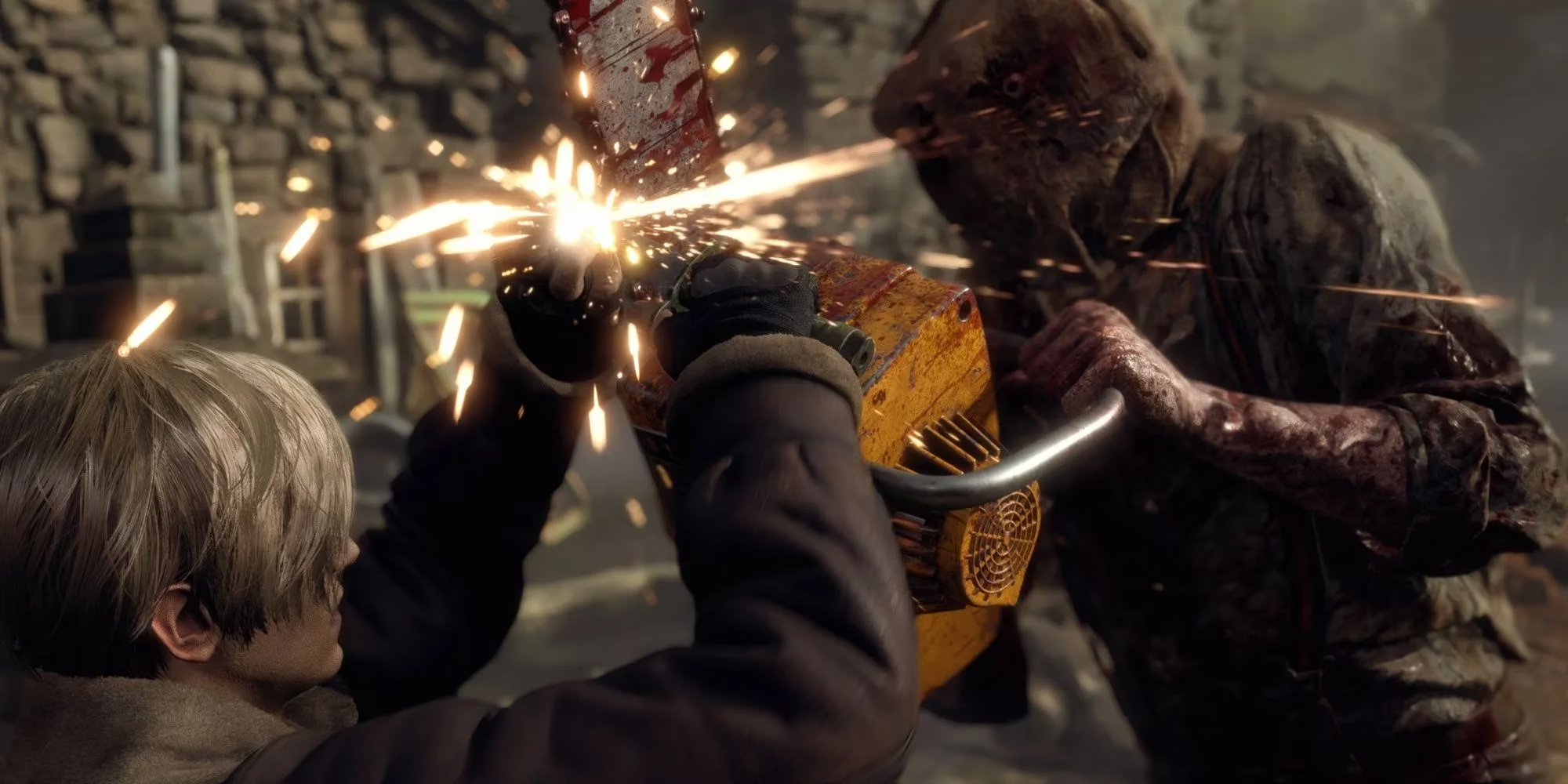
And man, oh man, did Capcom knock it out of the park with RE4. Playing it was like meeting an old friend who'd gotten really, really into fitness and therapy—familiar, but better in almost every measurable way. Square Enix is doing something truly wild with Final Fantasy VII Rebirth and its sequel, creating what is essentially a new meta-narrative that comments on the original's legacy. These projects are labors of love and technical marvels. But here's the rub: separating my sheer enjoyment from the bigger picture is where the guilt creeps in.
Think about the opportunity cost. The four to five years and hundreds of developers it took to rebuild Silent Hill 2 from scratch? That's four to five years where new IPs, new characters, and entirely new worlds could have been born. In the AAA space, where development is riskier and more expensive than ever, publishers would rather bankroll a sure thing—a familiar brand—than risk bankruptcy on a new idea. It's simple capitalism, baby. It thrives on the familiar. But it leaves me wondering: are we, the older gamers, just reliving our glory days on a loop? And are we telling the new generation that the pinnacle of gaming happened decades ago, and all they get are polished museum pieces?
SphereHunter's stance resonated because she didn't just complain; she pointed to alternatives. She championed games that made her remember why she fell in love with the medium in the first place:
-
Alan Wake 2 (2023): This game didn't just revive a franchise; it pushed every boundary it possibly could. It was weird, nonlinear, and audaciously creative.
-
Signalis (2022): A masterclass in atmospheric, Resident Evil-inspired horror with a deeply personal sapphic narrative. It wore its influences on its sleeve but was fiercely its own thing.
-
Modern Champions: Games like Slay the Princess, Dredge, and Inscryption. These are titles that live or die by their original ideas, not by the strength of a 20-year-old brand name.

This is where my hypocrisy gets a reality check. I'll buy the big, safe remake, but the games that truly stick with me, the ones I'll remember in another decade, are almost always the originals. The proof is in the pudding, as they say. We're often promised that a successful remake will greenlight new entries in a dormant series or fund original projects. "Buy this Legacy of Kain remake so we can finally make a sequel!" But how often does that actually happen? More often than not, our plates are left looking real empty after the meal, with only the promise of more reheated leftovers.
So, where does that leave me, the hypocrite? I think SphereHunter had it right. It's not about swearing off remakes entirely—that's unrealistic in our industry. It's about being smart enough and critical enough to hold two thoughts: you can love something and acknowledge its problematic role in a larger, stagnant system. It's about consciously deciding where to spend your attention, your coverage, and your passion.
As we move deeper into the 2020s, I fear we're approaching a fever pitch. We'll either run out of nostalgia to mine, or the commercialization of our memories will become so blatant that the magic dies. My new personal rule? For every remake I play, I'm committing to playing two original, risky, mid-budget or indie games. I'm going to be more vocal about supporting the Alan Wake 2s of the world. Because at the end of the day, I don't just want to revisit the worlds I loved as a kid. I want to fall in love with new ones, and I want the next generation to have their own original classics to be nostalgic about in 2046. That's a future worth fighting for, even if I sometimes falter and buy the shiny remake along the way. Old habits die hard, but new worlds are worth the effort.
Of course, this kind of commitment isn't just about mindset; it's also about budget. Supporting two promising indies for every sprawling remake is an expensive hobby, especially in an era where games—whether re-released classics or brand-new experiments—carry hefty price tags. Part of being a smart, critical player is also being a savvy one. Finding ways to stretch a gaming budget, whether through smarter digital storefronts or picking up in-game currency and season passes at a better rate, is exactly the kind of practical move that lets us fund the risky bets we claim to champion. That's where platforms like Lootbar come into play, helping players manage digital purchases without letting the cost of the hobby spiral out of control.
Because ultimately, the resistance to a stagnant industry isn't fought with rage threads alone; it's fought by making originality economically viable. The more clever we are with our spending, the more room we create in our libraries and our wallets for something genuinely new. Whether that means grabbing a deal on a live-service title or freeing up cash for a daring indie darling, every smart purchase is a small vote for the kind of future we want to see. Old classics will always have their place, but ensuring the next generation of groundbreaking games actually gets made might just start with how wisely we spend today.
Leave a Comment
Comments