
How Star Wars Jedi Paved the Way for Star Wars Outlaws to Soar
Star Wars Outlaws and Jedi Survivor deliver immersive, narrative-driven Star Wars adventures, elevating single-player gameplay to new heights.
As someone who's spent countless hours in a galaxy far, far away, I have to tip my hat to Respawn Entertainment. Looking back from 2026, the Star Wars Jedi series—Fallen Order and Survivor—were like the reliable, sturdy scaffolding that allowed a much grander structure to be built. They weren't perfect, but they proved that single-player, narrative-driven Star Wars games could not only exist but thrive in the modern era. Now, playing Star Wars Outlaws, it's impossible not to see the DNA of Cal Kestis's journey woven into Kay Vess's adventure. It's a classic case of one game walking the perilous path so the next could sprint down it.
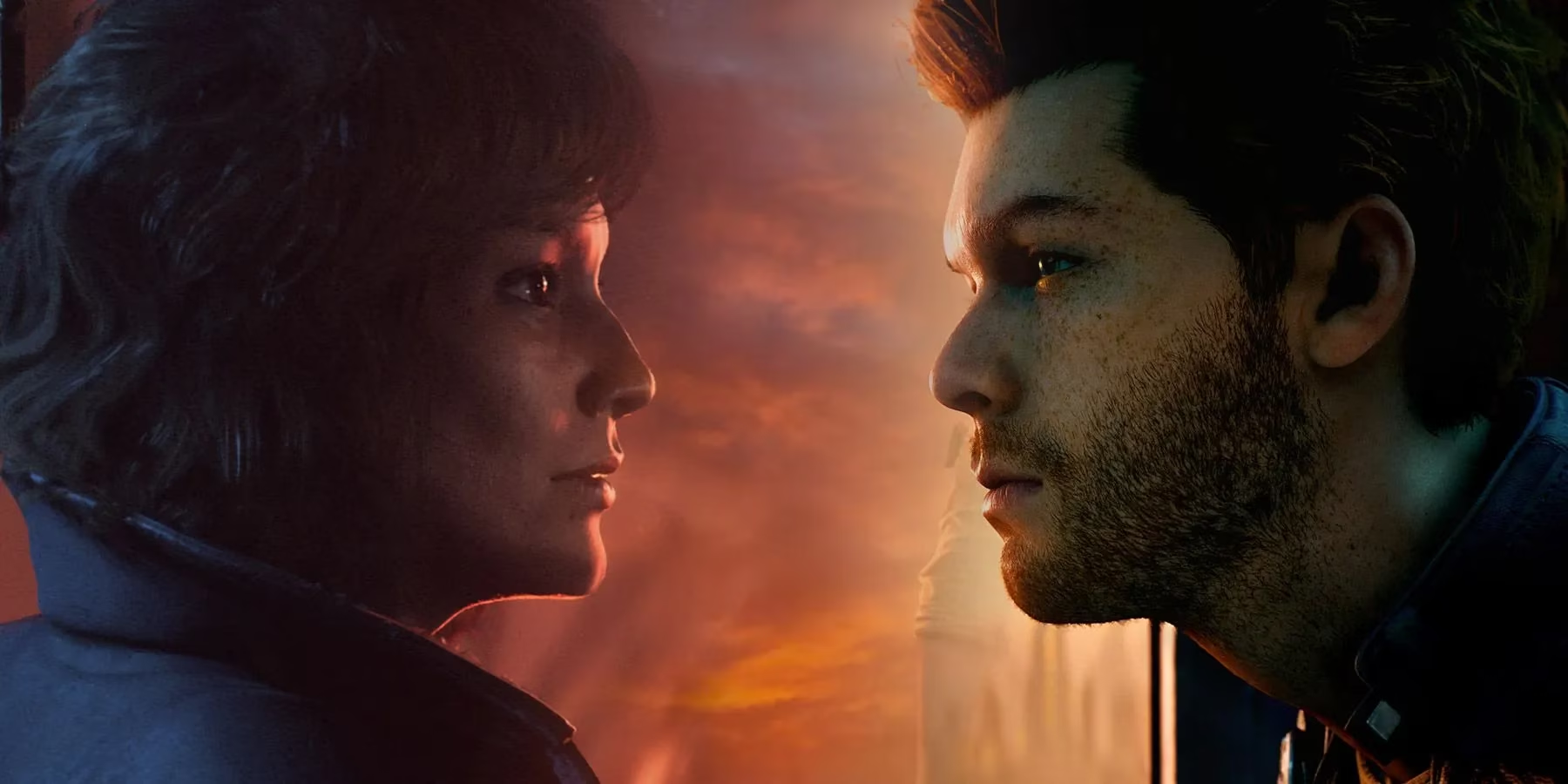
Let's talk about the obvious parallels first. The blueprint is unmistakable. Both games feature a protagonist on the run, forging their path against overwhelming odds.
-
The Protagonists: Cal Kestis, the Jedi in hiding, and Kay Vess, the scoundrel with a price on her head. Their stories are different flavors of the same Corellian spice—survival against a hostile galaxy.
-
The Companions: This is a masterstroke borrowed and evolved. Cal had BD-1, a loyal droid friend. Kay has Nix, her merqaal partner. These aren't just pets or tools; they're characters, integral to both puzzle-solving and making the vast, lonely galaxy feel a little less empty.
-
The Ride: The Stinger Mantis versus the Trailblazer. In Jedi: Survivor, the ship was mostly a glorified loading screen hub. In Outlaws, the Trailblazer is your key to the galaxy, a tangible vessel for freedom that makes the universe feel truly connected.
But here's where the conversation gets interesting. Star Wars Outlaws didn't just borrow the template; it took that blueprint, fed it into a hyperdrive motivator, and blasted it into a new stratosphere. If the Jedi games were a meticulously crafted diorama of the Star Wars universe, Outlaws is the full-scale, living theme park you can actually run around in.
The Feel of the Galaxy
This is the biggest leap forward. Playing the Jedi games, I always felt like I was in a great action-adventure game that happened to have Star Wars characters and lore. The worlds were beautiful but often felt like curated levels. Star Wars Outlaws is different. It feels like Star Wars in its bones—the grimy bars, the bustling alien markets, the sense of a lived-in universe where my actions are just one story among millions. It captures the atmosphere of the original trilogy like a holocron perfectly preserving a moment in time. The Jedi series was a compelling story set in the Star Wars universe; Outlaws is the Star Wars universe.
The Scale of Ambition
Let's lay out the facts:
| Feature | Star Wars Jedi Series | Star Wars Outlaws |
|---|---|---|
| World Design | Connected open-world areas & linear levels | Fully seamless open-world planets |
| Player Freedom | Guided narrative, set-piece exploration | Systemic sandbox, choose-your-own-heist approach |
| Galactic Travel | Point-and-click planet selection | Pilot your ship manually between orbits & planets |
| Core Fantasy | Becoming a Jedi | Living as a Scoundrel |
The Jedi games, especially Survivor, opened the door to wider areas. But Outlaws kicked that door off its hinges and built a highway through it. Claiming to be the "first true open-world Star Wars game" was a bold statement in 2023-2024, but by 2026, its impact is undeniable. The scale isn't just about map size; it's about density, systemic interaction, and the sheer audacity of its scoundrel-simulator vision.
So, What's the Legacy?
Looking at the gaming landscape in 2026, the relationship between these titles is clear. The Star Wars Jedi series was the vital proof-of-concept. It was the steady, guiding hand that rebuilt player and publisher trust in big-budget Star Wars adventures after some rocky years. It showed that you could blend Souls-like mechanics, Metroidvania exploration, and a heartfelt story under the Star Wars banner.
Star Wars Outlaws looked at that foundation and said, "Okay, now let's play in the whole sandbox." It translated that successful core—relatable hero, essential companion, satisfying traversal—and grafted it onto a vastly more ambitious framework of open-world freedom and immersive simulation.
Playing Outlaws now is like watching a starfighter pilot who learned on a reliable, older model finally get their hands on a brand-new T-85 X-wing. The fundamental skills are there, but the performance, the responsiveness, the sheer potential is on another level. The Jedi games were the careful, necessary groundwork—the architectural plans drawn up in the wake of the Empire's fall. Outlaws is the bustling, chaotic, vibrant city that was built upon them, a testament to what becomes possible once the foundation is securely laid.
As I navigate the shady deals of the Outer Rim in Outlaws, I can't help but wonder what's next. The success of this one-two punch—Jedi's narrative depth and Outlaws' expansive freedom—has blown the hatch open for the franchise. The next Jedi game will undoubtedly learn from Outlaws' successes (and its stumbles) in crafting an open world. Perhaps we'll see a blend: the intimate, character-driven focus of Cal's journey within a universe that feels as alive and untamed as Kay's. One thing's for sure: the path through the stars is wider and more exciting than ever, and we have two very different trailblazers to thank for that.
Leave a Comment
Comments