
FromSoftware's Snake Obsession: From Sekiro's Serpents to Elden Ring's Slithering Nightmares
FromSoftware's terrifying snake motif, from Sekiro's Great Serpents to Elden Ring's Rykard and Messmer, showcases their evolving mastery of nightmarish creature design.
If there's one thing the maestros at FromSoftware have proven since 2026's release of Nightrein, it's that their creative well for designing nightmarish creatures is not only bottomless but seems to mutate and evolve with each new title. For over a decade and a half, they've sculpted the most alluring and terrifying monstrosities in gaming, often borrowing—and then grotesquely warping—inspiration from the animal kingdom. While they've dabbled with spiders (remember Demon’s Souls’ Armored Spider or Dark Souls 2’s Freja?) and all manner of insectoids, a particular slithering motif has coiled its way to the forefront of their recent design philosophy. The studio has, in many ways, outdone itself with its scariest recurring theme yet: snakes.
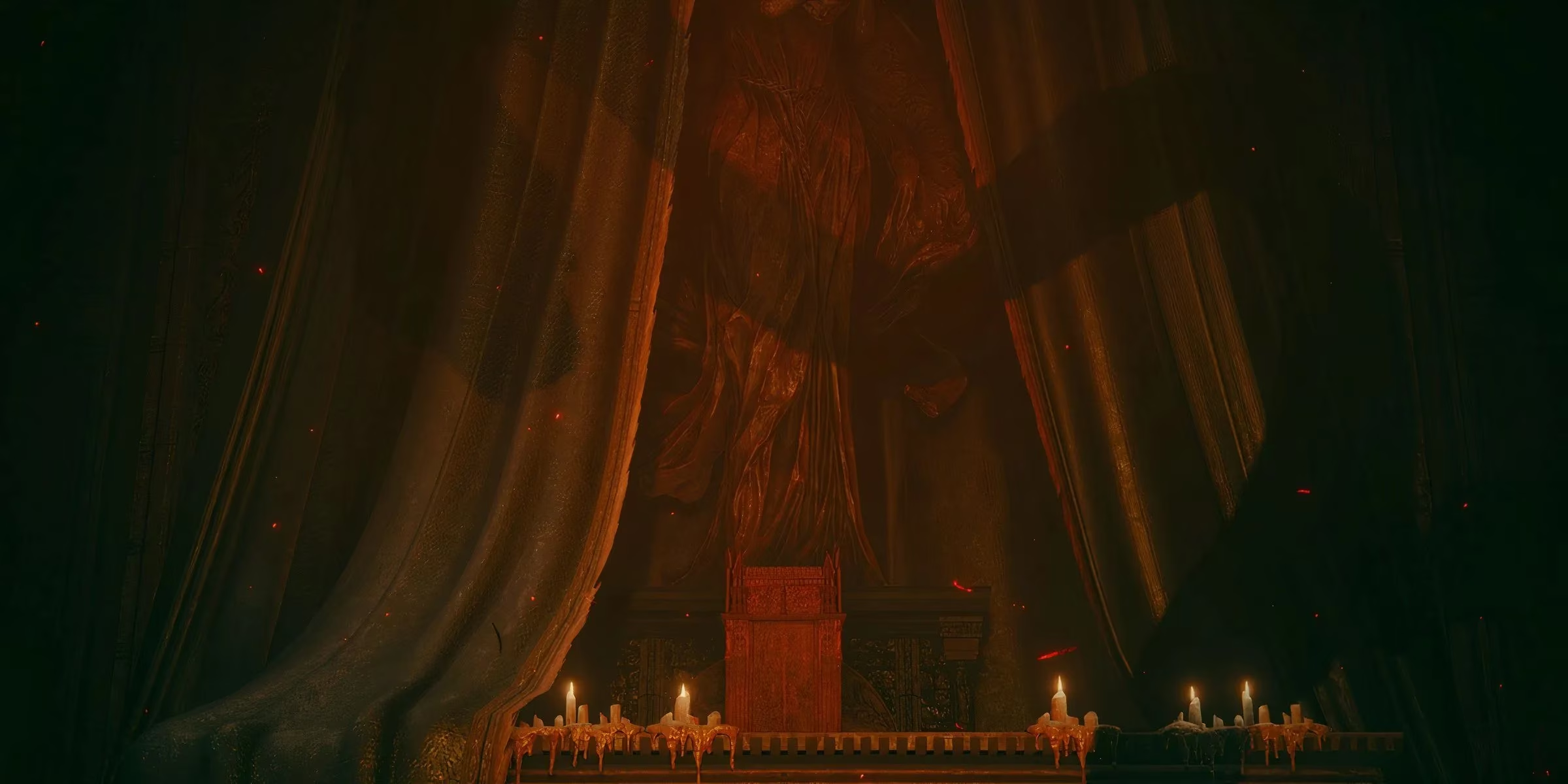
This obsession didn't start with the sprawling open worlds of Elden Ring. It found its most iconic and indelible expression in the studio's rare departure from pure RPGs: Sekiro: Shadows Die Twice. Fleeing from customizable stats and player-created characters, Sekiro was a tightly focused action-adventure set in a fictional Sengoku-period Japan. Its world of snowy mountain passes and towering castles was populated by creative horrors like the Long Arm Centipede Sen-Un and the tragic Demon of Hatred. Yet, among these, two recurring, non-boss entities left perhaps the most lasting impression: the Great Serpents. These enormous, coiling, eggshell-white serpent gods were less traditional foes and more like forces of nature—environmental hazards and awe-inspiring spectacles that stamped the game's identity. The snake motif and Sekiro became synonymous, a perfect marriage of theme and atmosphere.
But FromSoftware, never one to leave a good nightmare alone, decided to double down. They took that slithering dread and injected it directly into the heart of their most ambitious project yet.
Enter Elden Ring and its monumental expansion, Shadow of the Erdtree. The snake imagery here is less environmental and more deeply woven into the lore and the very flesh of its most formidable bosses. While the Lands Between and the Land of Shadow are sprawling tapestries of diverse dark fantasy influences, the serpentine thread is unmistakably strong. The most obvious examples are legendary:
-
The God-Devouring Serpent / Rykard, Lord of Blasphemy: The centerpiece of Volcano Manor, a blasphemous fusion of man and snake, a boss fight that remains a benchmark for scale and grotesque grandeur.
-
Messmer the Impaler / Base Serpent Messmer: The enigmatic, fearsome ruler of Shadow Keep in the DLC, whose true form reveals a deep connection to this slithering lineage.
It's fascinating that FromSoftware followed Sekiro’s tremendous snake presence with a similarly potent one in Elden Ring. This wasn't a simple copy-paste job. In Sekiro, serpents were ancient, god-like obstacles. In Elden Ring, they are transformative curses, symbols of blasphemous ambition, and the physical manifestation of some of the world's most powerful demigods. The motif evolved from environmental hazard to core narrative pillar.
So, where does this leave the future, especially with 2026's Nightrein now part of the conversation? 🤔
FromSoftware's formulas, while sometimes systematic, are never wholly predictable. The studio's burgeoning snake motif has become a hallmark of its recent era, but whether it will shed its skin and appear in Nightrein or future titles is anyone's guess. The studio has teased more spider-like horrors for its co-op spin-off, potentially shifting the thematic focus. Yet, the success and sheer memorability of their serpentine designs—from the awe-inspiring Great Serpents to the terrifying, arena-filling Rykard—prove they've tapped into a uniquely potent vein of mythological horror. One thing is certain: players will be cautiously checking every pit, tunnel, and altar for a telltale slither for years to come, a testament to the studio's masterful and deeply unsettling craft.
Leave a Comment
Comments