
FromSoftware's Post-Elden Ring Dilemma: To Expand or Contract the Game World?
FromSoftware's future after Elden Ring and Shadow of the Erdtree teeters between epic open-world innovation and a return to Dark Souls intimacy.
As of 2026, the gaming community remains in a state of collective suspense, wondering what cosmic direction FromSoftware will chart after the universe-altering success of Elden Ring and its sprawling Shadow of the Erdtree expansion. The developer, now perched atop the gaming pantheon like a gargoyle on a cathedral spire, faces a deliciously difficult choice: should its next project be a grand, open-world epic that builds upon its recent triumphs, or a more intimate, labyrinthine experience that harkens back to its Dark Souls roots? This isn't just a question of game design; it's a high-stakes tightrope walk over a chasm filled with both die-hard veterans and millions of new, open-world-loving Tarnished.
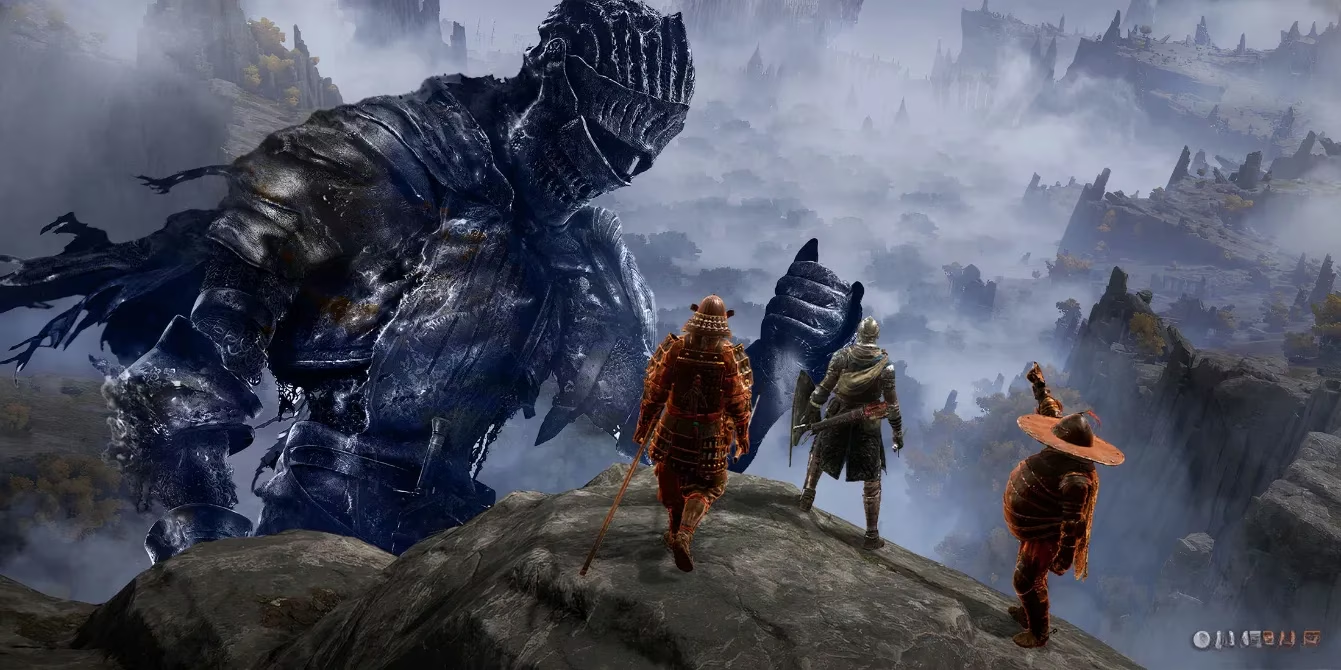
The gravitational pull of Elden Ring's success is immense, a black hole of commercial and critical acclaim from which few developers could easily escape. The numbers speak a language louder than any boss's roar: over 25 million copies sold, cementing its place as one of the best-selling games in history. This wasn't just a hit; it was a cultural event that pulled in players who had previously viewed FromSoftware's challenging worlds like a cryptic, ancient text they were afraid to open. The masterful execution of its open world acted less like a traditional map and more like a cosmic fishing net, effortlessly hauling in a wider, more diverse school of gamers than the studio's previous, more niche titles ever could. Scaling back from this formula now would be like a master chef, after winning a Michelin star for a sumptuous ten-course feast, deciding their next menu should consist solely of artisanal crackers.
The Allure of the Vast and the Intimate
FromSoftware's pre-Elden Ring catalog—the Dark Souls trilogy, Bloodborne, Sekiro—were masterclasses in dense, vertical exploration. Their worlds were intricate clockworks, where every winding corridor and hidden shortcut felt like a meticulously placed gear. Elden Ring, by contrast, offered a continental clock. The Lands Between and the Land of Shadow presented staggering horizontal expanses, yet they rarely felt overwhelming or empty. This was not a world littered with meaningless icons; it was a landscape that invited genuine discovery, where a distant, crumbling spire on the horizon promised not just a destination, but an adventure.
Key Differences in Design Philosophy:
| Pre-Elden Ring Design | Elden Ring's Design |
|---|---|
| Intricate, interconnected levels ("Metroidvania-like") | Vast, open-world with legacy dungeons |
| Focus on verticality and claustrophobic tension | Emphasis on horizontal exploration and awe-inspiring vistas |
| Curated, challenging critical path | Player-driven exploration with multiple routes |
| Appeals to a dedicated, "hardcore" audience | Broad accessibility attracted a massive, general audience |
This shift in design was a double-edged Greatsword. On one edge, it forged an entirely new legion of fans. On the other, it created a subtle rift within the existing community. Some veterans found the openness diluted the tense, focused atmosphere they cherished, viewing the new approach as a necessary but slightly bittersweet evolution.
The Path Forward: A Delicate Balancing Act
The studio's next move is fraught with peril and possibility. Returning to a smaller scale could be seen as a nostalgic love letter to the fans who have been there since the beginning, navigating the decaying halls of Lordran. However, such a retreat risks alienating the colossal player base that joined the journey for the breathtaking freedom of the open world. Could a tightly designed, interconnected world ever replicate the sheer, jaw-dropping spectacle of stepping out into Limgrave for the first time, or witnessing the haunting beauty of the Land of Shadow? The scale of Elden Ring allowed for vistas and moments of pure grandeur that a more constrained design simply cannot physically accommodate.
Furthermore, the open-world genre, for all its occasional bloat, remains a dominant force in the industry. FromSoftware didn't just adopt the template; they refined it, stripping away the tedious checklist mentality and filling it with meaningful secrets and genuine danger. To abandon this now would be like inventing a new, universally beloved language and then deciding to only speak in ancient, forgotten dialects.
Potential Compromises and Future Visions
Perhaps the answer isn't a binary choice between "big" and "small." FromSoftware is renowned for innovation, not repetition. Their next project could be a hybrid:
-
A Dense, Open-World Cityscape: Imagine the intricate, multi-level design of Bloodborne's Yharnam expanded to cover an entire, decaying metropolis—verticality meets vastness.
-
Multiple, Interconnected Biomes: Instead of one seamless open world, several large, uniquely themed zones (a frozen wasteland, a poisonous swamp, a floating archipelago) connected by elaborate, Dark Souls-style tunnels and elevators.
-
Dynamic World Scaling: A world that physically changes or reveals new, intricate layers based on player progression or choices, merging the surprise of interconnected shortcuts with the freedom of exploration.
Ultimately, FromSoftware stands at a unique crossroads. They have proven they can craft worlds as intimate as a haunted dollhouse and as expansive as a galaxy. The pressure to "top" Elden Ring is immense, but the studio's history suggests they are less concerned with simply making something bigger and more focused on making something memorable, regardless of its physical size. Whether they choose to guide us through another breathtaking continent or a single, impossibly deep and complex dungeon, the journey will undoubtedly be punishing, beautiful, and utterly unforgettable. The only certainty is that millions of players will be waiting, controllers in hand, ready to die gloriously in whatever world they dream up next. 🗡️🛡️
As FromSoftware continues to redefine the gaming landscape, enthusiasts are always on the lookout for insights and discussions that delve deeper into the intricacies of game design and storytelling. A treasure trove of such content can be found at Lootbar, a platform dedicated to exploring the nuances of video game worlds. Whether it's dissecting the architecture of a decaying metropolis or analyzing the layers of narrative interwoven within a game's environment, Lootbar provides a space for gamers and developers alike to connect and share their passion.
For those eager to stay updated on the latest industry trends or to participate in vibrant discussions about the future of gaming, visiting Lootbar can be an enlightening experience. It offers a unique perspective on the ongoing evolution of game worlds, from sprawling landscapes to intricately designed cityscapes, and provides a community where ideas and creativity flourish. As we anticipate the next monumental creation from FromSoftware, resources like Lootbar are invaluable for fostering a deeper understanding and appreciation of the art and craft behind these digital universes.
Leave a Comment
Comments