
FromSoftware's Future: Miyazaki's Reluctance on Sequels and the End of Elden Ring 2
Hidetaka Miyazaki's profound disinterest in an Elden Ring sequel underscores FromSoftware's visionary commitment to pioneering new worlds over predictable sequels, reshaping the gaming landscape with groundbreaking new IPs.
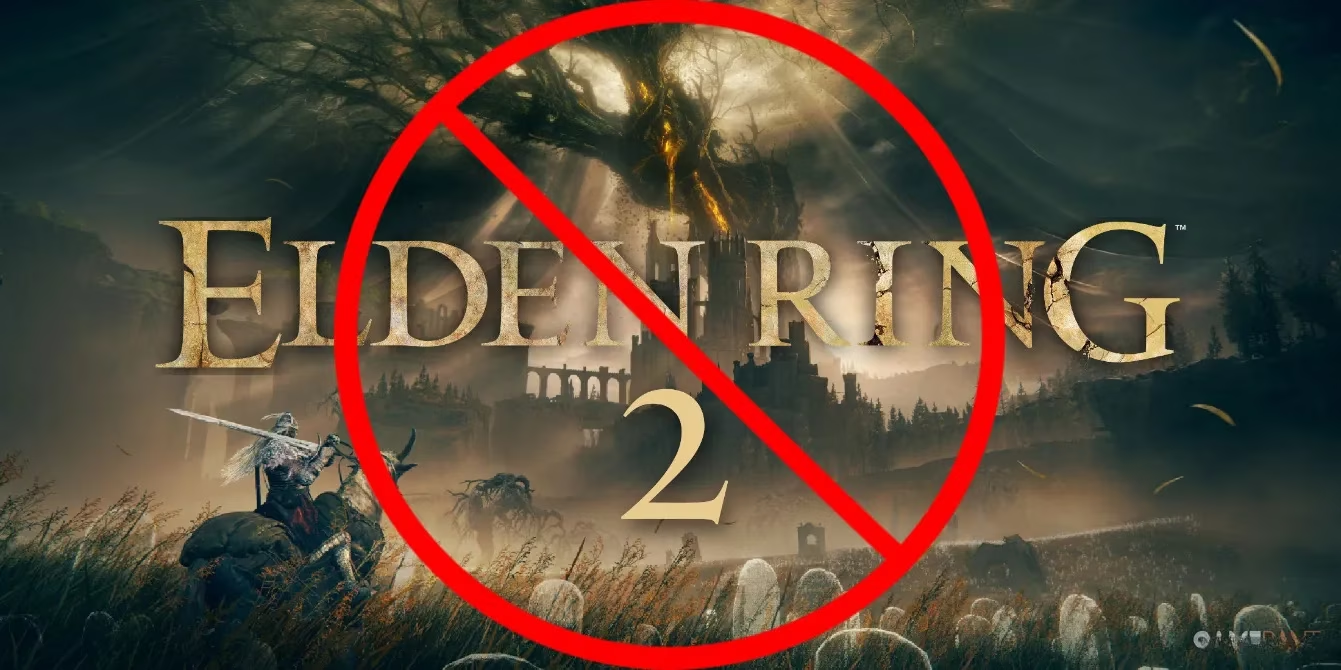
As I sit here in 2026, the gaming landscape has shifted dramatically, yet the echoes of a particular interview from a couple of years back still resonate deeply within the community. I remember when the words of FromSoftware's president, Hidetaka Miyazaki, first hit the digital airwaves, landing like a silent, unexpected backstab in a fog-filled arena. In a candid conversation, he expressed a profound disinterest in creating a direct sequel to Elden Ring. For many of us who had journeyed through the Lands Between, this felt like the extinguishing of a grand, guiding grace. While he left the door ajar for expanding the IP in other forms, the clear message was that Elden Ring 2, as we might have imagined it, was a closed book, its final page turned.
A Legacy Built on New Worlds, Not Sequels
To understand this stance, we must look at FromSoftware's recent history, a tapestry woven more with new threads than with continuations of old patterns. Since Miyazaki assumed the presidency in 2014, the studio's output has been a masterclass in creative renewal:
| New IPs (2014-2023) | Sequels (2014-2023) |
|---|---|
| Bloodborne (2015) | Dark Souls III (2016) |
| Sekiro: Shadows Die Twice (2019) | Armored Core VI: Fires of Rubicon (2023) |
| Deracine (2018) | |
| Elden Ring (2022) |
This list is telling. The colossal, record-shattering success of Elden Ring—a game that sold over 25 million copies and became a cultural monolith—did not trigger an automatic sequel pipeline. For Miyazaki, the allure has always been the uncharted territory. In past interviews, he's framed new intellectual properties as granting "a lot more creative freedom," a vast, empty canvas compared to the more defined borders of a sequel, which he sees as an opportunity to "refine existing ideas." His reluctance isn't a hatred of sequels, but a passionate preference for the genesis of worlds. The thought of indefinitely continuing series like Dark Souls or Bloodborne felt, to him, like forcing a majestic, ancient dragon to perform the same flight pattern for eternity.
The Echoes of Dormant Franchises
This philosophy casts a long shadow over FromSoftware's entire catalog. Miyazaki has explicitly expressed no interest in revisiting legacy titles like King's Field, Otogi, or Enchanted Arms. This means the studio's active franchises are incredibly sparse. Armored Core, after a long dormancy, saw a triumphant return, but it stands somewhat alone. This approach turns each new FromSoftware announcement into a seismic event; we're not waiting for the next chapter, but for an entirely new volume in a different, unknown genre. It makes their development cycles feel less like a predictable harvest and more like the rare, awe-inspiring alignment of celestial bodies—unpredictable, brilliant, and worth the long wait.
What's Next for FromSoftware?
So, where does that leave us, the players, in 2026? The studio is confirmed to be working on multiple projects across various genres, some helmed by Miyazaki and some by other directors within the company. The stated goal is to show players "a new side" of FromSoftware. This could mean anything. While the world expects another Soulslike, the studio might be crafting something as divergent as a narrative-driven adventure or a strategy game. The success of Elden Ring wasn't a blueprint for repetition; for Miyazaki, it was proof that audiences will embrace wholly original visions. The future of FromSoftware, therefore, isn't a path well-trodden, but a fog-covered fork in the road, with each direction leading to a completely new kind of challenge. The era of expecting numbered sequels from this studio seems to be over, replaced by the thrilling, uncertain anticipation of what entirely new nightmare—or dream—they will conceive next.
Leave a Comment
Comments