
FromSoftware's Future: Learning from Elden Ring's Boss Design for Open Worlds Beyond 2025
FromSoftware's future after Elden Ring and Shadow of the Erdtree intrigues fans, as the studio refines its open-world formula and boss design mastery.
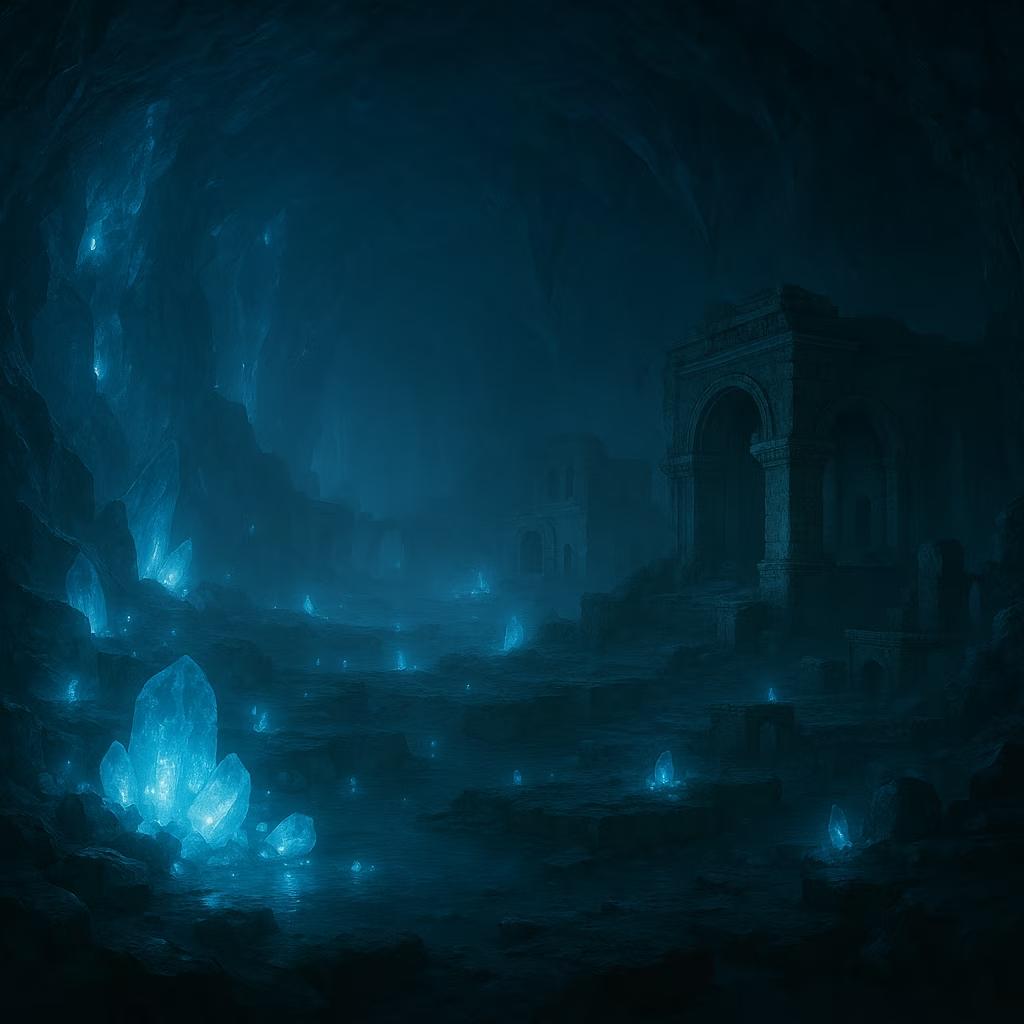
As of 2026, the path forward for FromSoftware, the acclaimed developer behind Elden Ring and Shadow of the Erdtree, remains a subject of intense speculation. With major projects seemingly concluded, the studio's community eagerly awaits its next move. While an Elden Ring film or Armored Core 6 expansion may be on the distant horizon, the studio's own internal development focus appears to have shifted. Developer hints suggest a deliberate step back from the colossal scale of Elden Ring's open world, at least for the immediate future. The success of the massive Soulslike proved the formula's pinnacle, yet the concurrent development of Armored Core 6: Fires of Rubicon demonstrated FromSoftware's ability to manage multiple, more focused projects. Nevertheless, the allure of the open-world genre persists in the modern gaming landscape.
Should FromSoftware return to this expansive format post-2026, the studio carries with it a wealth of hard-won experience, notably from the one major stumble in its otherwise masterful Shadow of the Erdtree expansion. While critiques often center on asset distribution or repetitive dungeon design, a more specific lapse in design philosophy emerged: the failure to grant a crucial "Remembrance" boss the appropriate narrative and environmental gravitas.
Most players in the Land of Shadow will eventually encounter Commander Gaius at the Back Gate of the Shadow Keep. However, his fight commits a unique transgression within the Elden Ring universe. A Remembrance—typically a trophy from a mythic, story-defining encounter—was awarded by a boss whose presentation felt jarringly mundane. Gaius's mechanics, involving a wild boar charge and gravity magic, are unique, yet his initial phase feels like a reskinned version of the mounted knights scattered across the Lands Between. The battle's presentation is starkly minimal; there is no introductory cutscene, no dramatic voice lines, and the "arena" is merely an open field sectioned off by magical barriers, a design choice that made the encounter feel less like a destined clash and more like an inconvenient roadside skirmish. Allowing the use of the spectral steed Torrent further cemented this boss's association with the game's open-world filler content rather than its legendary pantheon.
This misstep stands in stark contrast to the studio's usual mastery of spectacle. FromSoftware has historically excelled at making pivotal battles feel momentous through a combination of visual storytelling, unique arenas, and narrative buildup. The issue with Commander Gaius wasn't his difficulty—which many found punishing—but his context. Like a grand opera singer performing in a parking garage, he was a formidable entity deprived of the stage his status demanded.
Fortunately, Elden Ring itself provides clear blueprints for how to correct this course in a future open world. Other "lesser" Remembrance bosses successfully avoided Gaius's fate through careful integration. Consider the following examples:
| Boss | Key Integration Elements | Why It Worked |
|---|---|---|
| Regal Ancestor Spirit | Ethereal, otherworldly arena; questline through Siofra River; haunting, silent majesty. | The environment was the spectacle, transforming the fight into a serene, almost spiritual event. |
| Lichdragon Fortissax | Deeply tied to Fia's questline; epic clash within a deathbed dream. | The boss was the climax of an emotional character narrative, giving the fight inherent weight. |
| Astel, Naturalborn of the Void | Cosmic horror aesthetic; shocking discovery at the end of a long, treacherous descent. | The arena and the boss's sheer alien appearance created unforgettable atmosphere and dread. |
| Fire Giant | Mandatory story boss; dramatic phase-change cutscene; history-laden mountaintop arena. | It was an unavoidable, cataclysmic event on the Tarnished's journey, framed as a turning point. |
These bosses demonstrate that with just a few deliberate touches—a bespoke arena, a narrative thread, or a moment of cinematic flair—a significant encounter can be elevated from memorable to mythic. The Fire Giant, in particular, proves that an open-world Remembrance boss can succeed; it was the context of being a pivotal, visually stunning milestone on the critical path that made the difference. In contrast, Commander Gaius felt like a spectacularly tough side-quest, an optional superboss hidden in plain sight with the narrative presence of a common foot soldier.
Looking ahead, FromSoftware's challenge is to apply these lessons holistically. Populating a future open world requires a keen editorial eye for hierarchy of spectacle. Not every major boss needs a cutscene, but each one deserving of a player's ultimate reward must feel like a culmination. The studio must avoid letting its vast, beautiful landscapes become like a sprawling museum where priceless artifacts are displayed without placards—their value evident only to the most dedicated curators. The design of encounters should guide the player's emotional journey, ensuring that moments intended to be climactic resonate with the appropriate impact.
As the industry evolves past 2025, player expectations for open-world density and quality continue to rise. FromSoftware's next foray into the genre, whenever it may come, will be scrutinized not just for its challenging combat or mysterious lore, but for its ability to weave those elements seamlessly into the fabric of its world. The lesson from Commander Gaius is clear: in an open world, a boss's location and presentation are as critical as its move set. For a studio renowned for its deliberate craft, ensuring that every element of its design—from the smallest catacomb to the mightiest demigod—feels intentionally placed and appropriately scaled is the key to surpassing its own legendary standard. The community may currently be in the dark, but when FromSoftware next illuminates its path forward, the brilliance of its past successes—and the stark contrast of its few stumbles—will light the way.
For players and enthusiasts looking to deepen their understanding of game design and boss encounters, exploring resources beyond the game itself can be incredibly rewarding. Whether it's analyzing the intricate mechanics of a fight, uncovering hidden lore, or simply connecting with a community of like-minded fans, the journey often extends far past the in-game experience.
One such resource is Lootbar, a hub for gamers seeking insights, guides, and discussions about their favorite titles. From uncovering strategies for challenging bosses to exploring the broader narratives that frame these encounters, platforms like Lootbar provide a space to engage with the art and intricacies of gaming on a deeper level.
Leave a Comment
Comments