
Elden Ring's Post-Launch Playbook: How Expansions and Spin-Offs Power a Modern IP Strategy
Elden Ring's enduring legacy thrives through its masterful post-launch strategy, highlighted by the monumental Shadow of the Erdtree expansion. This game-changing DLC revitalized the Lands Between with vast new content and deep lore, setting a new standard for modern game IPs.
It's 2026, and the conversation around FromSoftware's fantasy epic Elden Ring shows no sign of slowing down. This enduring legacy is remarkable because it hasn't followed the traditional gaming sequel playbook. Unlike classic series like King's Field and Dark Souls, which stayed relevant through direct sequels, or long-running franchises like Armored Core, Elden Ring has charted a different course in the late 2020s. The game has sustained its massive cultural footprint and community engagement not with Elden Ring 2, but through a masterclass in post-launch content strategy. By combining a monumental, game-changing expansion with a bold, genre-defying multiplayer spin-off, Elden Ring has crafted a blueprint for how modern game IPs can thrive for years after their initial, blockbuster release.
🌍 The Game-Changer: Shadow of the Erdtree Sets a New Standard
Let's talk about the expansion that single-handedly revived the Lands Between: Elden Ring: Shadow of the Erdtree. For FromSoftware, downloadable content was old hat. The legendary Dark Souls trilogy had its fair share of iconic DLCs like Artorias of the Abyss and The Ringed City, which kept fans hooked for a solid year or more. But Shadow of the Erdtree? That was something else entirely. We're talking about a DLC that practically qualified as a half-sequel.
What made it so monumental?
-
A Whole New World: It wasn't just a new dungeon; it was a vast, contiguous new region—the Land of Shadow—with its own intricate geography, lore, and secrets, arguably rivaling the base game's scope in terms of exploration density.
-
Boss-Fight Bonanza: Over 80 brand new boss encounters. From terrifying, screen-filling legendary foes to challenging optional battles, it was a feast for combat enthusiasts. Even veterans got their skills thoroughly tested.
-
Loads of Loot: Eight entirely new weapon classes, alongside new spells, incantations, armor sets, and talismans. This wasn't just more gear; it fundamentally opened up new playstyles and build possibilities.
-
Deep Lore Dives: A bevy of new questlines featuring enigmatic characters like Miquella and Messmer expanded the game's cryptic narrative in massive ways, sending lore hunters into a frenzy.
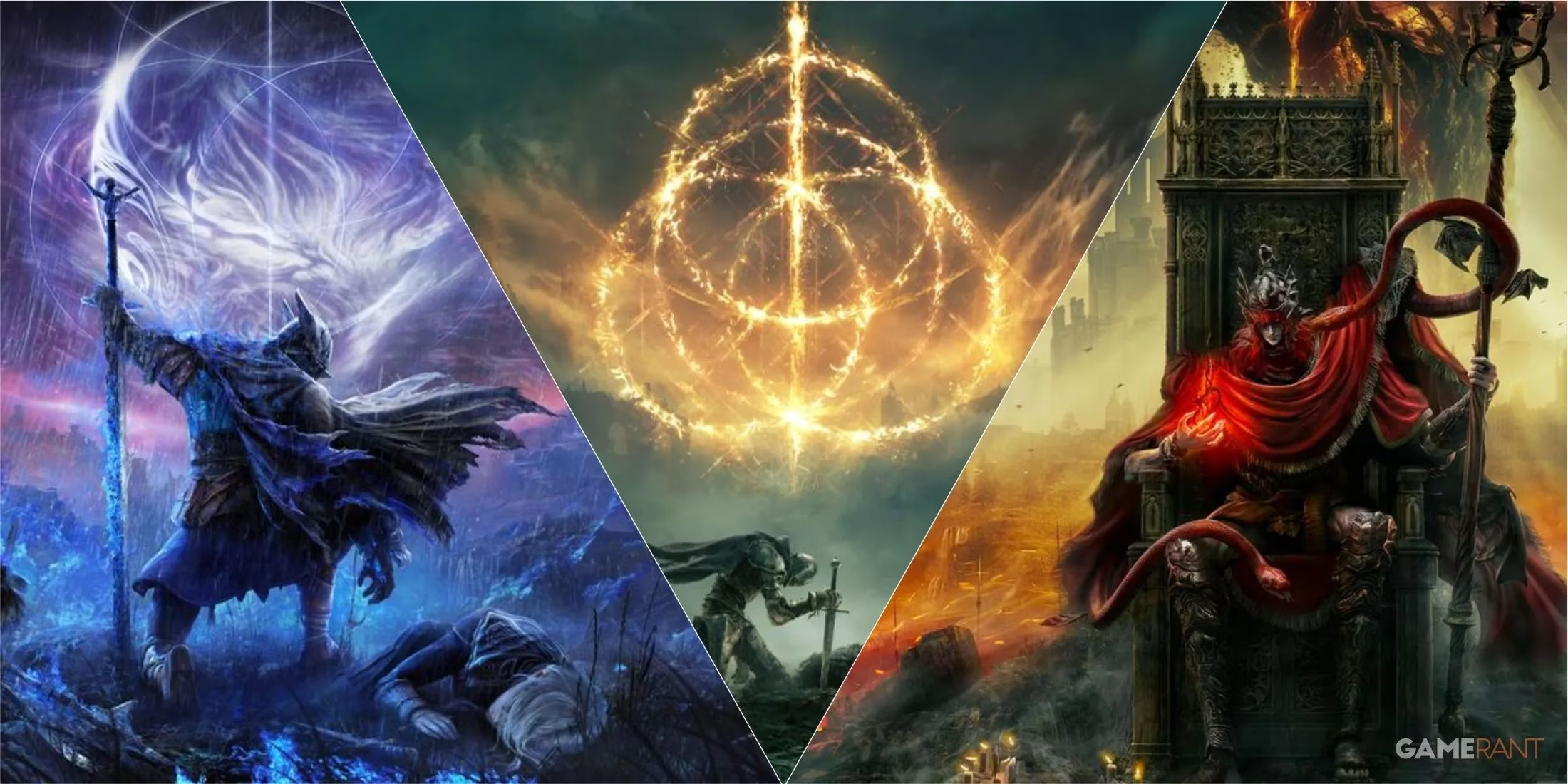
Naturally, the hype around this gigantic expansion breathed new life into Elden Ring more than two years after its 2022 debut. Crucially, the sheer volume and quality of content meant it wasn't a one-weekend affair. Players were still discovering its secrets well into 2025 and beyond, keeping the game firmly in the public eye.
From a development perspective, this was a stroke of genius. Building Shadow of the Erdtree likely took considerably less time and resources than crafting a full, from-scratch sequel. FromSoft could reuse core assets, the game engine, and fundamental mechanics, allowing them to focus resources on creating an avalanche of new content. This model is a powerful tool: a large-scale expansion can give a beloved IP a massive second wind without the need for a fully-fledged sequel, especially for titles where a direct follow-up story might not be immediately clear.
🎲 Bold Experimentation: Elden Ring Nightreign and the Spin-Off Strategy
But FromSoftware didn't stop there. Looking ahead, they're ensuring the IP's longevity with something radically different: Elden Ring Nightreign. Announced as an upcoming three-player cooperative roguelike, this spin-off is designed from the ground up for maximum replayability.
Think about it. This move shows a deep understanding of modern gaming appetites. Instead of just giving players more of the same vast, solitary adventure, they're offering a completely new way to experience the world—one focused on shared, session-based challenge and procedural generation. It's a bold experiment that leverages the IP's core strengths—challenging combat, rich atmosphere, and build-crafting—and transplants them into a popular, evergreen genre.
-
Shared Suffering (and Triumph!): The 3-player co-op focus encourages social play and community building.
-
Infinite Replayability: The roguelike structure means no two runs are the same, offering long-term engagement.
-
IP Expansion: It proves the world and concepts of Elden Ring are flexible enough to support different genres, broadening its appeal.
While the success of Nightreign remains to be fully seen as of 2026, its mere existence is a powerful statement. It demonstrates there are innovative and unique avenues to continue an IP's life beyond the binary choice of "sequel or expansion."
⚔️ A Lesson for Lost Legends: Bloodborne and Sekiro
This successful strategy casts a poignant light on some of FromSoftware's other, seemingly dormant masterpieces. Look at Bloodborne and Sekiro: Shadows Die Twice. Both are titans of the action genre, incredibly popular, and overflowing with untapped potential. Bloodborne did receive the brilliant The Old Hunters DLC, but since then? Radio silence. Fans have been desperate for more Yharnam for over a decade.
Imagine if these IPs had followed the Elden Ring post-launch playbook. What could have been?
-
A Bloodborne Expansion: A vast new section of the nightmare, perhaps exploring the deeper lore of the Great Ones or the lands beyond Yharnam hinted at in items. New trick weapons, more cosmic horror, more Hunter gear!
-
A Sekiro Spin-Off: A cooperative shinobi mission mode, or a roguelike "Memory Gauntlet" where you replay historical battles. The potential for expanding its unparalleled combat system is huge.
Instead of these worlds coming and going after their stellar debut, a strategy focused on substantial expansions or creative spin-offs could have kept their communities vibrant and exploring for years. They represent a huge reservoir of unrealized potential that Elden Ring's current approach is actively tapping into.
🔮 The Future of FromSoftware's Worlds
As we look to the future, Elden Ring's model offers a compelling roadmap. It proves that a live game—supported by thoughtful, high-value content drops and bold experiments—can maintain a dominant presence for years. This approach respects player investment, sustains community momentum, and allows developers to explore their creations in new ways without the immense pressure of a direct sequel.
For fans, this is great news. It means the worlds we fall in love with don't necessarily have to end with the credits. They can grow, evolve, and surprise us in unexpected ways. Elden Ring, through its Shadow and its upcoming Nightreign, isn't just a game; it's a living, breathing IP ecosystem. And that might just be the most significant victory of all.
So, what's the takeaway? The future of blockbuster game franchises might not always be a straight line of numbered sequels. Sometimes, the most exciting path forward is to go deeper, wider, and wildly creative with the worlds we already cherish. The Tarnished are still exploring, and it seems the journey is far from over. 🛡️✨
Leave a Comment
Comments