
Elden Ring's Outer Gods: A 2026 Guide to the Hidden Cosmic Powers Shaping the Lands Between
Explore the enigmatic Outer Gods of Elden Ring, including the mysterious God of the Twinbird and the blood-soaked Formless Mother, to uncover the hidden cosmic forces that shape the Lands Between.
Elden Ring's Outer Gods: A 2026 Guide to the Hidden Cosmic Powers Shaping the Lands Between
Yo, Tarnished! Ever since I first set foot in the Lands Between back in '22, and especially after diving into the Shadow of the Erdtree expansion, I've been absolutely obsessed with piecing together the game's lore. It's like trying to solve a puzzle where half the pieces are written in invisible ink. One of the most fascinating, and deliberately obscured, aspects is the pantheon of Outer Gods. These aren't your friendly neighborhood deities; they're cosmic forces, alien entities that exist beyond the Erdtree's golden light, each pulling strings and influencing the world in their own cryptic ways. Based on all the item descriptions, NPC ramblings, and environmental storytelling scattered across both the base game and the DLC, we can identify a whole roster of these beings. Think of them as the board of directors for the universe, while the Demigods are just middle management fighting over a crumbling office. Let's break down these enigmatic powers that shape reality itself.
12. The God of the Twinbird: The Envoy of Death
First up is arguably the most mysterious of the bunch. We don't even know its true name! This Outer God is linked to the Twinbird, Deathbirds, and Ghostflame. The  Twinbird Kite Shield calls the Twinbird its "envoy," a messenger sent to deliver... well, death. Its influence is like a cold, silent tide seeping into the world, most evident in the rise of Deathroot and Those Who Live in Death after the Night of the Black Knives. You can see its symbol—the Twinbird—etched on the shields and armor of the Mausoleum Knights, eternal sentinels guarding the dead. The
  Blue-Feathered and
  Red-Feathered Branchsword talismans are said to be feathers from its two heads, used in ancient death rituals. Its connection to the skeletal undead is clear, but its full agenda remains a secret, buried deeper than the roots of the Erdtree.
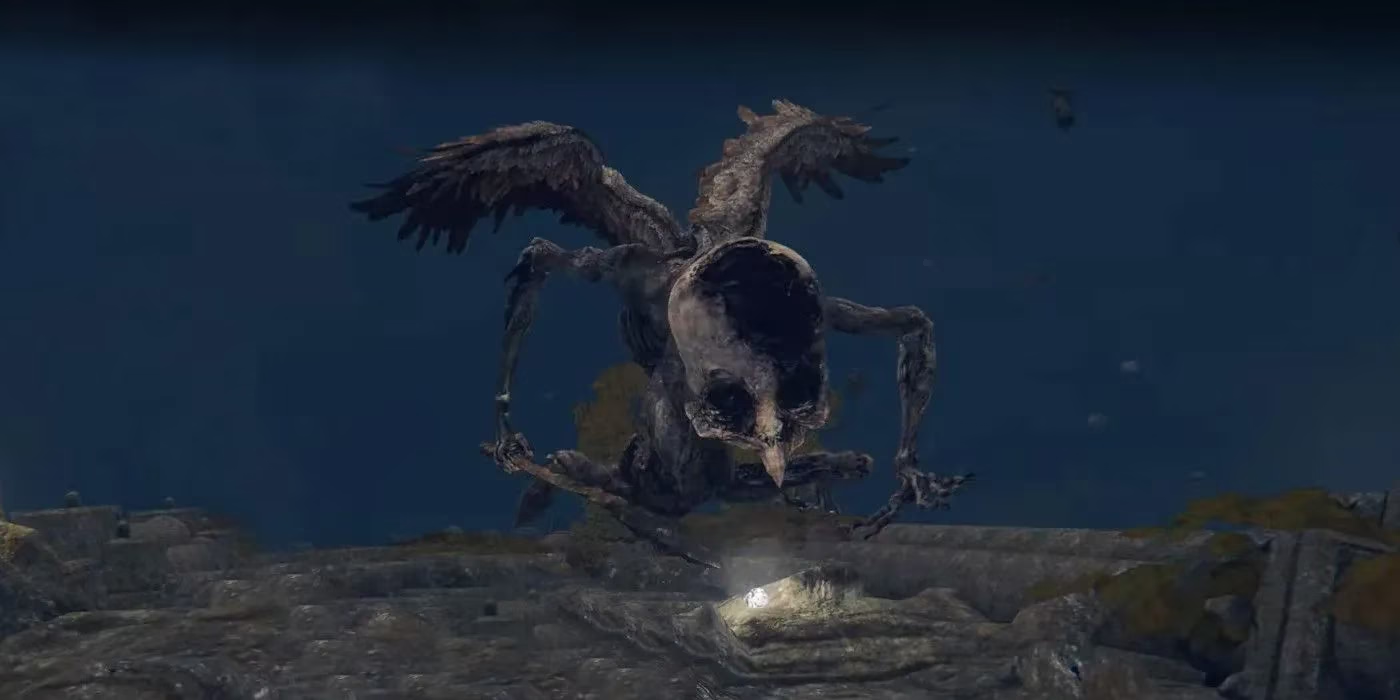
The Deathbird, a servant of the nameless God of the Twinbird.
11. The Formless Mother: Mother of Truth, Muse of Blood
Now here's an Outer God that made a splash (pun intended). The Formless Mother is all about blood, accursed blood, and the power within it. She's intimately tied to Mohg, Lord of Blood, who performed vile rituals in her name to "enrich" his blood with a fiery, chaotic energy. His whole plan was to use this power to raise his beloved Miquella to godhood—a clear sign this Outer God has the juice to elevate beings. The description for  Mohgwyn's Sacred Spear spells it out: she's "an outer god who bestows power upon accursed blood." In Shadow of the Erdtree, we see her influence isn't limited to Mohg. The Bloodfiend tribes, with their weapons like the
  Bloodfiend's Fork, also worship her, performing their own bloody rites. She's less a traditional deity and more like a sentient, hungry ocean of crimson potential, waiting for the right vessel to channel her.
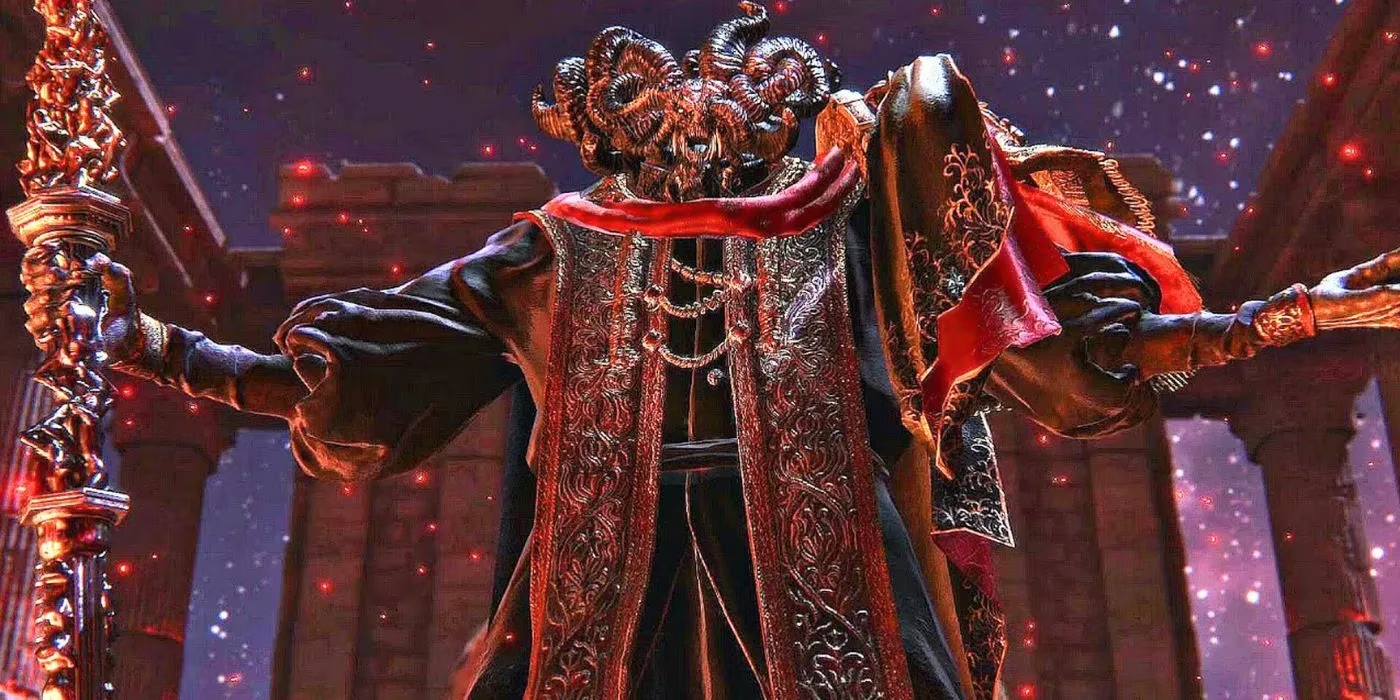
Mohg, a devout champion of the Formless Mother.
10. The Blood Star: The Edict of Thorns
Speaking of blood, meet its thornier cousin. The Blood Star is a mystifying entity discovered by a sect of criminals who had their eyes gouged out and were exiled to eternal darkness. There, they found it. Its power manifests as Aberrant Sorceries like  Briars of Sin and
  Briars of Punishment. The DLC expanded its lore with spells like
  Impenetrable Thorns, which reveal its grim "edict": "Spurn all that exists. Wound all that exists. For we have been abandoned." This isn't a god of creation or order; it's a god of rejection and painful retaliation. While it deals with blood and wounds, its magic is distinct from Mohg's Bloodflame, suggesting it's a wholly separate, nihilistic force. Understanding it is like trying to hear a scream from the other side of a black hole—you know it's there, but the message is pure, distorted agony.
9. The Sealed God of Scarlet Rot: The Ancient God That Was Rot Itself
This one has a clear backstory, thanks to item lore. An ancient, flowing swordsman, aided by a blue fairy, sealed away "an ancient god — a god that was Rot itself." This tale is depicted on the  Blue Dancer Charm. The divine essence of this Outer God is sealed beneath the Lake of Rot, and weapons like the
  Scorpion's Stinger are made from its relics. Malenia, Blade of Miquella, was almost certainly a follower or avatar of this sealed god. Her connection to the Scarlet Rot, her transformation into the Goddess of Rot in her second phase—it all points to her drawing power from this entombed entity. It fits the pattern: Demigods seeking an Outer God's patronage to ascend. This god isn't just associated with decay; it is decay, a passive, all-consuming force waiting to be unsealed.
8. The Frenzied Flame: The Uncontainable Chaos
Is it an Outer God or a primal force? The debate rages on. The Three Fingers, its emissary, speaks of melting all of creation away with the yellow chaos flame, returning everything to the primordial "One Great" to correct the "mistake" of fracture and life brought by the Greater Will. Its philosophy is absolute nihilism: "May Chaos take the world!" The Frenzied Flame behaves like an Outer God—it has emissaries (the Three Fingers, Shabriri), it offers power and an ending, and its influence can be specifically warded off by  Miquella's Needle, which "wards away the meddling of Outer Gods." Yet, it feels more like an uncontrollable cosmic reset button than a sentient planner. In Shadow of the Erdtree, we see the tragedy of Midra, who failed to become its Lord, a fate we can choose to embrace. It's the ultimate wild card in the deck of cosmic powers.
7. The Full, Dark, & Twin Moons: Celestial Rivals
While not explicitly labeled "Outer Gods," these celestial bodies act exactly like them. Each is tied to a powerful sorceress and represents a different aspect of lunar power:
-
Rennala's Full Moon: Associated with enchantment and bewitchment.
-
Ranni's Dark Moon: A being Ranni herself fears, central to the Age of Stars ending.
-
Rellana's Twin Moons: A fusion of moon and flame.
Ranni's ending monologue is key: "Now cometh the age of the stars. A thousand-year voyage under the wisdom of the Moon." She's essentially replacing the Greater Will's Golden Order with a new order guided by the Dark Moon's wisdom. This implies the Dark Moon is a conscious, intelligent entity capable of dispensing guidance and establishing a new cosmic regime—a classic Outer God move. They are the silent, watchful patrons of the Carian royals and their lunar sorcery.
6. The Fell God: The One-Eyed Giant's Fury
This is a god of pure, destructive fire, once worshiped by the Fire Giants. The  One-Eyed Shield describes it as "a malformed one-eyed god" that Queen Marika believed she had slain. She didn't kill it, though; she contained it. Godfrey defeated the Giants, and the Fell God's Flame of Ruin was confined to the giant's cauldron in the mountaintops. The
  Flame of the Fell God spell says it still "lurks" within the Giants. Its influence even reaches the Shadow Realm, where the Hornsent's
  Furnace Visage depicts it. This god is rage and ruin given form, a smoldering hatred imprisoned but never extinguished.
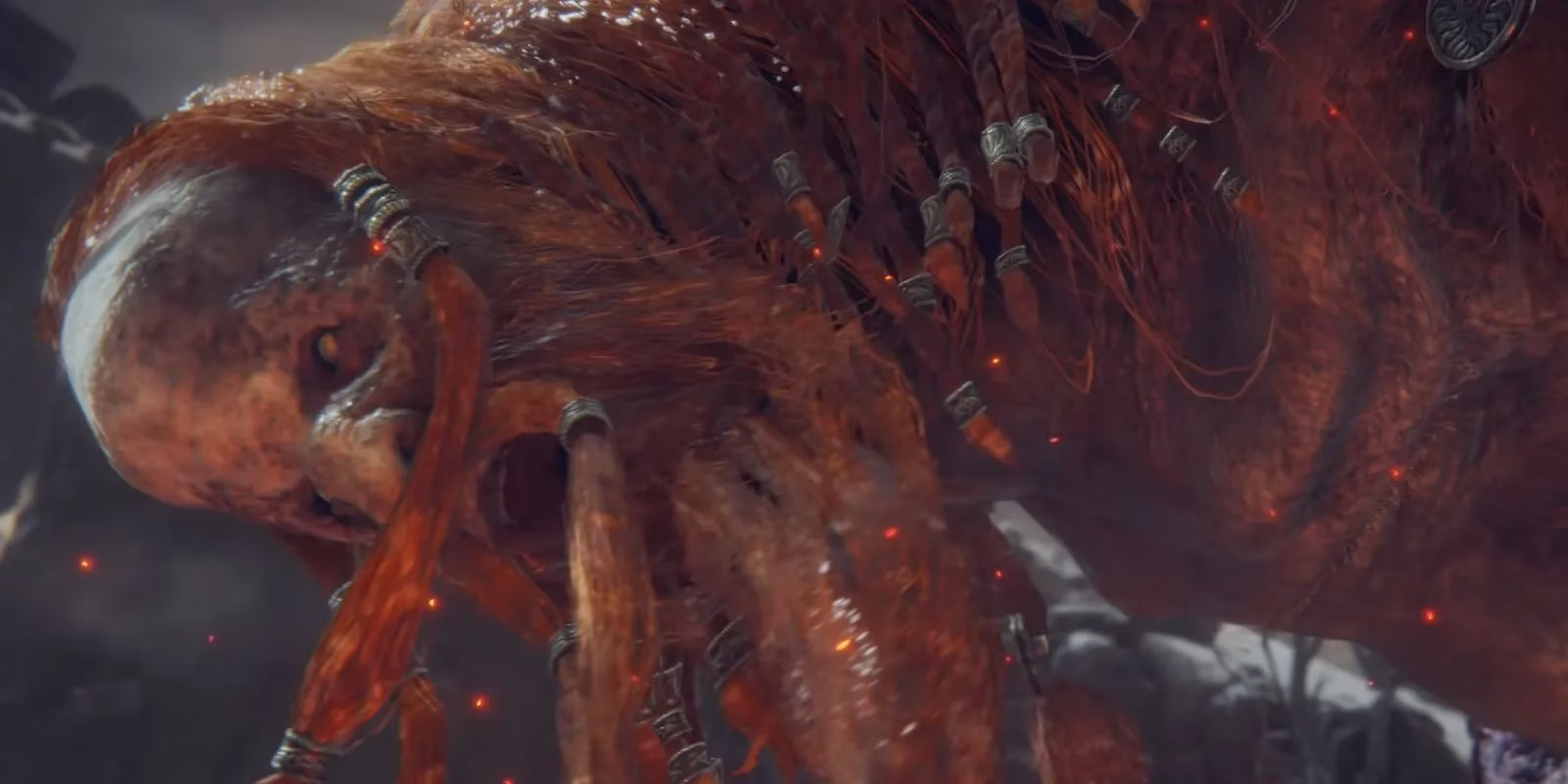
The Fire Giant, a living monument to the Fell God's imprisoned fury.
5. The Ancient Dragon God: The Lord Beyond Time
Dragonlord Placidusax, the storm-wreathed boss in Farum Azula, was once an Elden Lord who served an Outer God. His  Remembrance states: "once his god was fled, the lord continued to await its return." He's literally waiting in a storm beyond time for his god to come back. The
  Ancient Dragon Smithing Stone, made from his scale, "lightly twists time," hinting that this Outer God itself might exist outside of time's flow. Was it the Greater Will in a different form? Or a wholly separate timeless entity? Its nature is one of the game's biggest mysteries. Placidusax's eternal vigil is as heartbreaking as it is terrifying—a king waiting for a master who may never return, his loyalty as vast and empty as the sky he inhabits.
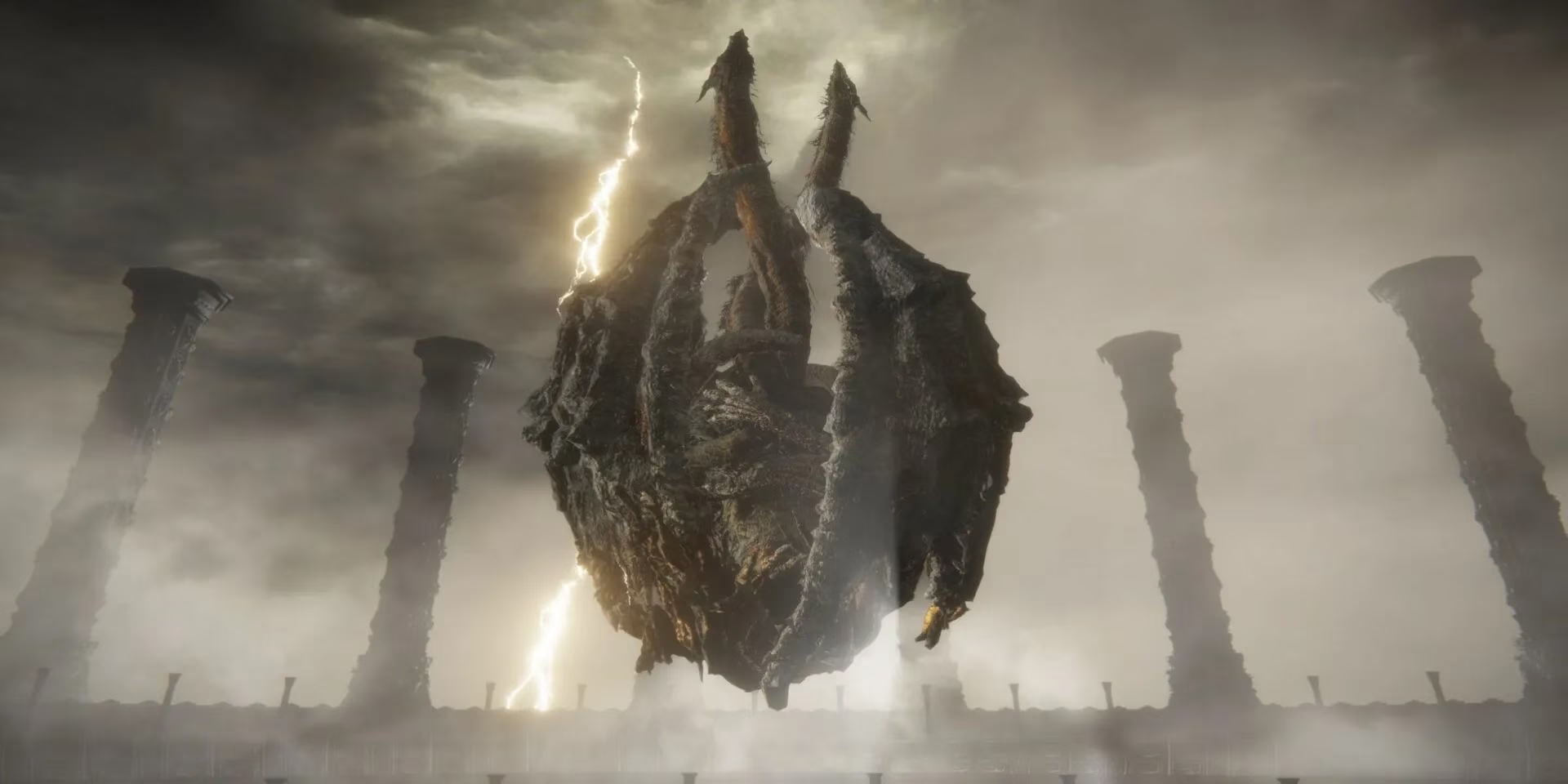
Placidusax, the eternal lord in waiting.
4. The God-Devouring Serpent / Eiglay: The Blasphemous Hunger
Is a serpent that can devour gods itself a god? The case for Eiglay is strong. This massive serpent, fought in Volcano Manor before it merges with Rykard, had its own temple and worshippers. Its very title, "God-Devouring," suggests it operates on a level that threatens other deities. In the Shadow Realm's Bonny Village, we find a huge shed snakeskin and great jars similar to those in Eiglay's temple, hinting at a broader, serpentine cult across the cosmos. It represents a primal, consuming hunger that seeks to overturn the divine hierarchy by literally eating it. It’s less a philosophical Outer God and more a cosmic predator.
3. The Primeval Current: The Glintstone Abyss
The Primeval Current is the deep, underlying source of glintstone sorcery and stellar magic. Sorcerers like Azur and Sellen sought it, with Azur glimpsing into it and seeing only a terrifying darkness. The  Founding Rain of Stars sorcery says the astrologer's glimpse of it "became real," causing stars to rain down. It's debated if it's a true Outer God or a fundamental force, but its power is undeniable. The Carian Royal Family, who are aligned with the Moons, detest primeval sorcery, which implies it's a rival power source of comparable scale. It's the raw, unfiltered magic of the cosmos, a current flowing from the abyss between stars that can enlighten or drive one mad. Seeking it is like trying to stare directly into the heart of a neutron star—you might gain ultimate knowledge, or you might just have your mind unraveled into cosmic dust.
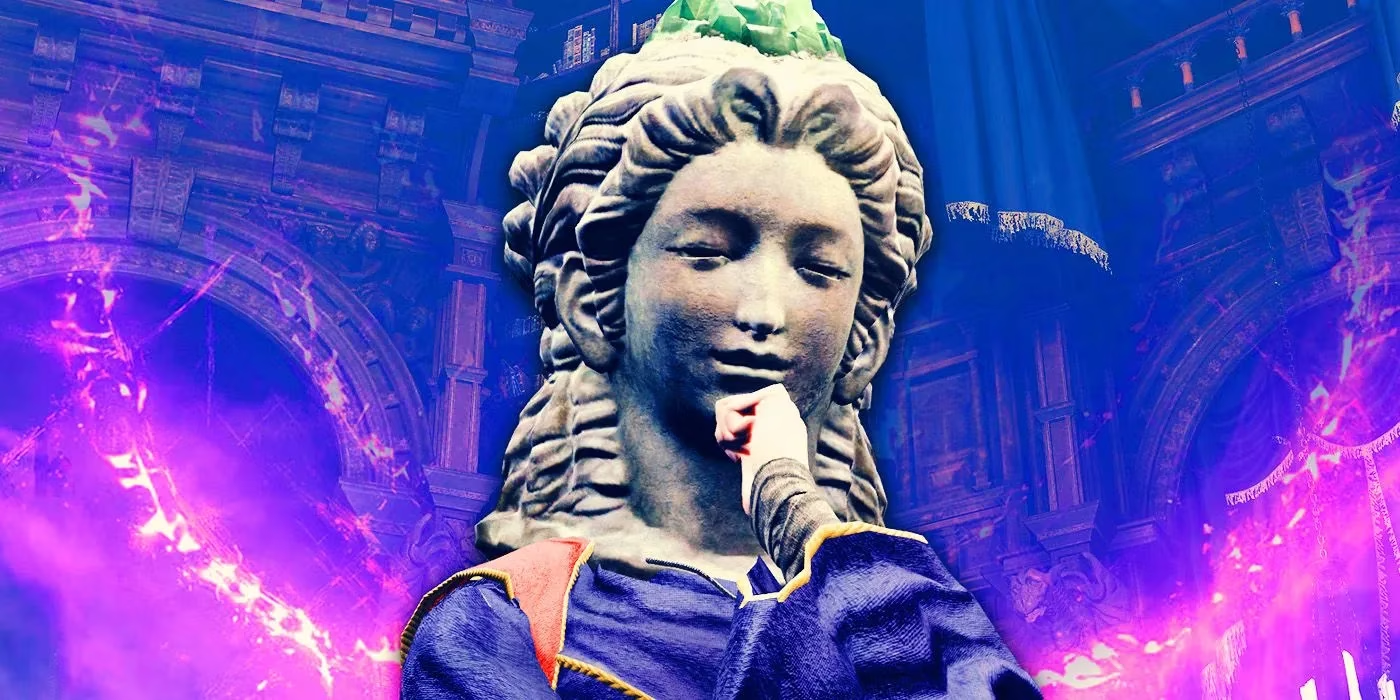
Sorceress Sellen, exiled for her pursuit of the Primeval Current.
🎮 Final Thoughts from a Lore Hunter in 2026
Looking back years later, what's incredible about Elden Ring's Outer Gods is how they create a living, breathing cosmology. The Greater Will and the Golden Order aren't the only game in town—they're just the current management. Beneath and beyond them lies a whole ecosystem of competing cosmic principles: Rot, Blood, Chaos, Death, the Void, the Stars. The Demigods' wars are just proxy battles for these higher powers. Each Outer God is like a different genre of music trying to become the universe's only soundtrack, with the Tarnished as the ultimate DJ deciding which track gets played. Their mysteries are what keep us digging through item descriptions and theorizing years later. The lore is a gift that keeps on giving, and these Outer Gods are its most enigmatic and powerful pieces. Now, if you'll excuse me, I have a date with a certain Dragonlord to see if his boss has clocked in yet. 🙏
As we continue to explore the depths of Elden Ring's lore, the community of lore enthusiasts and gamers provides invaluable insights and discussions. With countless theories and interpretations surrounding the enigmatic Outer Gods, platforms dedicated to gaming culture become essential for connecting with fellow fans and uncovering hidden secrets. For those looking to dive deeper into the mysteries and engage in vibrant discussions, Lootbar offers a great space to explore and exchange ideas with other passionate gamers.
Whether you're seeking the latest theories, guides, or simply a place to share your thoughts on the cosmic narratives that shape the Lands Between, joining discussions on such platforms can enhance your journey through the game. As Elden Ring continues to be a source of inspiration and wonder, engaging with communities like Lootbar can enrich your experience and keep you immersed in the ever-evolving world of gaming lore.
Leave a Comment
Comments