
Elden Ring's Evolving Combat: From Base Game Foundations to Shadow of the Erdtree's Frenetic Fray
Elden Ring's Shadow of the Erdtree DLC masterfully elevates the game's combat philosophy to a relentless, fever-pitch intensity. This brutal evolution transforms the core combat loop, demanding perfect mastery from players.
The world of the Lands Between and its newly revealed Land of Shadow is a crucible of combat, a relentless testing ground where FromSoftware's signature design philosophy is pushed to its absolute limits. A player's journey through this unforgiving landscape is defined by a constant, brutal dialogue with its inhabitants—from the lowliest foot soldier to the most imposing demigod. The transition from the vast, sprawling challenges of the base Elden Ring experience to the concentrated, fever-pitch intensity of the Shadow of the Erdtree expansion represents one of the most significant and debated evolutions in the studio's history. It's a shift that has fundamentally reshaped how players engage with the game's core combat loop, dividing the community while simultaneously forging a more complete, if more demanding, whole.
From the very first moments, Elden Ring establishes a tone of overwhelming, often insurmountable challenge. The Grafted Scion, a grotesque, multi-armed horror, serves as the player's unwelcome greeting committee. This foe is a far cry from the tutorial bosses of Souls games past; it presents a near-impossible wall for a fresh Tarnished, a brutal lesson in humility and mortality. This philosophy is immediately reinforced by the imposing Tree Sentinel patrolling the hills of Limgrave. Both encounters share a crucial lesson: while daunting at first, mastery is possible through observation and adaptation. The Tree Sentinel's ponderous swings can be exploited with well-timed counters, and the Grafted Scion's flurries can be learned and punished. The core tenet of any Soulslike—learning an enemy's moveset—is laid bare here, but Elden Ring complicates it with a staggering diversity of attack timings and telegraphs, some clear, some deliberately deceptive.
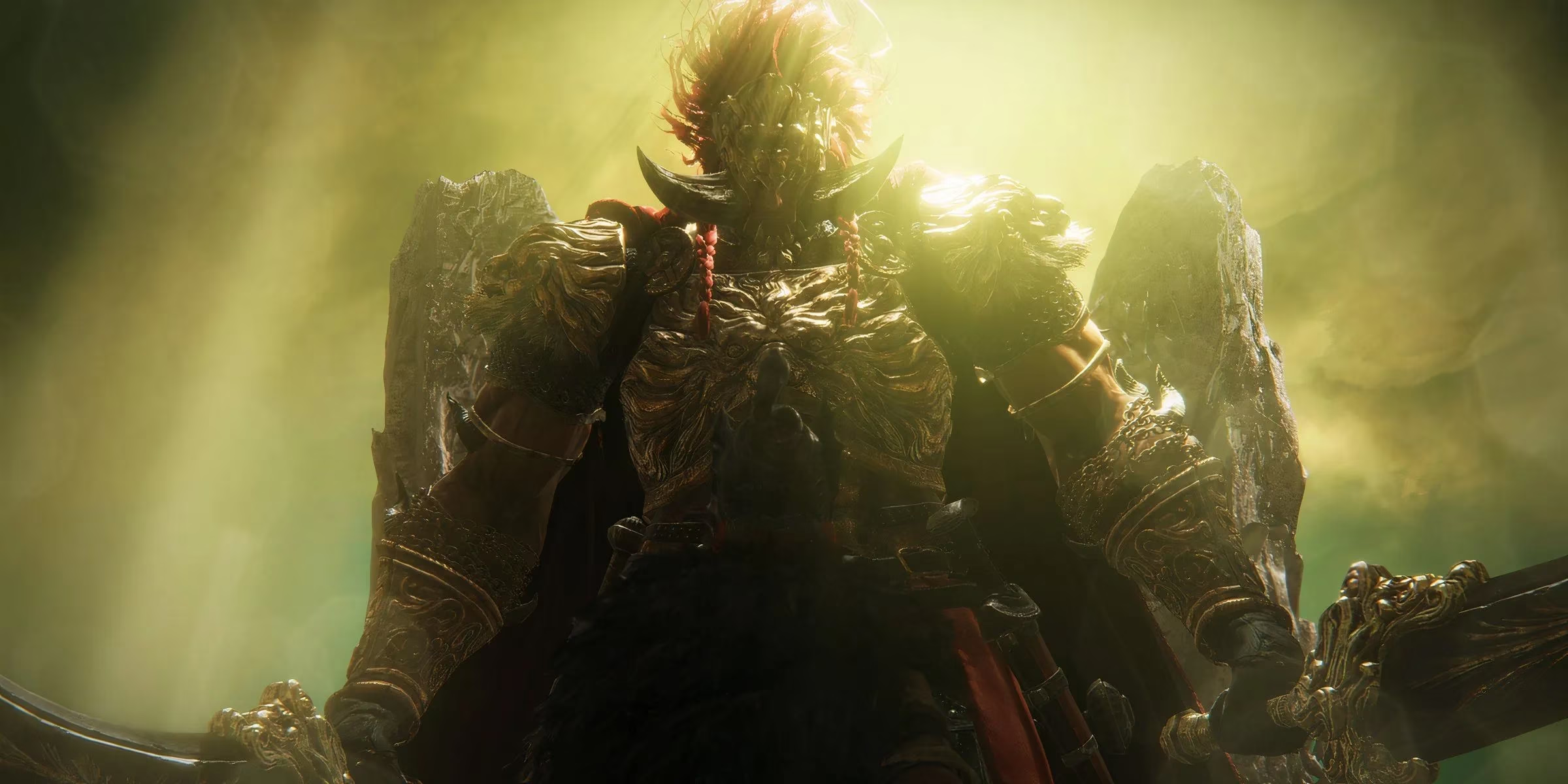
The base game's roster is a masterpiece of variety, boasting over a hundred hours of content filled with foes ranging from the "insignificantly trivial to unfathomably epic." Bosses like Malenia, Blade of Miquella became legends in their own right, her Waterfowl Dance a skill-check that separated the devoted from the defeated. Her aggression was fearsome, her health-sapping ability a constant threat. Yet, as formidable as she was, Shadow of the Erdtree would reframe her intensity in a shocking new light. The DLC didn't just introduce new enemies; it introduced a new pace, a new rhythm of combat that made the base game's most frantic encounters seem almost methodical by comparison.
The Land of Shadow is populated by adversaries whose attack patterns consist of relentless, seemingly endless chains of strikes. Where a base game boss might have a combo of three or four hits, DLC foes unleash barrages of eight, ten, or more consecutive attacks, leaving players with a binary choice: perfect, endless dodging, or the absolute commitment of a greatshield and unwavering poise. This design philosophy crystallizes in several now-infamous figures who have become the focal point of community discourse. The Blackgaol Knight in the Western Nameless Mausoleum is a relentless duelist. Commander Gaius, charging through the ruins of Scaduview, is a devastating force of momentum. And the climactic battle against Promised Consort Radahn in Enir-Ilim is a symphony of aggression that pushes the player's endurance to the brink. 😮
Comparing these new champions to the old highlights the seismic shift. Messmer the Impaler, with his serpentine flames and punishing reach, operates on a different wavelength of aggression than most base game lords. The Putrescent Knight exudes a constant, oppressive threat. Rellana, Twin Moon Knight, dances with a deadly grace that demands split-second reactions. Placed beside them, even the Goddess of Rot, Malenia, can feel more like a duel of precise maneuvers rather than a sheer survival test against an endless storm. This has naturally split the player base into distinct camps:
-
Camp A: The Adrenaline Adherents 🎯 This group thrives on the new, breakneck pace. They adore the hyper-aggression, viewing it as the ultimate test of skill, reaction time, and mastery. For them, defeating a boss like Gaius or Radahn is the pinnacle of the Soulslike experience—a pure, uncompromising challenge.
-
Camp B: The Apprehensive Traditionalists 🛡️ This corner of the community finds the shift jarring and, at times, alienating. They appreciate the deliberate, telegraphed dance of the base game and feel the DLC's endless combos cross a line from challenging to punitive, relying more on endurance than learning.
The debate rages on, but it's crucial to view Shadow of the Erdtree not as a replacement, but as a complement. The DLC changes fundamental rules, most notably progression through Scadutree Fragments rather than just rune-based leveling, forcing even veteran Tarnished to adapt. Yet, as a macrocosmic whole, the expansion completes Elden Ring. It provides a contrasting, heightened intensity that recontextualizes the entire journey. The base game teaches you the language of this world—its rhythms, its rules, its cruel poetry. The DLC then demands you speak that language fluently, under extreme duress, and at a frantic, breathless pace. One package establishes the foundation; the other stress-tests it to its absolute limit. Together, they form a diptych of despair and triumph, a balanced, if brutally demanding, portrait of FromSoftware's evolving vision for combat in a vast, unforgiving world. The legacy of the Lands Between is now inseparably grafted to the frenetic fury of the Land of Shadow, a testament to a studio forever willing to reshape the challenges it lays before its players.
Leave a Comment
Comments