
Elden Ring Nightreign's Network Test: A Crucible for FromSoftware's Cooperative Vision
Elden Ring Nightreign network test promises a thrilling cooperative roguelike experience, but faces high-stakes challenges for online stability.
In the sprawling, ever-expanding universe of Elden Ring, a new chapter is poised to begin, one that hinges not on a solitary Tarnished's journey, but on the coordinated efforts of three. As of 2026, FromSoftware, a developer synonymous with challenging single-player epics, is venturing into relatively uncharted territory with Elden Ring Nightreign. This standalone cooperative experience, built upon the foundation of its predecessor but infused with procedurally generated environments and Roguelike mechanics, represents a bold pivot. While the game can be tackled solo, its heart beats in rhythm with a trio of predefined heroes. For a community accustomed to solitary struggle, this announcement was a seismic shift, leaving some ardent fans apprehensive. The upcoming network test, therefore, is not merely a technical trial; it is a high-stakes preview that will shape the game's destiny long before its official release. 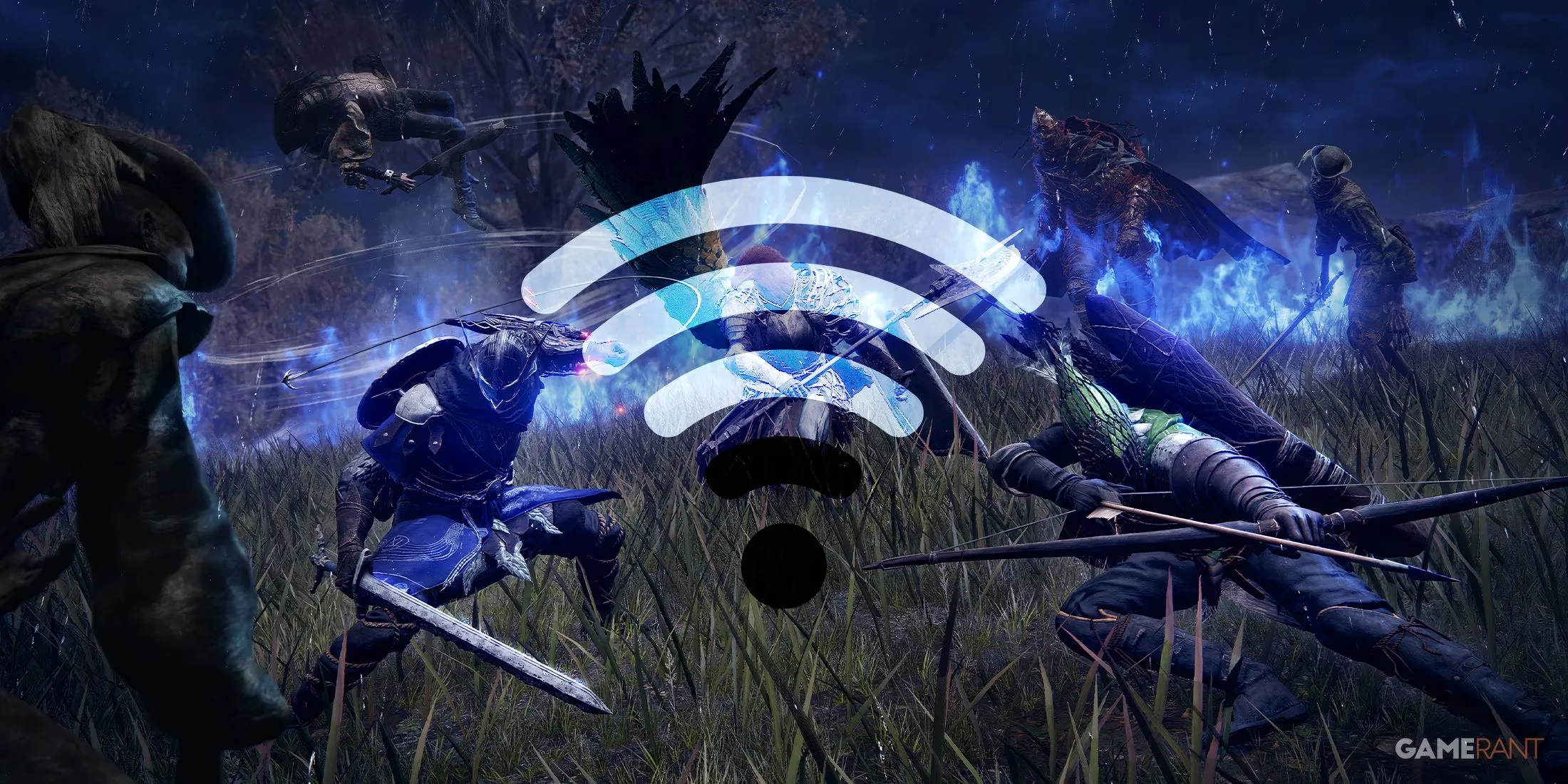
The Network Test: A Double-Edged Grace
For Elden Ring Nightreign, the network test is a necessary yet perilous rite of passage. In the world of online gaming, a public test can be a double-edged sword, capable of forging a game's reputation or shattering it before it truly begins. FromSoftware's reputation for polished, immersive worlds is legendary, but delivering a "high-quality and stable online cooperative experience" is a different beast altogether. The test serves as the game's first true crucible, where its networked skeleton will be stress-tested by a eager, yet critical, player base. A smooth experience could ignite widespread anticipation, while technical stumbles could cast a long, lingering shadow. History is littered with titles whose pre-launch tests became cautionary tales, their potential marred by early missteps that echoed loudly in the court of public opinion.
Potential Pitfalls in the Crucible
The success of Nightreign is intrinsically tied to the seamless function of its online infrastructure. The network test will be a stark reveal of its current state, and several specters haunt this digital proving ground:
-
Server Overload: This is the most common ogre at the gate of any online launch or test. If selected players are met with endless login queues or outright denial—a scenario where the game's welcoming bonfire is more like a logjam in a spectral river—frustration will mount rapidly. Players granted early access may feel their privilege squandered, leading to negative word-of-mouth that can be difficult to quell.
-
Matchmaking Failures: The core promise of Nightreign is cooperative play. If players cannot reliably form their trio, the entire premise crumbles. This issue plagued even the mighty Shadow of the Erdtree expansion at launch, as countless Tarnished sought aid against foes like Messmer the Impaler. A failed matchmaking system in the test would be like a summoning sign that flickers and dies before a connection is made—a profound betrayal of the game's central covenant.
-
Latency and Lag: In a game where precise dodges and timed parries mean the difference between glorious victory and humiliating defeat, even minor lag can be catastrophic. A delayed input in Nightreign could feel less like a network hiccup and more like a malignant ghost subtly tugging at a warrior's sword arm, turning a calculated strike into a fatal misstep. Persistent latency during the test would raise serious doubts about the viability of its combat-focused co-op.
The Gauge of Interest and Burnout
Beyond mere technicalities, the network test will function as a vital cultural barometer for the Elden Ring franchise. It is a live experiment to measure two critical factors:
-
Genuine Interest in the New Formula: Nightreign is not Elden Ring 2. Its Roguelike loops and focus on predefined team play represent a significant departure. The test offers intrigued players a hands-on opportunity to answer the fundamental question: Does this new direction resonate? Is the cooperative Lands Between a world they wish to inhabit, or does it feel like a dissonant echo of the original?
-
The Specter of Elden Ring Burnout: By 2026, the Lands Between have been explored exhaustively. The test will be a clear indicator of whether the community is hungry for more content in this universe, or if the well of interest has run dry. A tepid response may signal that players are ready to let the Erdtree rest, at least for a while, regardless of the game's individual merits.
For the lucky participants, the network test is a rare gift: the chance to render a personal verdict on FromSoftware's ambitious gamble long before the credits roll. Their collective experience, a tapestry woven from moments of seamless cooperation and frustrating disconnections, will write the first—and arguably most important—chapter in the story of Elden Ring Nightreign. The data harvested and the stories shared from this digital trial will undoubtedly shape the final steps of the game's journey to launch, determining whether it emerges as a celebrated evolution or a curious, cooperative footnote in the studio's storied history.
Leave a Comment
Comments