
Elden Ring Nightreign: A Lore Revolution
Discover how Nightreign's parallel universe twist in Elden Ring challenges the Erdtree's divine power, offering a wild, chaotic, and immersive new experience.
As a hardcore Elden Ring fan, I've been obsessing over Nightreign's release, and let me tell you, its parallel universe twist has me questioning everything I thought I knew. The game drops us into Limveld—a procedurally generated version of Limgrave—where the iconic Erdtree is completely gone. This isn't just a gameplay tweak; it's a seismic shift in the lore that forces us to rethink the Erdtree's godlike status. In the original Elden Ring, that golden tree was the heart of the Golden Order, governing life, death, and rebirth like some divine conductor. But here? Limveld feels wild and untamed, making me wonder if we've been fed myths all along. Personally, diving into this chaotic co-op roguelike loop feels like stepping into a storm where every run reveals new secrets—I'm both exhilarated and unnerved by how Nightreign challenges the foundations.
Now, let's unpack this lore bomb. In Elden Ring, the Erdtree was the absolute axis of divinity, symbolizing Queen Marika's order. It defined the metaphysical laws, turning the Lands Between into a structured realm. But Nightreign rips that out, presenting Limveld as a parallel dimension where no such tree exists. Why is this so mind-blowing? Because it directly confronts the Erdtree's supposed omnipotence. If it truly was the source of life and immortality, how come Limveld's inhabitants thrive without it? The gameplay reflects this chaos—fast-paced, unpredictable roguelike sessions that feel like a frantic dance compared to Elden Ring's methodical exploration. I remember playing the original and feeling anchored by the Erdtree; in Nightreign, it's like being adrift in an ocean where every wave could be a new revelation.
Here's a quick comparison to highlight the changes:
| Aspect | Elden Ring | Nightreign |
|---|---|---|
| Setting | Lands Between with Erdtree | Limveld, parallel universe |
| Core Lore | Erdtree as divine order | Erdtree absent, lore questioned |
| Gameplay Style | Open-world RPG with structured combat | Roguelike co-op, chaotic loops |
| Tone | Mystical and controlled | Wild, rebellious, and fast |
Subjectively, this shift hits hard. The Erdtree's absence isn't just a void; it's an invitation to see it as a symbol of stasis and corruption. Think about it—in Elden Ring, the Erdtree denied true death, leading to undead curses and decay. Without it, Nightreign's world might actually feel more alive or balanced, like a forest reclaiming an abandoned city. I've spent hours in both games, and the contrast is stark: Limveld hums with a raw energy that makes me question if the Erdtree was ever benevolent or just a control mechanism. The decision to delay the Switch 2 version to 2026 only heightens the anticipation—I'm itching to see how this unfolds on new hardware.
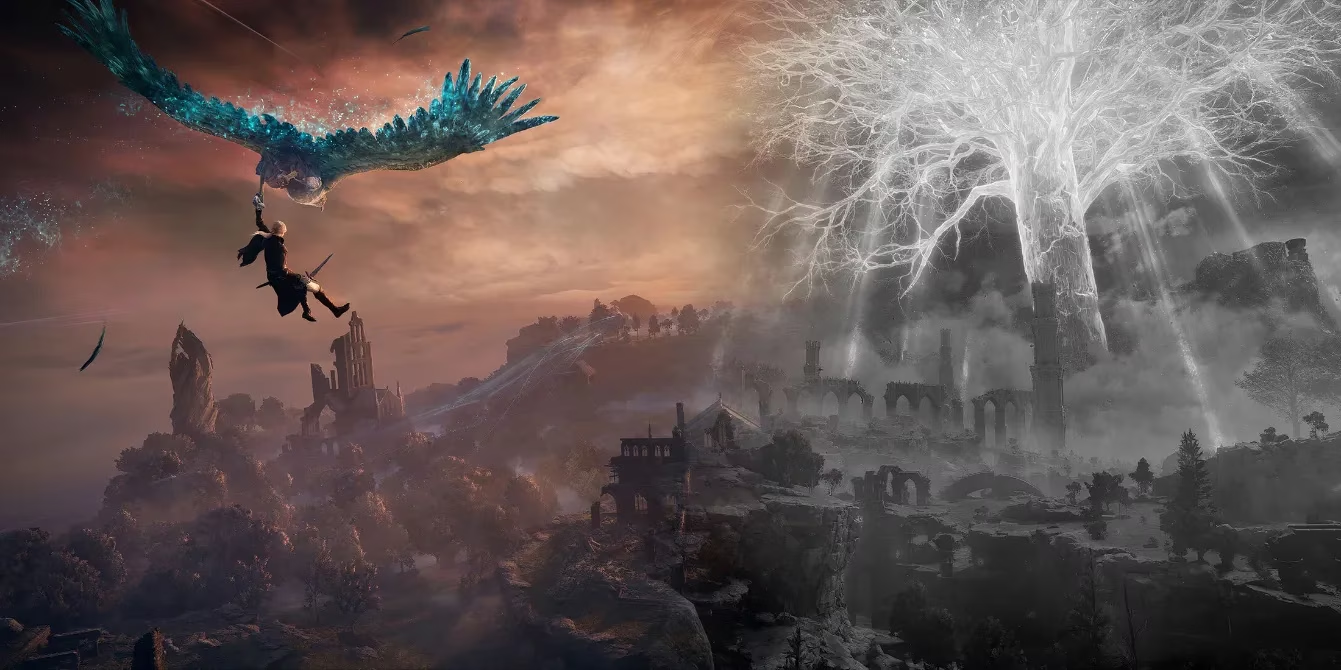
Adding to the immersion, the visual and audio design in Elden Ring games is stunning. Nightreign builds on that with procedurally generated landscapes that shift like a kaleidoscope of nightmares and dreams. Here's a glimpse of Limveld's mysterious vibe:
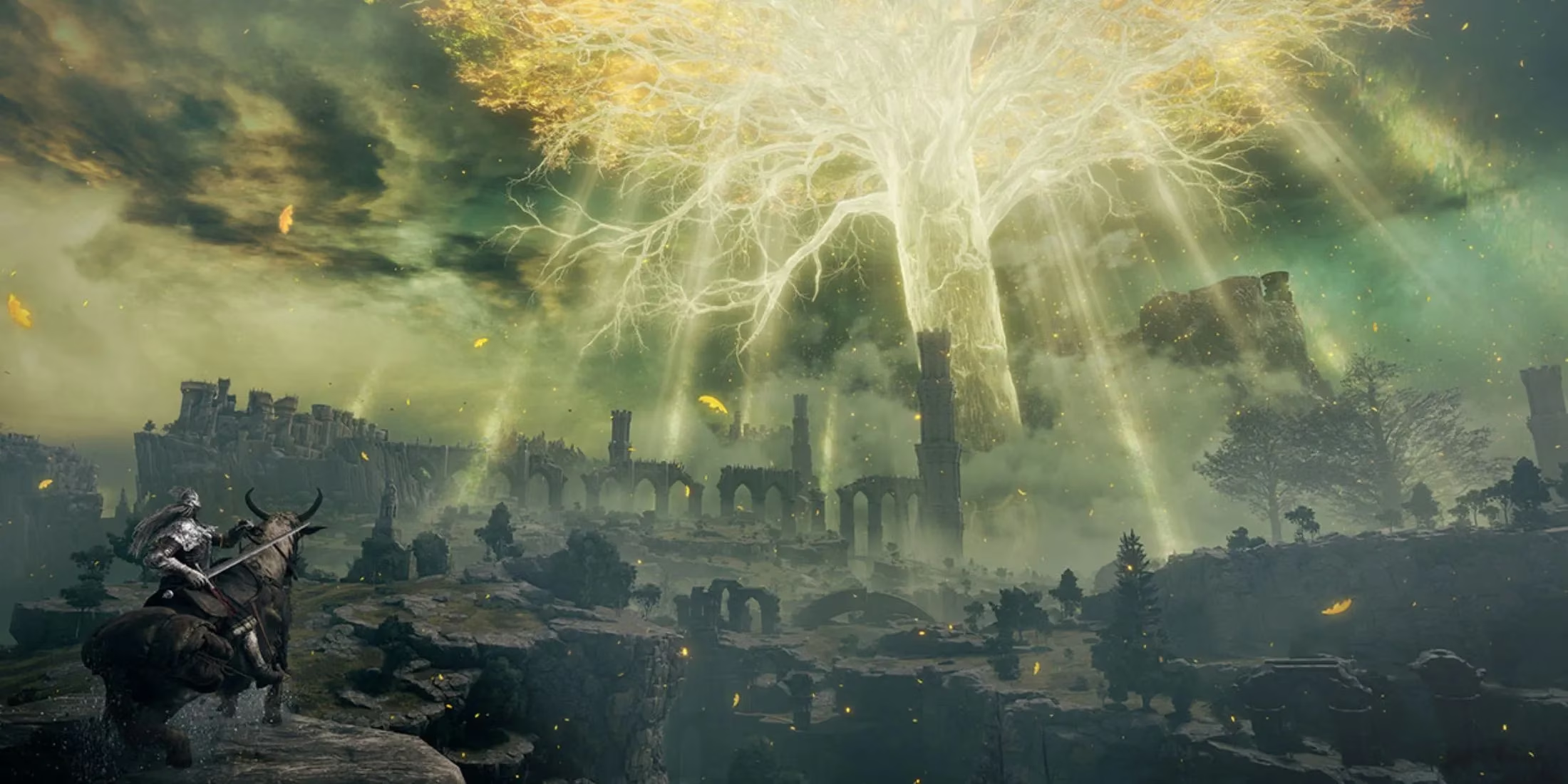
And for contrast, the original Erdtree's imposing presence:
Playing this, I can't help but draw personal parallels. The Erdtree's disappearance feels like pulling a master key from a locked door—suddenly, every room in the mansion of lore is accessible, but the foundations creak with uncertainty. It's as if Nightreign is a mirror reflecting Elden Ring's truths back at us, distorted and revealing. Another metaphor: Limveld without the Erdtree is like a symphony without a conductor, each note chaotic yet harmonizing in unexpected ways. As a player, this depth keeps me hooked, wondering what secrets FromSoftware will unveil next.
So, what do you think—could Nightreign's world hint that the Erdtree was never the benevolent force we believed, but a cage we didn't realize we were in?
For more perspectives on game worlds that challenge established lore and offer fresh takes on immersive universes, check out zzzverse, a dedicated blog for Zero Zone Zero fans and gaming enthusiasts.
Leave a Comment
Comments