
Elden Ring Fans Express Disappointment Over Ranni's Unchanged Role in Shadow of the Erdtree
Elden Ring fans express disappointment over Ranni's questline remaining unchanged in Shadow of the Erdtree, craving deeper narrative integration.
The fervent community surrounding Elden Ring has recently voiced a collective sense of disappointment, centering on FromSoftware's choice to leave the intricate questline of the enigmatic witch Ranni untouched in the monumental expansion, Shadow of the Erdtree. While the DLC masterfully introduced a vast new realm and narrative centered on Miquella, it deliberately avoided retroactive alterations to the established base game. This design decision, though understandable from a development standpoint, has left a segment of the fandom lamenting a missed opportunity, particularly concerning one of the game's most beloved and consequential characters.
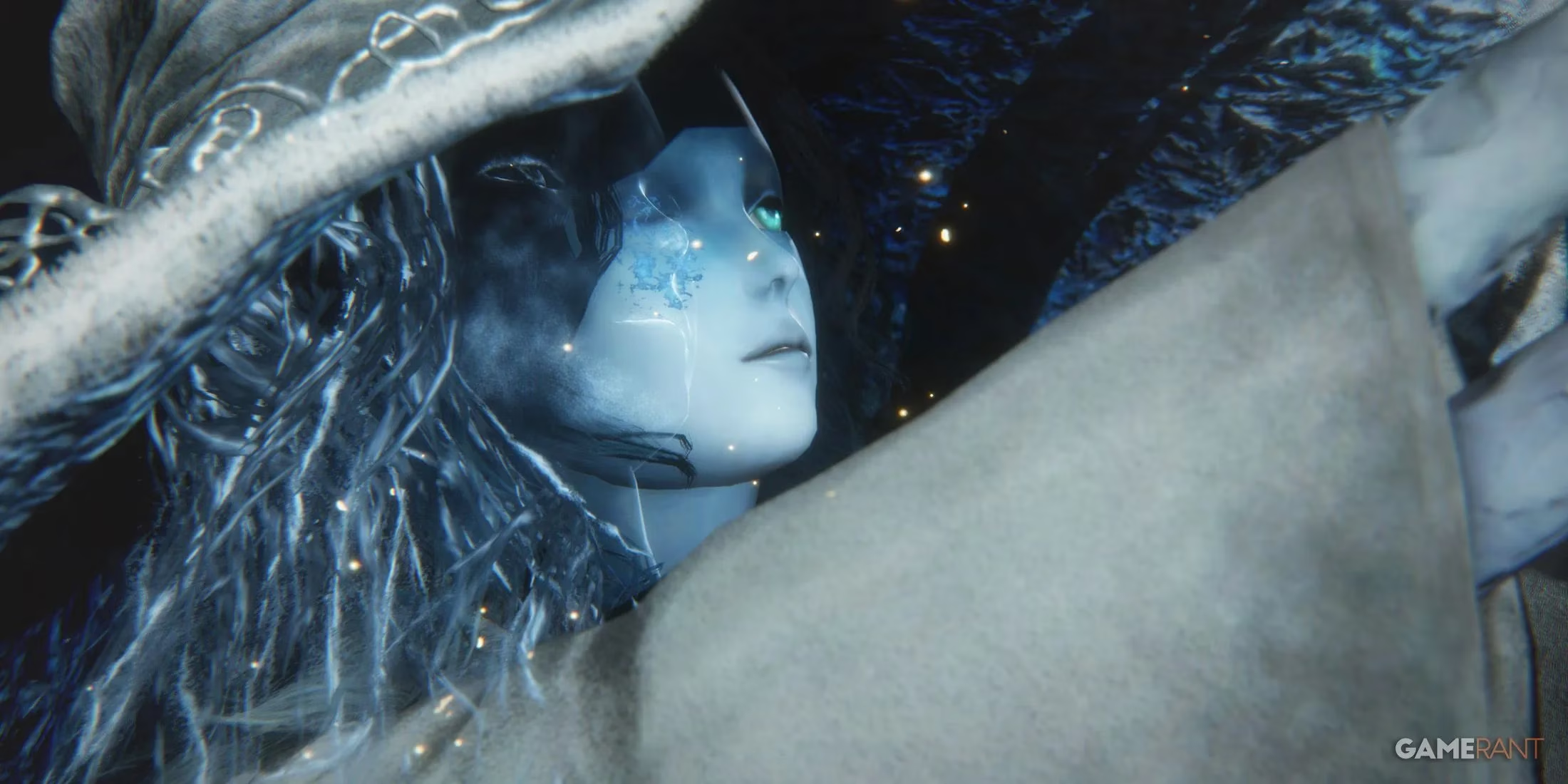
The Pinnacle of Endings: Ranni's Age of Stars
Ranni's narrative arc culminates in what is widely regarded as the most fulfilling and thematically rich conclusion to Elden Ring: the Age of Stars. Achieving this ending is no small feat, requiring the Tarnished to navigate a labyrinthine series of tasks across the Lands Between. This pilgrimage involves:
-
Locating Ranni early at her rise in Liurnia.
-
Aiding her loyal companions, including the stoic Blaidd and the tragic Iji.
-
Journeying to the heart of a cosmic threat beneath the Lands Between.
-
Finally, besting the game's ultimate challenges to pave the way for a new world order.
Upon completion, Ranni ascends to a form of divinity, and the Tarnished becomes her consort. Together, they usher in an era explicitly designed to be free from the influence of the capricious and often malignant Outer Gods. This ending represents a radical departure from merely restoring the fractured Golden Order, offering a future of cold, starlit possibility.
A Parallel Ambition: Miquella's Divine Ascent
The narrative core of Shadow of the Erdtree fascinatingly mirrors Ranni's own ambitions. The expansion delves into the story of Miquella the Kind, an Empyrean who, like Ranni, sought to transcend his given fate and ascend to godhood, intending to rule with a chosen consort. Players explore the Land of Shadow, uncovering the tragic depths of his plans. The expansion's climax is a breathtaking confrontation against Promised Consort Radahn, with the spirit of Miquella himself clinging to his champion. This epic, two-phase battle stands as one of the most challenging in FromSoftware's storied history.
It is within this context that fan disappointment crystallized. Upon facing this dual threat, some players naturally wondered: where is Ranni? Having forged a profound bond with her through the base game, the idea of her offering aid—whether through direct intervention or supportive magic—felt like a logical and deeply satisfying narrative beat. Discussions on community forums, such as a notable thread initiated by a user named cat210803, highlighted this desire. Fans expressed that even a minor acknowledgment or a unique piece of dialogue would have significantly enriched the experience for those who had committed to her path.
Development Logic vs. Player Expectation
From a purely developmental perspective, FromSoftware's approach is defensible and clear. The studio opted for a compartmentalized expansion, a self-contained epic that does not alter the foundation of the original game. This allowed the team to focus resources on maximizing the scale, detail, and quality of the new content—the Land of Shadow, its denizens, and its bosses—rather than intricately weaving new threads back into the existing tapestry of the Lands Between. It was a choice of scope and focus.
Furthermore, from a lore and chronological standpoint, Ranni's involvement is narratively incongruent. The events of Shadow of the Erdtree are canonically accessed before the Tarnished makes a final decision about the world's fate. At the point the player challenges Radahn and Miquella, Ranni has not yet enacted her Age of Stars. She is still the scheming, half-corpse witch working from the shadows, not the ascended goddess who would have a direct stake in a conflict against another Empyrean's consort.
The Yearning for Tangible Recognition
Despite these logical explanations, the emotional resonance of a player's journey with Ranni creates a powerful expectation for recognition. Fans who spent dozens of hours aiding her revolution, often considering it their "canon" playthrough, found no tangible link between that commitment and the new expansion. This has led to calls for, at the very least, a symbolic reward.
As one player, Lucille, eloquently put it, the desire wasn't necessarily for Ranni to appear as a summon and trivialize the boss fight. Instead, something as simple and charming as a unique talisman—perhaps a Miniature Ranni charm that offered a subtle, thematic benefit—would have served as a perfect token. This small item could have acted as a bridge, a physical reminder of the covenant formed in the base game, carried into the shadowy new lands. Its absence feels like a silent omission to those deeply invested in her story.
The Enduring Legacy of Choice
Ultimately, the discourse surrounding Ranni and Shadow of the Erdtree underscores a fundamental tension in expansive, choice-driven RPGs. How should major expansions acknowledge the diverse paths players took in the original experience? FromSoftware chose a path of narrative isolation, ensuring a consistent experience for all players entering the Land of Shadow, regardless of their prior choices. This guarantees gameplay and narrative cohesion for the DLC itself.
However, this design philosophy inevitably creates a sense of narrative dissonance for players whose personal journey was deeply intertwined with specific characters. Ranni's questline is not just a series of tasks; for many, it is the emotional core of their adventure in the Lands Between. The expansion's brilliant but separate tale of Miquella, while thematically parallel, does not intersect with it, leaving that prior bond unacknowledged in the new context.
In 2026, as players continue to dissect every nuance of this monumental game and its expansion, the conversation about Ranni's role remains a poignant example of how player agency and emotional investment can sometimes collide with the practical and artistic constraints of game development. The Age of Stars ending still shines brightly as a fan-favorite conclusion, but its light does not reach into the Land of Shadow, a separation that continues to spark thoughtful debate within the Elden Ring community. The desire for her presence, whether as an ally or merely through a token, reflects the profound impact this digital character has had on the players who followed her to the stars and back.
Leave a Comment
Comments