
Beyond the Level-Up Lady: How FromSoftware's Next Game Could Evolve NPC-Boss Dynamics Post-Erdtree
FromSoftware's iconic level-up lady and hub characters evolve, blending emotional depth and narrative impact in Elden Ring and Sekiro.
As a long-time player navigating the unforgiving worlds crafted by FromSoftware, I've always found a strange comfort in the recurring presence of the 'level-up lady.' You know the one—the mysterious, often somber woman who serves as your anchor in the hub, guiding your stat progression with a few cryptic words. From the Maiden in Black in Demon's Souls to the ethereal Melina in Elden Ring, this archetype has been a constant. But let's be real, folks—after the monumental success of Elden Ring: Shadow of the Erdtree, it's high time for a shake-up. The blueprint for evolution, I'd argue, was already masterfully laid out years ago in Sekiro: Shadows Die Twice, where the lines between ally and adversary weren't just blurred; they were shattered with emotional precision.
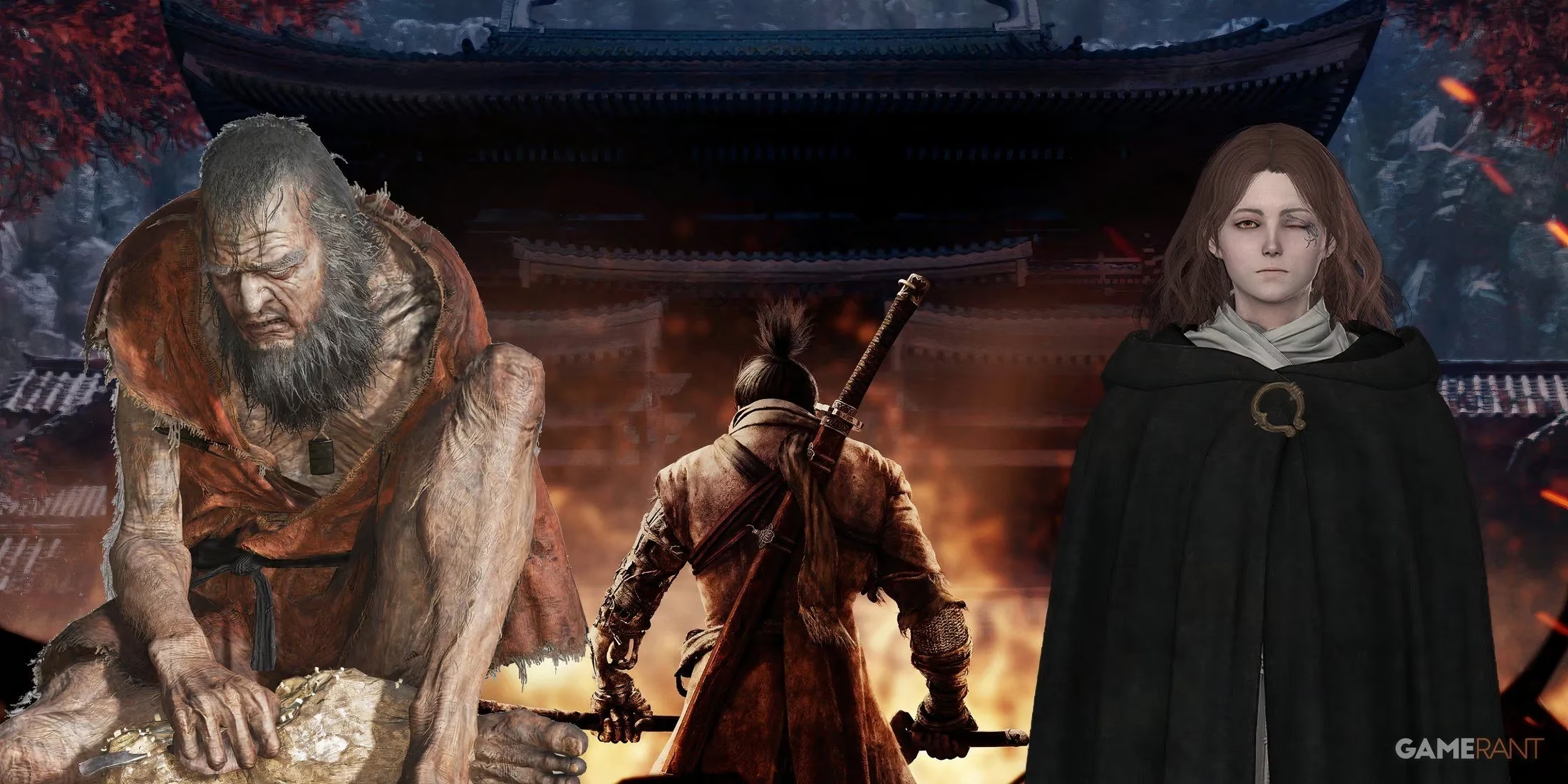
The Traditional Blueprint: A Legacy of Passive Support
Looking back, the formula is almost comforting in its predictability. The journey typically goes like this:
-
The Foundation: Demon's Souls' Maiden in Black. She set the gold standard—a silent, solemn figure in the Nexus who handles your soul leveling. Her role was purely functional, a narrative device for progression.
-
The Refinement: Characters like Dark Souls' Fire Keeper and Dark Souls II's Emerald Herald. They added more dialogue, a sliver of personal lore, but their core function remained untouched. They were fixtures, unchanging regardless of your in-game actions or moral alignment.
-
The Pinnacle (of the Old Formula): Elden Ring's Melina. She offers more narrative integration as your 'Maiden,' guiding you to the Erdtree and presenting key choices. Yet, for many players, her arc felt... subdued. In a world as vast and epic as the Lands Between, having such a pivotal character remain largely in the background, her fate often feeling like a narrative footnote, was a bit of a letdown. It's like having a VIP backstage pass but never getting to meet the main act.
This tradition created a safe, reliable space for players. But in 2026, with the bar raised astronomically high by Shadow of the Erdtree, 'safe' and 'reliable' might not cut it anymore. Players crave consequence, emotional weight, and narratives that react to their journey.
The Sekiro Paradigm Shift: When Allies Become Adversaries
This is where Sekiro dropped a mic that's still echoing through the community. The game featured not one, but two key support characters who could transform into devastating, emotionally charged boss fights.
| Character | Primary Role | Potential Boss Role | Narrative Context |
|---|---|---|---|
| The Sculptor | Provides Prosthetic Tool upgrades & lore. | Becomes the Demon of Hatred (implied transformation). | A tragic fall from grace, battling his own inner rage and regret. |
| Emma, the Gentle Blade | Healer, key lore figure, and guardian. | Becomes a mandatory boss fight for the Shura ending. | A direct, heartbreaking confrontation to stop you from becoming a monster. |
Emma's confrontation, in particular, is a masterclass in narrative game design. She isn't corrupted or mind-controlled. She faces you with complete agency, choosing to stand against the path of ultimate destruction you've embarked upon. The fight isn't just a test of skill; it's a philosophical duel. You're not fighting a 'boss'; you're being judged by a friend. That kind of storytelling hits different—it's personal, it's painful, and it's unforgettable.
The Path Forward for FromSoftware's Next World
So, what's the takeaway for whatever grand, cryptic world FromSoftware cooks up after the Age of the Erdtree? It's time to fully embrace the NPC-Boss Ambiguity. Here's my two cents on how they can level up:
🔥 Ditch the Predictability: The next 'guide' character shouldn't be a guaranteed safe haven. Their relationship with the player must be dynamic, capable of shifting from mentorship to rivalry based on player choice. Imagine a scenario where your actions in the open world directly affect their trust.
💔 Embrace Emotional Complexity: FromSoft's worlds are morally grey. Let our allies reflect that. Their decision to oppose us should stem from their own well-defined convictions, creating conflict that feels earned, not arbitrary. A fight born from ideological difference is far more compelling than one born from 'the gods made me do it.'
🎮 Integrate Mechanically: This evolution shouldn't be just narrative. What if this character's disposition affected the services they offered? Growing distrust could lead to higher 'costs' for leveling up, or even the temporary loss of their services, forcing the player to seek alternatives. The stakes become tangible.
In essence, the legacy of the 'level-up lady' doesn't need to be abandoned; it needs to be deconstructed and rebuilt. The template of Emma and the Sculptor proves that these characters can be the emotional core of a story, not just its logistical center. For a studio that has built its reputation on challenging gameplay, the next frontier is challenging our emotional and narrative expectations. The success of Shadow of the Erdtree showed us how high the ceiling is. Now, it's time to break through it by making our closest allies our greatest tests. After all, in the harsh, beautiful worlds of FromSoftware, the most formidable enemy is often the reflection of the path we choose to walk.
At the end of the day, these profound encounters are exactly why so many of us lose ourselves in the Lands Between and beyond—we crave stories that leave a real mark. But living inside those unforgettable moments often requires countless hours of grinding, retries, and careful build preparation, especially when you're determined to pursue every ending and uncover every hidden dialogue. That's why many players look for ways to keep their journey flexible rather than exhausting. Whether you need to top up for a fresh character, unlock resources for a new experimental build, or simply free yourself from time-consuming farming so you can invest your energy where it truly matters, having a little extra support never hurts.
Platforms like Lootbar exist to help gamers stay immersed in these layered worlds without letting monotony pull them out of the experience. When the emotional weight of a boss fight meets a smooth, well-prepared playthrough, every duel and every farewell feels exactly the way the developers intended—heavy, honest, and unforgettable. After all, the best way to honor the deep, thoughtful games from studios like FromSoftware is to give ourselves the space and momentum to keep exploring them fully.
Leave a Comment
Comments