
Armored Core 6's Return and the Compelling Case for Future Expansion
Armored Core 6: Fires of Rubicon and FromSoftware revive the iconic mech series with bold creativity, blending classic gameplay with thrilling innovation.
As I look back on the gaming landscape of the past few years, the triumphant return of Armored Core 6: Fires of Rubicon stands out as a pivotal moment. It wasn't just the revival of a beloved, long-dormant franchise; it was a bold statement from FromSoftware. In an era where the studio's name had become synonymous with soulslikes, Armored Core 6 demonstrated a refreshing willingness to revisit its roots, proving that creative ambition isn't solely dictated by prevailing market trends. The game masterfully blended its classic, intricate mech-building DNA with a modern, polished sensibility, creating an experience that felt both nostalgically authentic and thrillingly new. Its success has reopened a door many thought was permanently shut, and now, the question isn't just about a sequel—it's about how to build upon this magnificent foundation right now.
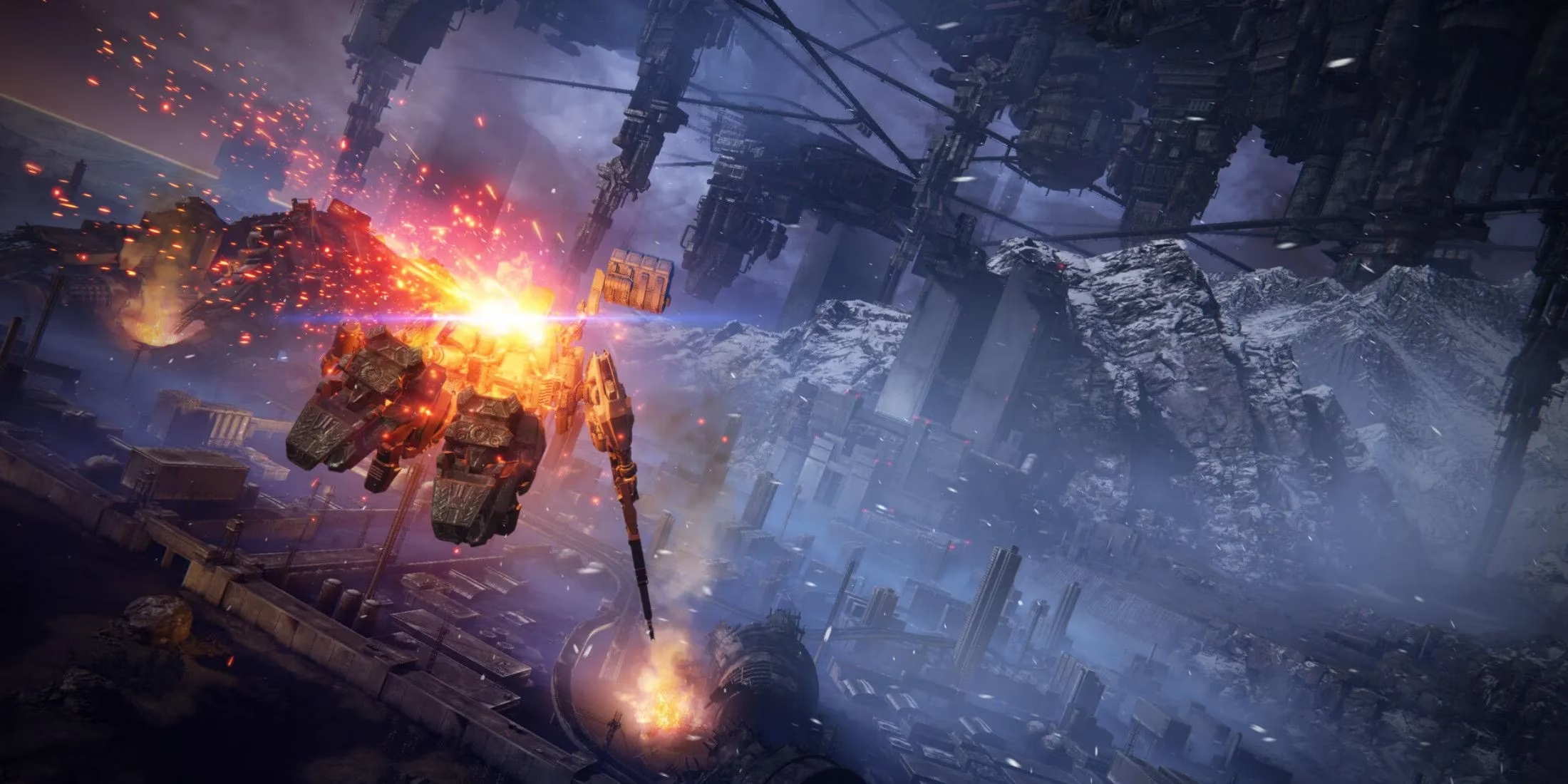
The Alluring Sci-Fi Canvas of Rubicon 3
The world of Rubicon 3 is a masterclass in dystopian world-building. Unlike the gothic castles and decaying kingdoms of FromSoftware's recent hits, this setting plunges us into a brutal, corporate-dominated sci-fi nightmare. The power dynamics are fascinating and horrifying, driven by incomprehensible technology and private militias of Armored Cores. This narrative framework, dense with political intrigue and environmental storytelling, offers a rich tapestry that feels both fresh and deeply ingrained with FromSoftware's signature touch. Characters like the enigmatic Carla, the relentless Iguazu, and the omnipresent ALLMIND are introduced with the studio's trademark subtlety, their backstories woven into the world's fabric through logs, brief dialogues, and environmental cues. Yet, this universe feels vast and only partially explored. The potential for narrative DLC here is immense. Imagine expansions that delve deeper into the Coral Wars, the rise of the corporations, or the true origins of entities like ALLMIND. Such content could elevate the game's already cerebral and nebulous sci-fi concepts, offering a more mind-bending and multilayered story that rivals the depth found in Shadow of the Erdtree.
Deepening the Definitive Armored Core Gameplay Loop
At its core, the genius of Armored Core has always been its interconnected gameplay loop. This isn't just an action game; it's a granular, strategic puzzle where every mission is preceded by a session in the garage. Build-crafting isn't a side activity—it's the heart of the experience. Tweaking leg types for mobility, balancing energy output with weapon load, and finding the perfect FCS for your playstyle creates a strategic depth that few other action games possess. The moment-to-moment combat is exhilarating, but victory is often secured long before launch, in the meticulous planning of your AC's loadout.
While the base system is remarkably comprehensive, the blueprint for expansion is clear. FromSoftware's approach to Elden Ring's DLC provides the perfect template. Shadow of the Erdtree didn't just add more of the same; it revolutionized the game's combat with eight entirely new weapon categories, each bringing unique mechanics and playstyles. An Armored Core 6 expansion could follow suit brilliantly:
-
New Weapon & Damage Types: Introduce weapons that utilize Coral in new, unstable ways, or gear that disrupts enemy systems rather than just dealing raw damage.
-
Advanced Mobility Options: New booster types, hover legs for aquatic combat, or even limited flight modules for specific mission types.
-
Expanded Internal Systems: New core expansions, alternative generators with unique trade-offs, or specialized FCS for niche combat roles.
The goal wouldn't be to invalidate existing builds but to exponentially increase the viable combinations, making the garage an even more captivating sandbox of mechanical mayhem.
Why DLC is the Logical Next Step
Considering FromSoftware's post-launch history, the call for substantial Armored Core 6 DLC isn't just fan wishful thinking—it's a logical progression. For over a decade, the studio has supported its major releases with expansive content that often redefines the base experience. Shadow of the Erdtree stands as the pinnacle of this philosophy, a massive, critically acclaimed expansion that many argue surpasses the original game in ambition and density.
For Armored Core 6, a similar treatment makes perfect sense. It allows the developers to:
-
Satisfy the existing, passionate fanbase with new reasons to return to Rubicon.
-
Refine and expand the gameplay systems that are already the game's greatest strength.
-
Tell a complete, deeper chapter in the Rubicon saga without the pressure of building an entirely new sequel from scratch.
-
Prove the franchise's longevity in the modern market, building momentum for a potential Armored Core 7.
An expansion with the same effort, scale, and creative panache as Shadow of the Erdtree—featuring new narrative arcs, terrifying new bosses, and innovative gear—wouldn't just be a victory; it would be a statement. It would solidify Armored Core's place not as a nostalgic one-off, but as a vital, ongoing pillar in FromSoftware's legendary portfolio. The mechs are assembled, Rubicon is waiting, and the potential for growth is staggering. The time for expansion is now.
Leave a Comment
Comments